

Jardins da Casa dos Biscainhos (Gardens of the House of the Biscainhos), Braga
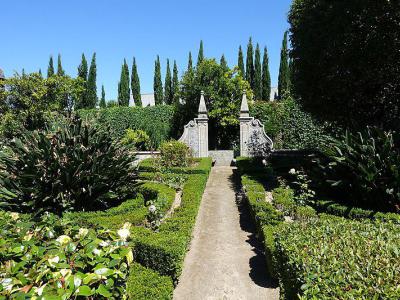
The gardens of the House of the Biscainhos were commissioned as part of a series of major works initiated by Dean Francisco Pereira da Silva in 1712. The gardens are organized around a central longitudinal axis that extends from the courtyard of the palace to the Pombal garden. This axis is characterized by a sequence of portals, tanks, and lakes that create a sense of unity throughout the complex.
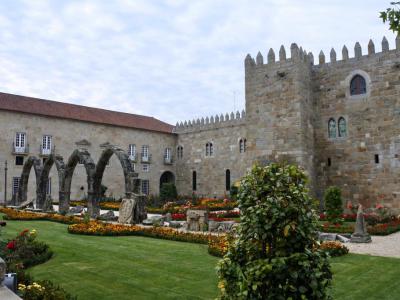
The Gardens of the House of the Biscainhos cover an area of approximately one hectare and consist of several interconnected structures and spaces. Some of the notable areas within the gardens include the "courtyard," the "formal garden," the "orchard and vegetable gardens," the "wall enclosure," the "canavial," and the "largo do pombal." Each of these spaces is embellished with sculptures, fountains, and architectural details that contribute to the overall charm of the gardens.
The "formal garden" is a standout feature, characterized by a maze-like layout of boxwood beds. Ornamental windows and gates, adorned with pinnacles and charming figures, decorate this area. Polychrome tile panels and decorative sculptures further enhance its beauty. Throughout the gardens, there are five fountains, a garden pavilion, and a gazebo that provide both aesthetic appeal and functional elements to the landscape.
An intriguing element within Portuguese gardens is the small frescoed house, which draws from Arab traditions. These diminutive structures, discreetly located at the garden's periphery, are marked by their refined finishes and small scale. They often served as secluded gathering places, hinting at the possibility of romantic or intimate encounters away from the public eye.
The Gardens of the House of the Biscainhos cover an area of approximately one hectare and consist of several interconnected structures and spaces. Some of the notable areas within the gardens include the "courtyard," the "formal garden," the "orchard and vegetable gardens," the "wall enclosure," the "canavial," and the "largo do pombal." Each of these spaces is embellished with sculptures, fountains, and architectural details that contribute to the overall charm of the gardens.
The "formal garden" is a standout feature, characterized by a maze-like layout of boxwood beds. Ornamental windows and gates, adorned with pinnacles and charming figures, decorate this area. Polychrome tile panels and decorative sculptures further enhance its beauty. Throughout the gardens, there are five fountains, a garden pavilion, and a gazebo that provide both aesthetic appeal and functional elements to the landscape.
An intriguing element within Portuguese gardens is the small frescoed house, which draws from Arab traditions. These diminutive structures, discreetly located at the garden's periphery, are marked by their refined finishes and small scale. They often served as secluded gathering places, hinting at the possibility of romantic or intimate encounters away from the public eye.
Want to visit this sight? Check out these Self-Guided Walking Tours in Braga. Alternatively, you can download the mobile app "GPSmyCity: Walks in 1K+ Cities" from Apple App Store or Google Play Store. The app turns your mobile device to a personal tour guide and it works offline, so no data plan is needed when traveling abroad.
Download The GPSmyCity App



Jardins da Casa dos Biscainhos (Gardens of the House of the Biscainhos) on Map
Sight Name: Jardins da Casa dos Biscainhos (Gardens of the House of the Biscainhos)
Sight Location: Braga, Portugal (See walking tours in Braga)
Sight Type: Park/Outdoor
Sight Location: Braga, Portugal (See walking tours in Braga)
Sight Type: Park/Outdoor
Nearby Sights


Walking Tours in Braga, Portugal

Create Your Own Walk in Braga
Creating your own self-guided walk in Braga is easy and fun. Choose the city attractions that you want to see and a walk route map will be created just for you. You can even set your hotel as the start point of the walk.
Historical Religious Sites Walking Tour
Braga is a prominent destination in Portugal's Religious Tourism segment, primarily due to its vibrant Holy Week celebrations and rich ecclesiastical architecture. Indeed, being one of the world's oldest Christian cities, Braga boasts an extensive religious legacy. Much like Rome, it seamlessly interweaves art and spirituality throughout its historic center.
Here, you will find a... view more
Tour Duration: 1 Hour
Travel Distance: 1.4 Km or 0.9 Miles
Here, you will find a... view more
Tour Duration: 1 Hour
Travel Distance: 1.4 Km or 0.9 Miles
Braga Introduction Walking Tour
The history of Braga, Portugal's religious capital, spans millennia. Located in the northern Minho region, this city is also one of the country's oldest, reportedly founded by Bracari Celts.
Braga's origin is closely associated with the Roman conquest in 136 BC, culminating in the establishment of Bracara Augusta in 16 BC, a pivotal location within the newly-formed Gallaecia... view more
Tour Duration: 2 Hours
Travel Distance: 2 Km or 1.2 Miles
Braga's origin is closely associated with the Roman conquest in 136 BC, culminating in the establishment of Bracara Augusta in 16 BC, a pivotal location within the newly-formed Gallaecia... view more
Tour Duration: 2 Hours
Travel Distance: 2 Km or 1.2 Miles