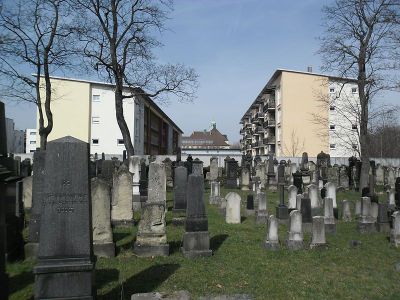


Jewish Cemetery, Nuremberg
The Jewish Cemetery in Nuremberg carries a significant historical legacy, reflecting the tumultuous history of Jews in the city. Established in the 13th century, the cemetery has experienced numerous phases of destruction and restoration. Originally serving as a burial site for the medieval Jewish community, it saw devastating events such as the 1298 persecution, which likely led to its destruction. Subsequent Jewish cemeteries emerged, including one in the 14th century on Vordere Beckerschlagergasse, which was later confiscated and repurposed by the city following the expulsion of Jews in 1499.
On February 28, 1864, the Jewish community reopened a cemetery on Bärenschanzstraße, marking a new era with the first burial of Jakob Hirsch Marschütz. This site functioned as a key burial ground until its closure in 1922, during which 2,225 individuals were interred. The rise of the National Socialists led to further desecration before World War II, including the removal of all metal attachments from the graves.
The cemetery was severely damaged during a bombing raid on January 2, 1945, which destroyed the administration building and numerous graves. Post-war, many tombstones were repurposed for city reconstruction, further erasing parts of its historical footprint. The cemetery was eventually closed to the public and is currently protected by cameras to prevent further desecration.
A significant remnant of the earlier Jewish presence is preserved at the cemetery on Schnieglinger Straße, where stones from the medieval cemetery, reused in various constructions including the Lorenz Church (Lorenzkirche), were rediscovered. These historical markers provide a tangible link to Nuremberg's Jewish past, amidst ongoing challenges of preservation and memory.
On February 28, 1864, the Jewish community reopened a cemetery on Bärenschanzstraße, marking a new era with the first burial of Jakob Hirsch Marschütz. This site functioned as a key burial ground until its closure in 1922, during which 2,225 individuals were interred. The rise of the National Socialists led to further desecration before World War II, including the removal of all metal attachments from the graves.
The cemetery was severely damaged during a bombing raid on January 2, 1945, which destroyed the administration building and numerous graves. Post-war, many tombstones were repurposed for city reconstruction, further erasing parts of its historical footprint. The cemetery was eventually closed to the public and is currently protected by cameras to prevent further desecration.
A significant remnant of the earlier Jewish presence is preserved at the cemetery on Schnieglinger Straße, where stones from the medieval cemetery, reused in various constructions including the Lorenz Church (Lorenzkirche), were rediscovered. These historical markers provide a tangible link to Nuremberg's Jewish past, amidst ongoing challenges of preservation and memory.
Want to visit this sight? Check out these Self-Guided Walking Tours in Nuremberg. Alternatively, you can download the mobile app "GPSmyCity: Walks in 1K+ Cities" from Apple App Store or Google Play Store. The app turns your mobile device to a personal tour guide and it works offline, so no data plan is needed when traveling abroad.
Download The GPSmyCity App



Jewish Cemetery on Map
Sight Name: Jewish Cemetery
Sight Location: Nuremberg, Germany (See walking tours in Nuremberg)
Sight Type: Attraction/Landmark
Sight Location: Nuremberg, Germany (See walking tours in Nuremberg)
Sight Type: Attraction/Landmark
Nearby Sights
Walking Tours in Nuremberg, Germany

Create Your Own Walk in Nuremberg
Creating your own self-guided walk in Nuremberg is easy and fun. Choose the city attractions that you want to see and a walk route map will be created just for you. You can even set your hotel as the start point of the walk.
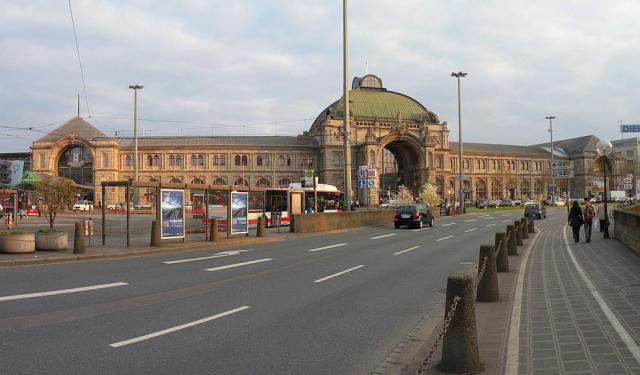
A Walk Through Nuremberg's Historical Old Town
American poet Henry Wadsworth Longfellow described Nuremberg as a “quaint old town of toil and traffic, quaint old town of art and song.”
Nuremberg has witnessed some of the most significant events in German history. For many people, the city is first associated with the rise of the Third Reich, the Nazi Party rallies, and the postwar trials of Nazi leaders. Indeed, Hitler regarded... view more
Tour Duration: 3 Hour(s)
Travel Distance: 3.8 Km or 2.4 Miles
Nuremberg has witnessed some of the most significant events in German history. For many people, the city is first associated with the rise of the Third Reich, the Nazi Party rallies, and the postwar trials of Nazi leaders. Indeed, Hitler regarded... view more
Tour Duration: 3 Hour(s)
Travel Distance: 3.8 Km or 2.4 Miles
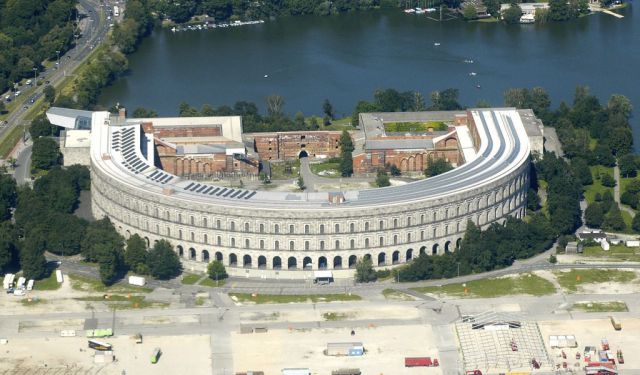
Hitler's Nuremberg Tour
Nuremberg’s association with Adolf Hitler and National Socialism is one of the darkest chapters in the city’s history. Although Nuremberg is known for its medieval architecture and storybook appearance, few German cities are as closely intertwined with the Nazi legacy. Hitler referred to it as the “City of the Party Rallies” and regarded it as a model for the ideal German city.
The... view more
Tour Duration: 2 Hour(s)
Travel Distance: 4.9 Km or 3 Miles
The... view more
Tour Duration: 2 Hour(s)
Travel Distance: 4.9 Km or 3 Miles