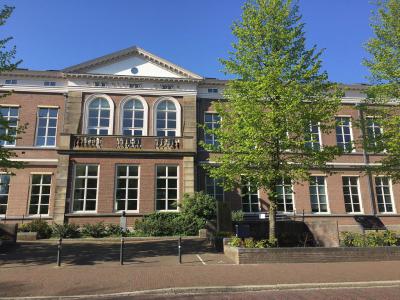


Kamerling-Onnes Laboratory, Leiden
The Kamerlingh Onnes Laboratory, part of the Leiden Institute of Physics, holds a prominent place in the history of scientific discovery. Known for its distinctive trapezoidal shape, the building features a central open area, white arched windows, and Gothic-inspired decorations, exemplifying Flamand art. This laboratory was named in honor of Heike Kamerlingh Onnes, a pioneering physicist whose groundbreaking research earned him the Nobel Prize in 1913.
Kamerlingh Onnes, born in 1853, was the first to liquefy helium in 1908, a critical achievement that advanced cryogenics and earned him international acclaim. In 1911, he discovered superconductivity, the phenomenon where certain materials exhibit zero electrical resistance at extremely low temperatures. His contributions cemented Leiden University's reputation as a hub for low-temperature physics, a focus that continues to this day.
The Kamerlingh Onnes Laboratory, founded in 1904 as a cryogenics research center, became a hub for leading scientists, including Albert Einstein. Safety concerns from the 1807 Leiden gunpowder disaster eventually prompted its relocation to the Huygens-Onnes Laboratory near Oegstgeest.
Artifacts from the laboratory’s golden era, including equipment used by Nobel laureates Kamerlingh Onnes and Pieter Zeeman, are preserved at the Boerhaave Museum. A recently discovered photo album further sheds light on daily life in the lab, capturing experimental setups, staff members, and facilities through the lens of an amateur photographer.
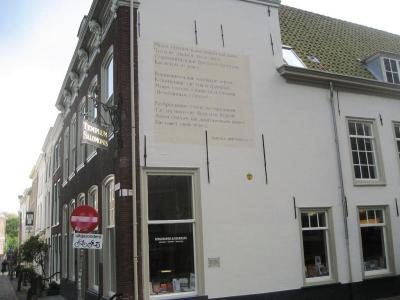
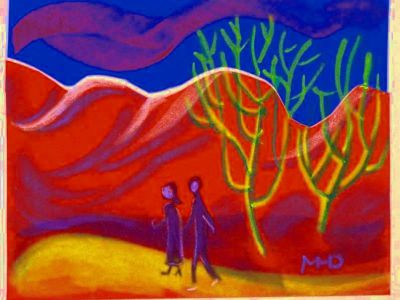
The original laboratory, now Leiden University’s law faculty, houses a plaque marking the first helium liquefaction and an "O"-shaped artwork. Sadly, this commemorative space is often obscured behind a coffee corner, its significance largely overlooked.
The legacy of the Kamerlingh Onnes Laboratory lives on through its contributions to science and its enduring influence on physics research. Its story is a testament to the pioneering spirit of Heike Kamerlingh Onnes and the enduring impact of his discoveries.
Kamerlingh Onnes, born in 1853, was the first to liquefy helium in 1908, a critical achievement that advanced cryogenics and earned him international acclaim. In 1911, he discovered superconductivity, the phenomenon where certain materials exhibit zero electrical resistance at extremely low temperatures. His contributions cemented Leiden University's reputation as a hub for low-temperature physics, a focus that continues to this day.
The Kamerlingh Onnes Laboratory, founded in 1904 as a cryogenics research center, became a hub for leading scientists, including Albert Einstein. Safety concerns from the 1807 Leiden gunpowder disaster eventually prompted its relocation to the Huygens-Onnes Laboratory near Oegstgeest.
Artifacts from the laboratory’s golden era, including equipment used by Nobel laureates Kamerlingh Onnes and Pieter Zeeman, are preserved at the Boerhaave Museum. A recently discovered photo album further sheds light on daily life in the lab, capturing experimental setups, staff members, and facilities through the lens of an amateur photographer.
The original laboratory, now Leiden University’s law faculty, houses a plaque marking the first helium liquefaction and an "O"-shaped artwork. Sadly, this commemorative space is often obscured behind a coffee corner, its significance largely overlooked.
The legacy of the Kamerlingh Onnes Laboratory lives on through its contributions to science and its enduring influence on physics research. Its story is a testament to the pioneering spirit of Heike Kamerlingh Onnes and the enduring impact of his discoveries.
Want to visit this sight? Check out these Self-Guided Walking Tours in Leiden. Alternatively, you can download the mobile app "GPSmyCity: Walks in 1K+ Cities" from Apple App Store or Google Play Store. The app turns your mobile device to a personal tour guide and it works offline, so no data plan is needed when traveling abroad.
Download The GPSmyCity App



Kamerling-Onnes Laboratory on Map
Sight Name: Kamerling-Onnes Laboratory
Sight Location: Leiden, Netherlands (See walking tours in Leiden)
Sight Type: Attraction/Landmark
Sight Location: Leiden, Netherlands (See walking tours in Leiden)
Sight Type: Attraction/Landmark
Nearby Sights

Walking Tours in Leiden, Netherlands

Create Your Own Walk in Leiden
Creating your own self-guided walk in Leiden is easy and fun. Choose the city attractions that you want to see and a walk route map will be created just for you. You can even set your hotel as the start point of the walk.
A Walk Through Leiden's Charming Historic Old Town
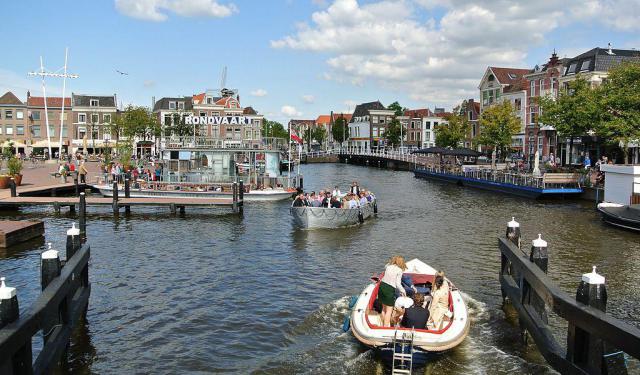
In the year 860, at the confluence of the Old Rhine and the New Rhine, there was a settlement called "Leithon." This word referred to a canalized river. The name is appropriate. Leiden from its beginnings was a city of canals.
In 1060 Alewin I, landlord of Leiden, built his fortified keep, the "Burcht" ("Fort"). The village of Leiden huddled around the fortified... view more
Tour Duration: 1 Hour(s)
Travel Distance: 2.2 Km or 1.4 Miles
In 1060 Alewin I, landlord of Leiden, built his fortified keep, the "Burcht" ("Fort"). The village of Leiden huddled around the fortified... view more
Tour Duration: 1 Hour(s)
Travel Distance: 2.2 Km or 1.4 Miles
In the Footsteps of Young Rembrandt
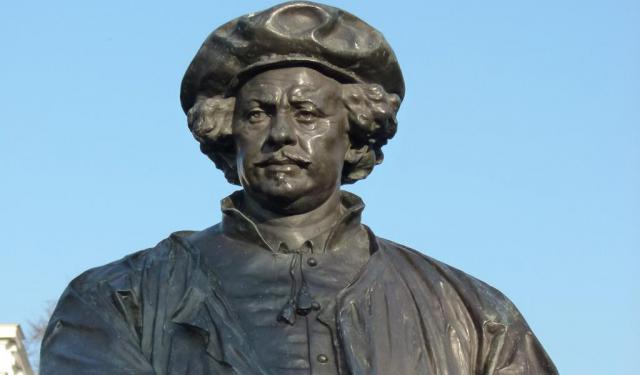
Once a thriving hub for trade and textile manufacturing, and a home to Holland's oldest university, Leiden also made history as the birthplace of Rembrandt van Rijn, one of the greatest visual artists of the mankind, renowned for his ingenious use of light and shadow, and life-like portraits. The Golden Age of the Netherlands can still be felt in Leiden, especially if you follow in the... view more
Tour Duration: 1 Hour(s)
Travel Distance: 1.2 Km or 0.7 Miles
Tour Duration: 1 Hour(s)
Travel Distance: 1.2 Km or 0.7 Miles