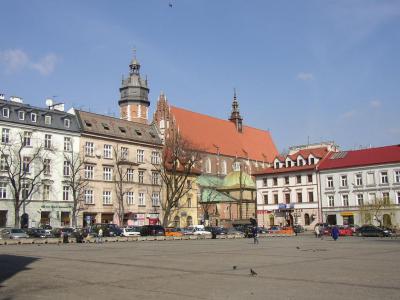


Kazimierz (Jewish Quarter), Krakow (must see)
For many centuries, Kazimierz thrived as a realm where Polish and Jewish cultures coexisted and blended harmoniously. The northeastern sector of the district held a rich Jewish history, with its Jewish residents being forcibly uprooted in 1941 by the occupying German forces to the Krakow ghetto just on the opposite side of the river in Podgórze. In the present day, Kazimierz stands as one of Krakow's foremost tourist destinations, playing a pivotal role in the city's cultural tapestry.
The genesis of Kazimierz owes itself to the efforts of King Casimir the Great, the namesake of the town. Yet, it was the decision of King Jan Olbracht that prompted the migration of Krakow's Jewish population to Kazimierz. Following this migration, instances of violence and clashes between these two predominant communities notably decreased. These communities coexisted relatively seamlessly until the early 19th century, when the distinct Jewish township was incorporated into Krakow. The intellectual and societal elite largely departed from Kazimierz during this period, gravitating toward other parts of Krakow. Nonetheless, within the old town, those who remained were primarily impoverished and orthodox Jews, and their presence is responsible for the enduring appreciation of the area's architecture and structures.
The upheaval of the Second World War further exacerbated the community's decline and desolation. By the conflict's conclusion, the once-vibrant Jewish enclave had been reduced to ruins, erasing a melting pot of unique and diverse Jewish heritage.
It wasn't until the year 2000, quite recently, that the most economically disadvantaged district of Krakow began to attract the attention of the burgeoning hospitality sector. Before long, the buildings became havens for some of the city's most charming cafes and restaurants. Additionally, each year at the close of June, Kazimierz hosts the Jewish Culture Festival, the largest of its kind in Europe, drawing in visitors from across the globe. The festival boasts an array of music from various regions, played by ensembles hailing from the Middle East, the USA, Africa, and beyond.
Why You Should Visit:
If you're looking for a place to wander pretty streets and dip in and out of nice places, then this is the area for you.
Tip:
If you head toward the corner of Ulica Józefa and Ulica Nowa, the walkways in that area are the perfect mix of local shops and atmospheric alleyways. You'll see lots of cute shops with fun graffiti and artwork painted on the side of them.
The genesis of Kazimierz owes itself to the efforts of King Casimir the Great, the namesake of the town. Yet, it was the decision of King Jan Olbracht that prompted the migration of Krakow's Jewish population to Kazimierz. Following this migration, instances of violence and clashes between these two predominant communities notably decreased. These communities coexisted relatively seamlessly until the early 19th century, when the distinct Jewish township was incorporated into Krakow. The intellectual and societal elite largely departed from Kazimierz during this period, gravitating toward other parts of Krakow. Nonetheless, within the old town, those who remained were primarily impoverished and orthodox Jews, and their presence is responsible for the enduring appreciation of the area's architecture and structures.
The upheaval of the Second World War further exacerbated the community's decline and desolation. By the conflict's conclusion, the once-vibrant Jewish enclave had been reduced to ruins, erasing a melting pot of unique and diverse Jewish heritage.
It wasn't until the year 2000, quite recently, that the most economically disadvantaged district of Krakow began to attract the attention of the burgeoning hospitality sector. Before long, the buildings became havens for some of the city's most charming cafes and restaurants. Additionally, each year at the close of June, Kazimierz hosts the Jewish Culture Festival, the largest of its kind in Europe, drawing in visitors from across the globe. The festival boasts an array of music from various regions, played by ensembles hailing from the Middle East, the USA, Africa, and beyond.
Why You Should Visit:
If you're looking for a place to wander pretty streets and dip in and out of nice places, then this is the area for you.
Tip:
If you head toward the corner of Ulica Józefa and Ulica Nowa, the walkways in that area are the perfect mix of local shops and atmospheric alleyways. You'll see lots of cute shops with fun graffiti and artwork painted on the side of them.
Want to visit this sight? Check out these Self-Guided Walking Tours in Krakow. Alternatively, you can download the mobile app "GPSmyCity: Walks in 1K+ Cities" from Apple App Store or Google Play Store. The app turns your mobile device to a personal tour guide and it works offline, so no data plan is needed when traveling abroad.
Download The GPSmyCity App



Kazimierz (Jewish Quarter) on Map
Sight Name: Kazimierz (Jewish Quarter)
Sight Location: Krakow, Poland (See walking tours in Krakow)
Sight Type: Attraction/Landmark
Sight Location: Krakow, Poland (See walking tours in Krakow)
Sight Type: Attraction/Landmark
Nearby Sights
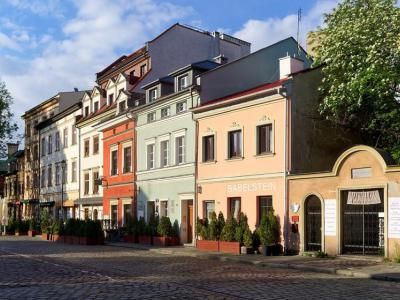
Walking Tours in Krakow, Poland

Create Your Own Walk in Krakow
Creating your own self-guided walk in Krakow is easy and fun. Choose the city attractions that you want to see and a walk route map will be created just for you. You can even set your hotel as the start point of the walk.
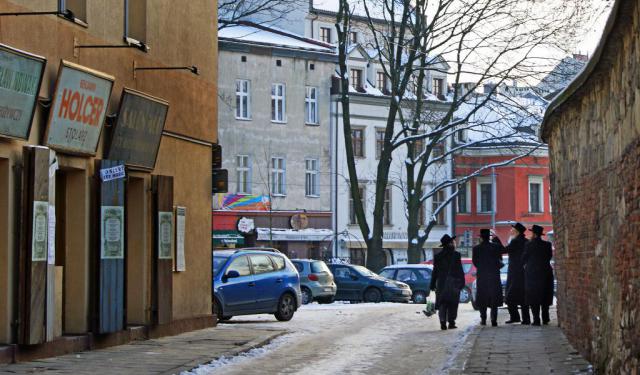
Jewish Heritage Tour in Krakow
The history of Kraków’s Jewish community stands among the most significant chapters of Jewish life in Central Europe. Jews first settled in Kraków in the 13th century, drawn by the city’s expanding trade networks and by greater tolerance compared to other European regions. Early Jewish residents lived mainly around what is today the Old Town and enjoyed a degree of royal protection. However,... view more
Tour Duration: 2 Hours
Travel Distance: 3 Km or 1.9 Miles
Tour Duration: 2 Hours
Travel Distance: 3 Km or 1.9 Miles
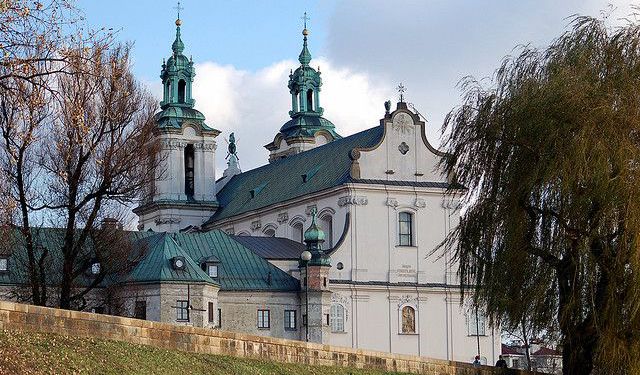
Historical Churches Walking Tour
Krakow, the center of religious life in Poland, was once considered “the Northern Rome” for its multitude of churches. Alongside the new temples continuing to appear in the city today, these remarkable sanctuaries, holding deep historical and cultural significance, still remain the most attractive and interesting to look at.
By far the most iconic of these is the Basilica of Saint Mary. A... view more
Tour Duration: 1 Hour
Travel Distance: 2.2 Km or 1.4 Miles
By far the most iconic of these is the Basilica of Saint Mary. A... view more
Tour Duration: 1 Hour
Travel Distance: 2.2 Km or 1.4 Miles
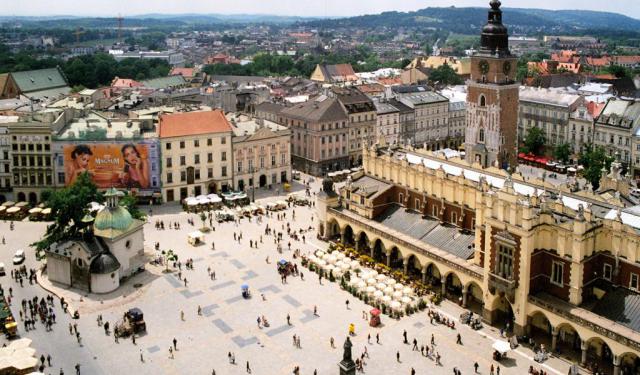
Krakow Old Town Walking Tour
“Kraków has shaped me more than any other place on Earth.” These words from Pope John Paul II brought the city into the global limelight.
The city's name is traditionally linked to Krak, or Krakus, a legendary ruler said to have founded the city after defeating a dragon beneath Wawel Hill. Though the tale is mythological, the name itself derives from this early Slavic personal name,... view more
Tour Duration: 2 Hours
Travel Distance: 3.3 Km or 2.1 Miles
The city's name is traditionally linked to Krak, or Krakus, a legendary ruler said to have founded the city after defeating a dragon beneath Wawel Hill. Though the tale is mythological, the name itself derives from this early Slavic personal name,... view more
Tour Duration: 2 Hours
Travel Distance: 3.3 Km or 2.1 Miles
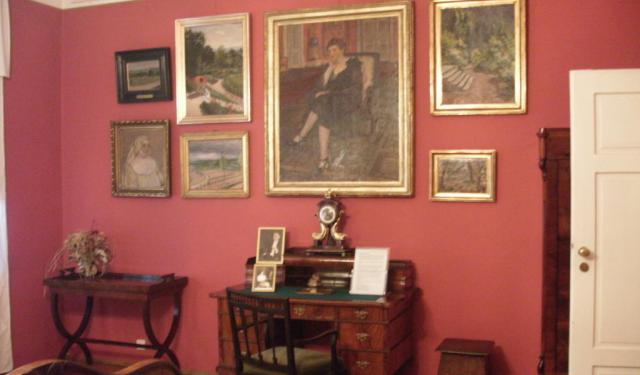
Historical House Museums Tour
Well-preserved historical buildings can often tell the stories of their city more vividly than any history book. Krakow, the old capital and cultural center of Poland, for many years, has been the home of many important Poles. Today, their former residences have been converted into house museums where visitors can learn about their inhabitants and see what life was like in the past.
One such... view more
Tour Duration: 1 Hour
Travel Distance: 2 Km or 1.2 Miles
One such... view more
Tour Duration: 1 Hour
Travel Distance: 2 Km or 1.2 Miles
City Walks Overview
