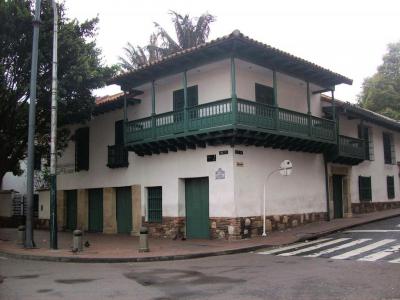


La Casa Museo del 20 de Julio (Museum of July 20, 1810), Bogota
The Museum of Independence, located in Bogota’s historic La Candelaria district, is a significant cultural and historical institution housed in a late sixteenth-century colonial building. Also referred to as the Museum of July 20, 1810 (Museo del 20 de Julio de 1810) or the House of the Vase (Casa del Florero), the museum was founded on July 20, 1960, commemorating a pivotal moment in Colombia’s fight for independence: the ''Grito de Independencia'' (Cry of Independence).
The museum commemorates July 20, 1810, the day Colombia’s independence movement began. A planned altercation over a vase with Spanish trader Jose Gonzalez Llorente sparked a public uprising, leading to the signing of the Act of Independence the next day. Though independence took over a decade, July 20 is now celebrated as Colombia’s Independence Day with patriotic ceremonies.
The museum features nine halls showcasing nearly 4,000 artifacts, including the shattered vase. Highlights include the Sala del Florero, centered on July 20, 1810; the Sala de Antonio Narino, honoring the independence leader who translated the Declaration of the Rights of Man; and an exhibit on women's vital roles in espionage, activism, and public mobilization during the independence movement.
The museum is always adorned with the red, blue, and yellow Colombian flag, a nod to its patriotic significance. It is closed on Mondays, but entrance is free on Sundays, making it accessible to everyone. Through its compelling storytelling and rich collection, the Museum of Independence offers a profound look at Colombia’s journey to sovereignty and the diverse voices that shaped its history.
The museum commemorates July 20, 1810, the day Colombia’s independence movement began. A planned altercation over a vase with Spanish trader Jose Gonzalez Llorente sparked a public uprising, leading to the signing of the Act of Independence the next day. Though independence took over a decade, July 20 is now celebrated as Colombia’s Independence Day with patriotic ceremonies.
The museum features nine halls showcasing nearly 4,000 artifacts, including the shattered vase. Highlights include the Sala del Florero, centered on July 20, 1810; the Sala de Antonio Narino, honoring the independence leader who translated the Declaration of the Rights of Man; and an exhibit on women's vital roles in espionage, activism, and public mobilization during the independence movement.
The museum is always adorned with the red, blue, and yellow Colombian flag, a nod to its patriotic significance. It is closed on Mondays, but entrance is free on Sundays, making it accessible to everyone. Through its compelling storytelling and rich collection, the Museum of Independence offers a profound look at Colombia’s journey to sovereignty and the diverse voices that shaped its history.
Want to visit this sight? Check out these Self-Guided Walking Tours in Bogota. Alternatively, you can download the mobile app "GPSmyCity: Walks in 1K+ Cities" from Apple App Store or Google Play Store. The app turns your mobile device to a personal tour guide and it works offline, so no data plan is needed when traveling abroad.
Download The GPSmyCity App



La Casa Museo del 20 de Julio (Museum of July 20, 1810) on Map
Sight Name: La Casa Museo del 20 de Julio (Museum of July 20, 1810)
Sight Location: Bogota, Colombia (See walking tours in Bogota)
Sight Type: Museum/Gallery
Sight Location: Bogota, Colombia (See walking tours in Bogota)
Sight Type: Museum/Gallery
Nearby Sights
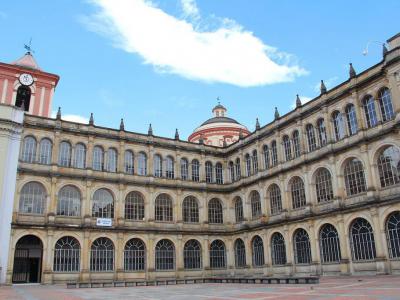
Walking Tours in Bogota, Colombia

Create Your Own Walk in Bogota
Creating your own self-guided walk in Bogota is easy and fun. Choose the city attractions that you want to see and a walk route map will be created just for you. You can even set your hotel as the start point of the walk.
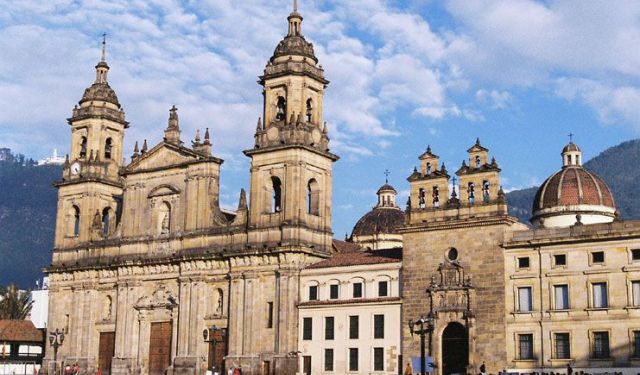
Bogota Old Town Walking Tour
In 1538, the indigenous Muisca of the Colombian Altiplano had the advantage in numbers over the force of conquistador Gonzalo Jimenez de Quesada. Arriving in the Muisca Federation, the Spanish had only 162 exhausted men. However, the guecha warriors of Chief Tisquesusa were no match. The Federation fell in bloody battle.
In the area now known as Quevedo's Fountain Square, Quesada set up 12... view more
Tour Duration: 2 Hour(s)
Travel Distance: 4.1 Km or 2.5 Miles
In the area now known as Quevedo's Fountain Square, Quesada set up 12... view more
Tour Duration: 2 Hour(s)
Travel Distance: 4.1 Km or 2.5 Miles
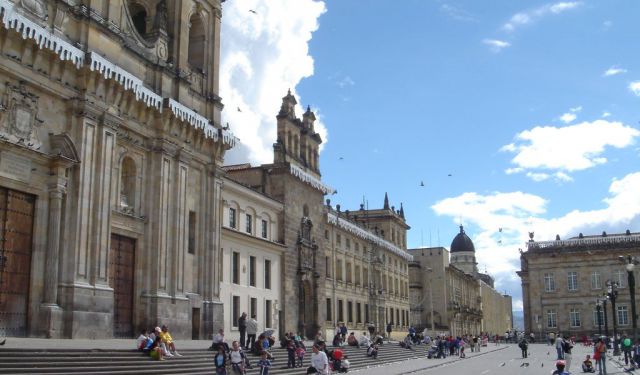
Discover Bogota's Architectural Jewels on Foot
Bogota, Colombia, is quite a city for an architectural experience. Attentive to the local historical heritage, the city has managed to preserve in full splendor most of its colonial buildings.
One such gem is the Palace (or House) of Nariño, the official residence of the President of Colombia. Its grandeur and historical significance make it a prominent landmark.
Not far away from it... view more
Tour Duration: 2 Hour(s)
Travel Distance: 3.7 Km or 2.3 Miles
One such gem is the Palace (or House) of Nariño, the official residence of the President of Colombia. Its grandeur and historical significance make it a prominent landmark.
Not far away from it... view more
Tour Duration: 2 Hour(s)
Travel Distance: 3.7 Km or 2.3 Miles
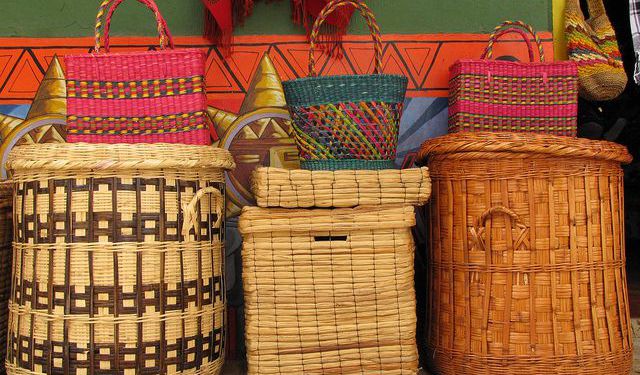
Bogota Shopping Tour
Colombia is known for its gold and emeralds, recognizable national clothing, pottery, accessories, and other crafts. The country's capital Bogota is so rich in authentic shopping that it's almost mind-boggling to decide what to buy first and most importantly, where to buy it at the best possible price!
Start your quest at Pasaje Rivas Market, Bogota's oldest marketplace, offering... view more
Tour Duration: 1 Hour(s)
Travel Distance: 2.3 Km or 1.4 Miles
Start your quest at Pasaje Rivas Market, Bogota's oldest marketplace, offering... view more
Tour Duration: 1 Hour(s)
Travel Distance: 2.3 Km or 1.4 Miles
Useful Travel Guides for Planning Your Trip
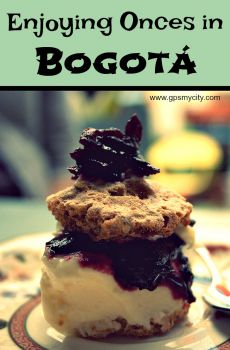
Enjoying Onces in Bogota
Elevenses, on the surface, seem to be a particularly British tradition, a break for something light and sweet between breakfast and lunch, a time to gossip, a time to catch up, a time just to be. Lo and behold, Colombia somewhere along the line adapted this tradition in a particularly Latin fashion....
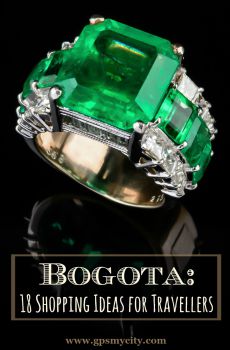
18 Uniquely Columbian Things to Buy in Bogota
To those who understand Russian, the word "Bogota" sounds very similar to the one translating as "rich". And, indeed, the city does live up to this name connotation in terms of peculiar things worth exploring in addition to coca, coffee and emeralds. Here's the longer list...