

La Madrasa (The Prayer Room), Granada (must see)
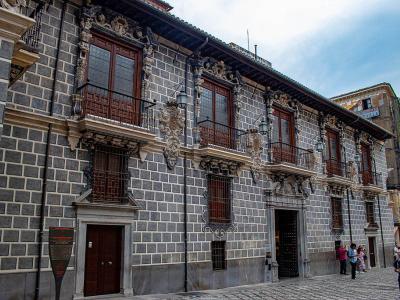
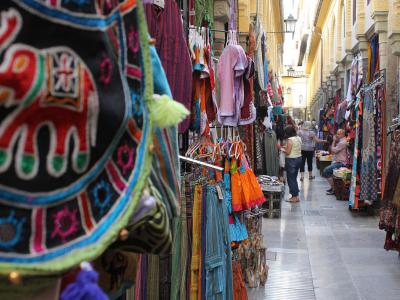
The building generally called the Madrasa Palace stands on Oficios Street, between Granada Cathedral and the Alcaiceria, the former silk and gold market. Founded in 1349 by Yusuf I, Nasrid Emir of Granada, it was a school of Islamic law and grammar, with a curriculum that also included rhetoric and medicine. Known as the Yusufiyya, or “House of Science,” it became one of the intellectual centers of Nasrid Granada.
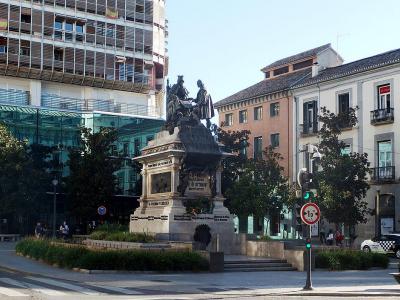
The Madrasa survived the Christian conquest of 1492, when the city was ceded to Ferdinand and Isabella. But in 1500, following a Muslim rebellion, the Inquisitor-General Gonzalo Jiménez de Cisneros attacked the institution. The building was sacked, and its irreplaceable library was taken to Bib-Rambla Square and burned. The Madrasa subsequently served variously as a city hall, a textile warehouse, and an empty building, its original purpose largely forgotten.
In 1860, an inscription dedicating the prayer room to the month of Muharram was discovered. After several restorations, the Madrasa finally opened to the public in 2011.
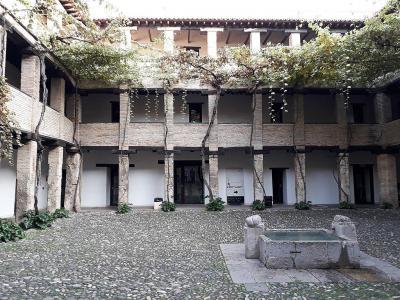
Much of the original structure has disappeared, but the prayer room survives as the most important Nasrid interior remaining from the institution. It has a high ceiling, with the shape of the room changing halfway up the walls into an octagonal form. The upper walls are richly decorated with stucco ornament and Arabic calligraphy, while sixteen windows illuminate the space beneath a wooden cupola.
Within the entrance, an inscription invites visitors to embrace the desire to study and promises “the beautiful tree of honor.” The Inquisition attempted to erase this place and its intellectual legacy, but the surviving prayer room remains a powerful testament to Granada’s Islamic past.
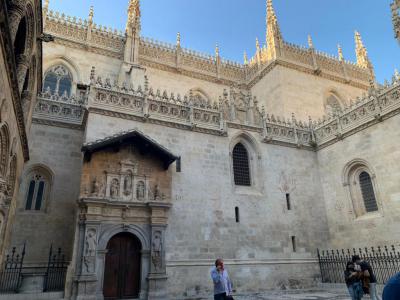
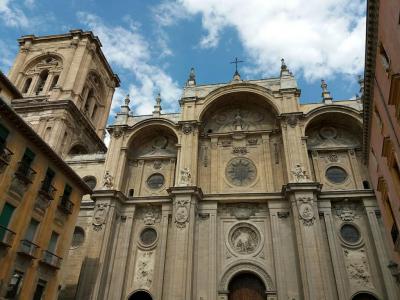
The contrast with nearby Granada Cathedral is particularly striking: within a few meters, visitors encounter both a former center of Nasrid learning and one of the great Christian monuments built after the conquest.
The Madrasa survived the Christian conquest of 1492, when the city was ceded to Ferdinand and Isabella. But in 1500, following a Muslim rebellion, the Inquisitor-General Gonzalo Jiménez de Cisneros attacked the institution. The building was sacked, and its irreplaceable library was taken to Bib-Rambla Square and burned. The Madrasa subsequently served variously as a city hall, a textile warehouse, and an empty building, its original purpose largely forgotten.
In 1860, an inscription dedicating the prayer room to the month of Muharram was discovered. After several restorations, the Madrasa finally opened to the public in 2011.
Much of the original structure has disappeared, but the prayer room survives as the most important Nasrid interior remaining from the institution. It has a high ceiling, with the shape of the room changing halfway up the walls into an octagonal form. The upper walls are richly decorated with stucco ornament and Arabic calligraphy, while sixteen windows illuminate the space beneath a wooden cupola.
Within the entrance, an inscription invites visitors to embrace the desire to study and promises “the beautiful tree of honor.” The Inquisition attempted to erase this place and its intellectual legacy, but the surviving prayer room remains a powerful testament to Granada’s Islamic past.
The contrast with nearby Granada Cathedral is particularly striking: within a few meters, visitors encounter both a former center of Nasrid learning and one of the great Christian monuments built after the conquest.
Want to visit this sight? Check out these Self-Guided Walking Tours in Granada. Alternatively, you can download the mobile app "GPSmyCity: Walks in 1K+ Cities" from Apple App Store or Google Play Store. The app turns your mobile device to a personal tour guide and it works offline, so no data plan is needed when traveling abroad.
Download The GPSmyCity App



La Madrasa (The Prayer Room) on Map
Sight Name: La Madrasa (The Prayer Room)
Sight Location: Granada, Spain (See walking tours in Granada)
Sight Type: Attraction/Landmark
Guide(s) Containing This Sight:
Sight Location: Granada, Spain (See walking tours in Granada)
Sight Type: Attraction/Landmark
Guide(s) Containing This Sight:
Nearby Sights

Walking Tours in Granada, Spain

Create Your Own Walk in Granada
Creating your own self-guided walk in Granada is easy and fun. Choose the city attractions that you want to see and a walk route map will be created just for you. You can even set your hotel as the start point of the walk.
Granada's Architectural Jewels
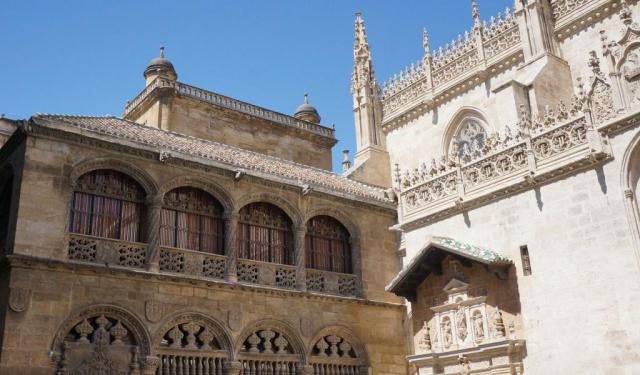
Over the course of centuries, Granada's architecture has been influenced by four major styles – Moorish, Renaissance, Gothic and Baroque. The city’s most impressive buildings date from the period of Arabic rule and the subsequent Catholic epoch which started after the Moors were displaced in 1492.
From the dazzling majesty of the Alhambra to the awe-inspiring churches and the subtly... view more
Tour Duration: 2 Hour(s)
Travel Distance: 3.5 Km or 2.2 Miles
From the dazzling majesty of the Alhambra to the awe-inspiring churches and the subtly... view more
Tour Duration: 2 Hour(s)
Travel Distance: 3.5 Km or 2.2 Miles
A Walk in Granada's Historical Old Town
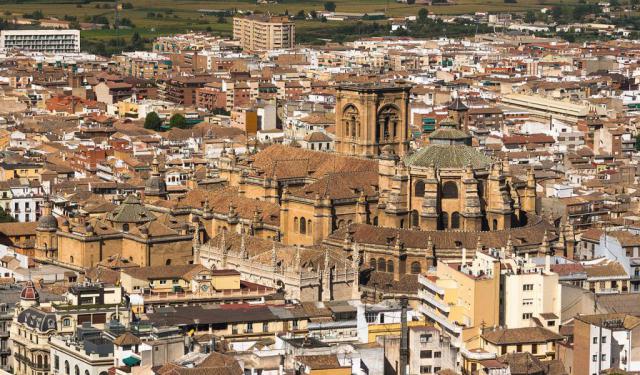
American writer Washington Irving arrived at the Alhambra in 1829-and stayed for nearly three months. He became so concerned about visitors scratching their names into the monument that he and Prince Dolgorouki provided a leather-bound visitors’ book as an alternative.
Granada lies at the foot of the Sierra Nevada mountain range, where the Darro and Genil rivers meet. Its history reaches back... view more
Tour Duration: 3 Hour(s)
Travel Distance: 3.5 Km or 2.2 Miles
Granada lies at the foot of the Sierra Nevada mountain range, where the Darro and Genil rivers meet. Its history reaches back... view more
Tour Duration: 3 Hour(s)
Travel Distance: 3.5 Km or 2.2 Miles
Alhambra Walking Tour
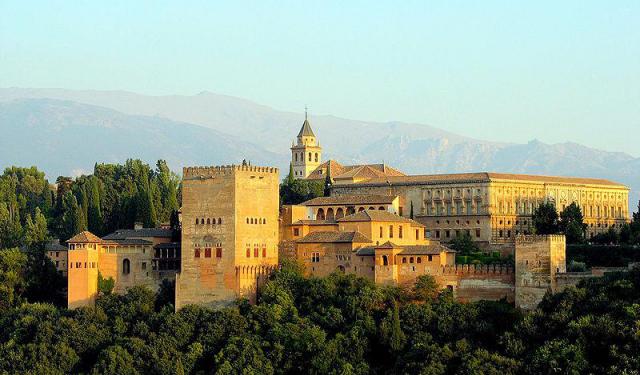
The Alhambra is Granada’s most famous monument and one of the finest surviving examples of medieval Islamic architecture in Europe. Its name comes from Arabic and is generally translated as “The Red One,” probably referring to the reddish walls of the fortress. The complex occupies Sabika Hill, overlooking Granada and the Albaicín.
The hill was fortified as early as the 9th century, but... view more
Tour Duration: 2 Hour(s)
Travel Distance: 2.0 Km or 1.2 Miles
The hill was fortified as early as the 9th century, but... view more
Tour Duration: 2 Hour(s)
Travel Distance: 2.0 Km or 1.2 Miles
Albayzín Walking Tour
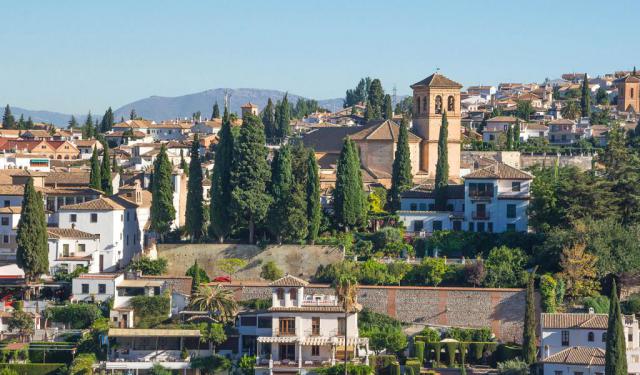
American writer Washington Irving’s book Tales of the Alhambra repeatedly features the Albayzín quarter. He was particularly struck by the district at night, when he heard “the tinkling of innumerable guitars, and the clicking of castanets” rising from its streets and gardens.
The Albayzín occupies the hill opposite the Alhambra, on the northern side of the Darro River. It is one of... view more
Tour Duration: 2 Hour(s)
Travel Distance: 2.3 Km or 1.4 Miles
The Albayzín occupies the hill opposite the Alhambra, on the northern side of the Darro River. It is one of... view more
Tour Duration: 2 Hour(s)
Travel Distance: 2.3 Km or 1.4 Miles