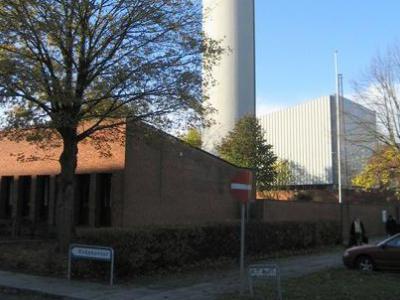


Langenæskirken (Langenæs Church), Aarhus
Langenæs Church (Langenæskirken) is a notable religious and community landmark located in the Langenæs neighborhood of Aarhus. As the sole church of Langenæs Parish, it is a key part of the Church of Denmark, operating under the Diocese of Aarhus. Serving around 6,000 parishioners, the church hosts regular activities including weekly sermons, weddings, baptisms, and burials.
The church is recognized as a "Green Church," a distinction given to churches in Denmark that commit to environmentally sustainable practices and initiatives to address climate change. This commitment aligns with the objectives set forth by the National Council of Churches in Denmark since 2011, emphasizing Langenæs Church's role in promoting ecological responsibility.
Langenæs Church was constructed to accommodate the rapid population growth in the area before World War II, which led to the planned division of the then Saint Lukas Parish. The onset of the war delayed these plans, and it wasn't until 1966 that the church was completed after sustained fundraising efforts that began in 1946. The design of the church was determined through an architectural competition won by Arne Gravers and Johan Richter, who are also known for their designs of the Århus Statsgymnasium and the Aarhus Concert Hall.
Architecturally, the church features a distinctive red brick and concrete construction. In 2013, it underwent significant restoration managed by Cubo Architects. During this restoration, visual artist Elle-Mie Ejdrup Hansen was commissioned to install new glasswork in the nave, earning her the Farveprisen (The Colour Prize) for her contributions. Langenæs Church thus stands not only as a place of worship but also as a beacon of community, historical significance, and environmental stewardship in Aarhus.
The church is recognized as a "Green Church," a distinction given to churches in Denmark that commit to environmentally sustainable practices and initiatives to address climate change. This commitment aligns with the objectives set forth by the National Council of Churches in Denmark since 2011, emphasizing Langenæs Church's role in promoting ecological responsibility.
Langenæs Church was constructed to accommodate the rapid population growth in the area before World War II, which led to the planned division of the then Saint Lukas Parish. The onset of the war delayed these plans, and it wasn't until 1966 that the church was completed after sustained fundraising efforts that began in 1946. The design of the church was determined through an architectural competition won by Arne Gravers and Johan Richter, who are also known for their designs of the Århus Statsgymnasium and the Aarhus Concert Hall.
Architecturally, the church features a distinctive red brick and concrete construction. In 2013, it underwent significant restoration managed by Cubo Architects. During this restoration, visual artist Elle-Mie Ejdrup Hansen was commissioned to install new glasswork in the nave, earning her the Farveprisen (The Colour Prize) for her contributions. Langenæs Church thus stands not only as a place of worship but also as a beacon of community, historical significance, and environmental stewardship in Aarhus.
Want to visit this sight? Check out these Self-Guided Walking Tours in Aarhus. Alternatively, you can download the mobile app "GPSmyCity: Walks in 1K+ Cities" from Apple App Store or Google Play Store. The app turns your mobile device to a personal tour guide and it works offline, so no data plan is needed when traveling abroad.
Download The GPSmyCity App



Langenæskirken (Langenæs Church) on Map
Sight Name: Langenæskirken (Langenæs Church)
Sight Location: Aarhus, Denmark (See walking tours in Aarhus)
Sight Type: Religious
Sight Location: Aarhus, Denmark (See walking tours in Aarhus)
Sight Type: Religious
Nearby Sights


Walking Tours in Aarhus, Denmark

Create Your Own Walk in Aarhus
Creating your own self-guided walk in Aarhus is easy and fun. Choose the city attractions that you want to see and a walk route map will be created just for you. You can even set your hotel as the start point of the walk.
A Walk Through Aarhus' Historic Center and Old Town
Aarhus is the second-largest city in Denmark. It is also one of the oldest cities in the country with roots that date to the 8th century when Vikings built a small settlement at the mouse of AArhus River encircled by an earthen rampart and a moat. Back then, Aarhus was called "Aros" which was the old Danish word for "river mouth".
During the Middle Ages, Aarhus was a... view more
Tour Duration: 2 Hours
Travel Distance: 3 Km or 1.9 Miles
During the Middle Ages, Aarhus was a... view more
Tour Duration: 2 Hours
Travel Distance: 3 Km or 1.9 Miles
Explore Aahus' Historical Architecture on Foot
Among other attractions, Aarhus, Denmark, boasts a variety of eye-catching historical buildings, a good number of which were designed by the famous Danish architect, Hack Kampmann.
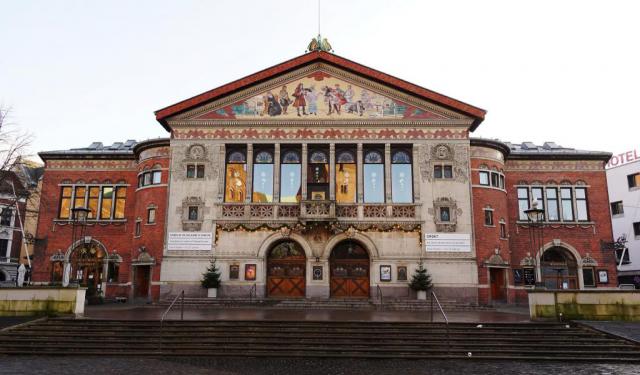
Among such landmarks is the Aarhus Custom House (Toldboden), standing as a testament to the city's maritime heritage. The Aarhus Theater, with its elegant facade, showcases the city's commitment to the... view more
Tour Duration: 2 Hours
Travel Distance: 2.9 Km or 1.8 Miles
Among such landmarks is the Aarhus Custom House (Toldboden), standing as a testament to the city's maritime heritage. The Aarhus Theater, with its elegant facade, showcases the city's commitment to the... view more
Tour Duration: 2 Hours
Travel Distance: 2.9 Km or 1.8 Miles
City Walks Overview
