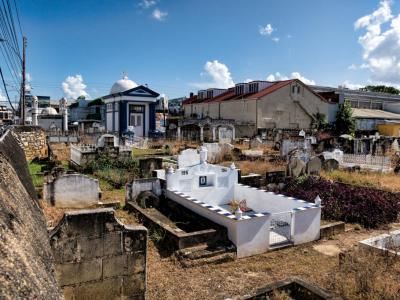


Lapeyrouse Cemetery, Port of Spain
Lapeyrouse Cemetery, located in the Woodbrook neighborhood of Port of Spain, is one of the city’s oldest and most storied burial grounds. Established in 1813, it offers a fascinating glimpse into the island’s history, culture, and diversity. Its name is thought to derive from Picot de la Perouse, a sugar estate owner whose land was later repurposed for the cemetery.
The cemetery’s roots stretch back to the Spanish occupation of Trinidad when an earlier burial ground, known as the "Old Cemetery," existed just east of the present site. The oldest recorded grave, dated 1745, belonged to Jean Creteau. By 1813, the "New Cemetery," as it was initially called, came into use, with sections dedicated to different religious denominations as early as 1823.
The striking arch at the main entrance, erected in 1869 on Philip Street, is a testament to the cemetery’s Victorian-era significance. Today, Lapeyrouse Cemetery is a mosaic of history, featuring Victorian crypts, modern graves, and ornate statues.
Gerald Besson, a prominent cultural historian, aptly described Lapeyrouse Cemetery as a reflection of Trinidad’s cosmopolitan population. Rows of graves bear Chinese inscriptions, while elaborate mausoleums house the French aristocracy. British influence is seen in stately monuments, and towering obelisks commemorate Freemasons from centuries past. This diversity underscores the unique cultural blend that defines Trinidad.
Lapeyrouse Cemetery is the final resting place for many notable figures, including Perry Gate, a Hero of Lake Erie during the American War of Independence. He died of malaria in 1819 while traveling to Trinidad and was honored with a hero’s funeral by Governor Sir Ralph Woodford. Another prominent figure interred here is Michel-Jean Cazabon, Trinidad’s celebrated 19th-century artist, who passed away in 1888.
To visitors used to pristine cemeteries, Lapeyrouse may seem chaotic with its worn headstones and weathered monuments. Yet, its "old-world" charm and timeless character make it a must-see for history enthusiasts, offering a glimpse into the lives and legacies that shaped Port of Spain and Trinidad.
The cemetery’s roots stretch back to the Spanish occupation of Trinidad when an earlier burial ground, known as the "Old Cemetery," existed just east of the present site. The oldest recorded grave, dated 1745, belonged to Jean Creteau. By 1813, the "New Cemetery," as it was initially called, came into use, with sections dedicated to different religious denominations as early as 1823.
The striking arch at the main entrance, erected in 1869 on Philip Street, is a testament to the cemetery’s Victorian-era significance. Today, Lapeyrouse Cemetery is a mosaic of history, featuring Victorian crypts, modern graves, and ornate statues.
Gerald Besson, a prominent cultural historian, aptly described Lapeyrouse Cemetery as a reflection of Trinidad’s cosmopolitan population. Rows of graves bear Chinese inscriptions, while elaborate mausoleums house the French aristocracy. British influence is seen in stately monuments, and towering obelisks commemorate Freemasons from centuries past. This diversity underscores the unique cultural blend that defines Trinidad.
Lapeyrouse Cemetery is the final resting place for many notable figures, including Perry Gate, a Hero of Lake Erie during the American War of Independence. He died of malaria in 1819 while traveling to Trinidad and was honored with a hero’s funeral by Governor Sir Ralph Woodford. Another prominent figure interred here is Michel-Jean Cazabon, Trinidad’s celebrated 19th-century artist, who passed away in 1888.
To visitors used to pristine cemeteries, Lapeyrouse may seem chaotic with its worn headstones and weathered monuments. Yet, its "old-world" charm and timeless character make it a must-see for history enthusiasts, offering a glimpse into the lives and legacies that shaped Port of Spain and Trinidad.
Want to visit this sight? Check out these Self-Guided Walking Tours in Port of Spain. Alternatively, you can download the mobile app "GPSmyCity: Walks in 1K+ Cities" from Apple App Store or Google Play Store. The app turns your mobile device to a personal tour guide and it works offline, so no data plan is needed when traveling abroad.
Download The GPSmyCity App



Lapeyrouse Cemetery on Map
Sight Name: Lapeyrouse Cemetery
Sight Location: Port of Spain, Trinidad and Tobago (See walking tours in Port of Spain)
Sight Type: Attraction/Landmark
Sight Location: Port of Spain, Trinidad and Tobago (See walking tours in Port of Spain)
Sight Type: Attraction/Landmark
Nearby Sights


Walking Tours in Port of Spain, Trinidad and Tobago

Create Your Own Walk in Port of Spain
Creating your own self-guided walk in Port of Spain is easy and fun. Choose the city attractions that you want to see and a walk route map will be created just for you. You can even set your hotel as the start point of the walk.
Discover Port of Spain's Historic Buildings on Foot
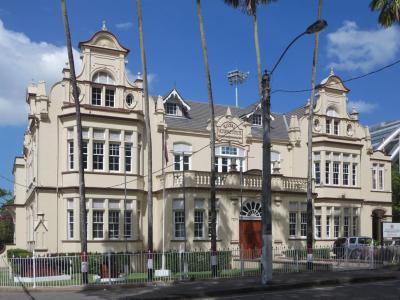
A group of mansions in northern Port of Spain, located on Maraval Road, to the west of the Queen's Park Savannah, is known colloquially as “The Magnificent Seven”. They were built between 1902 and 1910 on the land that was previously used as a government stock farm. Together with the nearby President's House, the official residence of the President of Trinidad and Tobago, which is... view more
Tour Duration: 1 Hour(s)
Travel Distance: 1.1 Km or 0.7 Miles
Tour Duration: 1 Hour(s)
Travel Distance: 1.1 Km or 0.7 Miles
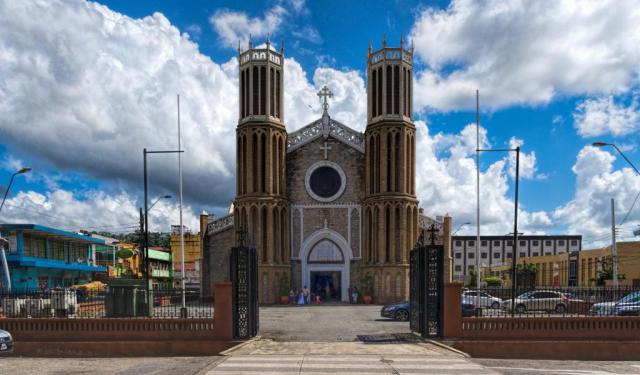
Port of Spain Downtown Walking Tour
Port of Spain was once the site of a fishing village of Amerindian people. It was called "Place of the silk cotton trees." By 1560, a Spanish garrison was stationed in the area. By 1757, the village had changed to the capital of the Port of Spain.
The last Spanish governor of Trinidad, Don Jose Chacon, opened the colony to French Catholic immigrants. The population grew and the town... view more
Tour Duration: 1 Hour(s)
Travel Distance: 1.7 Km or 1.1 Miles
The last Spanish governor of Trinidad, Don Jose Chacon, opened the colony to French Catholic immigrants. The population grew and the town... view more
Tour Duration: 1 Hour(s)
Travel Distance: 1.7 Km or 1.1 Miles