

Discover Port of Spain's Historic Buildings on Foot (Self Guided), Port of Spain
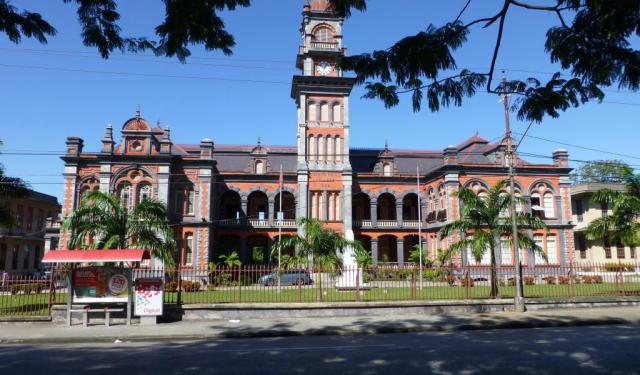
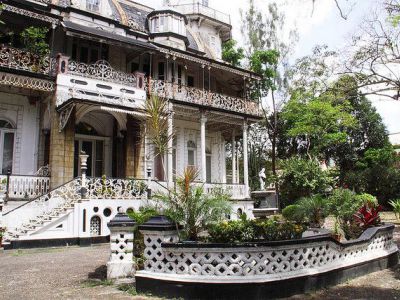
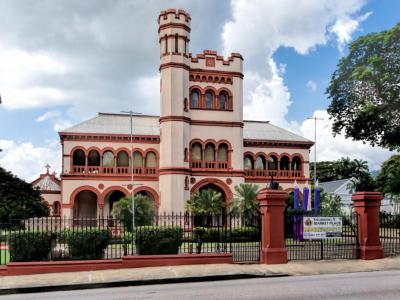
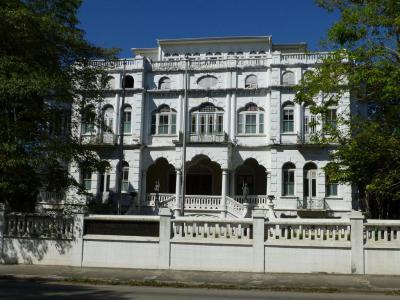
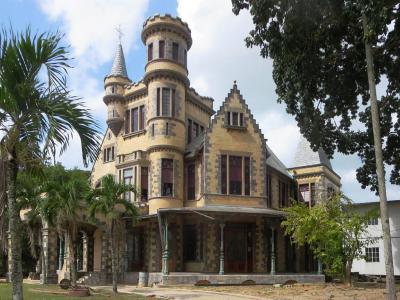
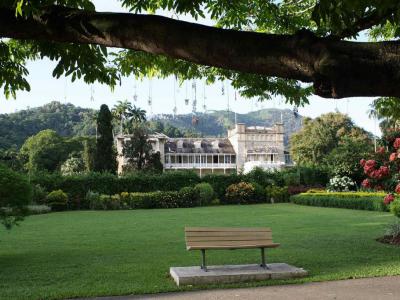
A group of mansions in northern Port of Spain, located on Maraval Road, to the west of the Queen's Park Savannah, is known colloquially as “The Magnificent Seven”. They were built between 1902 and 1910 on the land that was previously used as a government stock farm. Together with the nearby President's House, the official residence of the President of Trinidad and Tobago, which is just “round the corner”, next to the Royal Botanic Gardens, these buildings are listed as heritage sites by the country's National Trust.
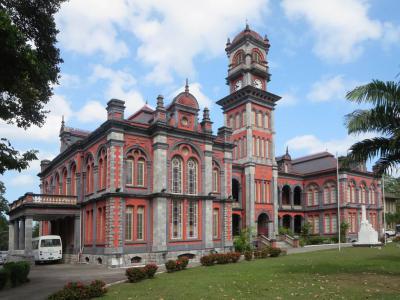
These structures feature an array of architectural styles, such as French Colonial, Scottish Baronial, Indian Empire, and Moorish Mediterranean-often blended with Caribbean architecture. Many of them have unusual elements, like the chiming clock and lighted clock tower of Queen's Royal College, and the Scottish cast iron elements coupled with traditional Demerara windows in Hayes Court.
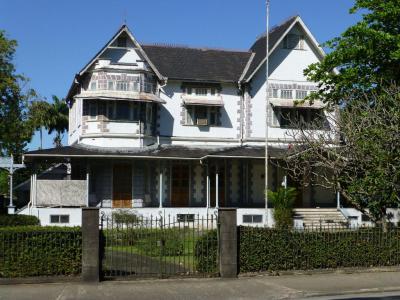
Some of the houses are made of imported materials, like Italian marble and white limestone of Barbados, and most of them have retained the aesthetics of their original designs. Stollmeyer's Castle, the first building in the neighborhood, is said to be modeled after a wing of Balmoral Castle, a residence of the British royal family in Aberdeenshire, Scotland.
The majority of these properties were originally built as residences and kept within families for decades. Archbishop's House was built as, and still remains, the official home of the Archbishop of Port of Spain, while the Anglican Bishop to Trinidad lives in Hayes Court. Queen's Royal College was built as a secondary school for boys.
White Hall, in its turn, was used as the Office of the Prime Minister, from 1963 to 2009, and together with Stollmeyer's Castle, it falls under the purview of the PM's Office. Both buildings underwent profound restoration so they could be used by foreign dignitaries visiting the country.
As for the President's House, today, apart from being the President's private residence, it is used for national awards and swearing-in ceremonies, as well as for diplomatic receptions.
For a more detailed acquaintance with these marvelous structures, take our self-guided walking tour.
These structures feature an array of architectural styles, such as French Colonial, Scottish Baronial, Indian Empire, and Moorish Mediterranean-often blended with Caribbean architecture. Many of them have unusual elements, like the chiming clock and lighted clock tower of Queen's Royal College, and the Scottish cast iron elements coupled with traditional Demerara windows in Hayes Court.
Some of the houses are made of imported materials, like Italian marble and white limestone of Barbados, and most of them have retained the aesthetics of their original designs. Stollmeyer's Castle, the first building in the neighborhood, is said to be modeled after a wing of Balmoral Castle, a residence of the British royal family in Aberdeenshire, Scotland.
The majority of these properties were originally built as residences and kept within families for decades. Archbishop's House was built as, and still remains, the official home of the Archbishop of Port of Spain, while the Anglican Bishop to Trinidad lives in Hayes Court. Queen's Royal College was built as a secondary school for boys.
White Hall, in its turn, was used as the Office of the Prime Minister, from 1963 to 2009, and together with Stollmeyer's Castle, it falls under the purview of the PM's Office. Both buildings underwent profound restoration so they could be used by foreign dignitaries visiting the country.
As for the President's House, today, apart from being the President's private residence, it is used for national awards and swearing-in ceremonies, as well as for diplomatic receptions.
For a more detailed acquaintance with these marvelous structures, take our self-guided walking tour.
How it works: Download the app "GPSmyCity: Walks in 1K+ Cities" from Apple App Store or Google Play Store to your mobile phone or tablet. The app turns your mobile device into a personal tour guide and its built-in GPS navigation functions guide you from one tour stop to next. The app works offline, so no data plan is needed when traveling abroad.
Download The GPSmyCity App



Discover Port of Spain's Historic Buildings on Foot Map
Guide Name: Discover Port of Spain's Historic Buildings on Foot
Guide Location: Trinidad and Tobago » Port of Spain (See other walking tours in Port of Spain)
Guide Type: Self-guided Walking Tour (Sightseeing)
Tour Duration: 1 Hour
Travel Distance: 1.1 Km or 0.7 Miles
Tour Best Suited For: In-depth exploration
Guide Location: Trinidad and Tobago » Port of Spain (See other walking tours in Port of Spain)
Guide Type: Self-guided Walking Tour (Sightseeing)
Tour Duration: 1 Hour
Travel Distance: 1.1 Km or 0.7 Miles
Tour Best Suited For: In-depth exploration
Sights Featured in This Walk
Walking Tours in Port of Spain, Trinidad and Tobago

Create Your Own Walk in Port of Spain
Creating your own self-guided walk in Port of Spain is easy and fun. Choose the city attractions that you want to see and a walk route map will be created just for you. You can even set your hotel as the start point of the walk.
Port of Spain Downtown Walking Tour
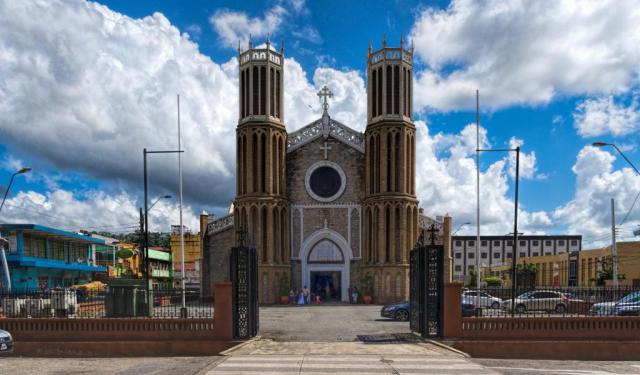
Port of Spain was once the site of a fishing village of Amerindian people. It was called "Place of the silk cotton trees." By 1560, a Spanish garrison was stationed in the area. By 1757, the village had changed to the capital of the Port of Spain.
The last Spanish governor of Trinidad, Don Jose Chacon, opened the colony to French Catholic immigrants. The population grew and the town... view more
Tour Duration: 1 Hour
Travel Distance: 1.7 Km or 1.1 Miles
The last Spanish governor of Trinidad, Don Jose Chacon, opened the colony to French Catholic immigrants. The population grew and the town... view more
Tour Duration: 1 Hour
Travel Distance: 1.7 Km or 1.1 Miles
City Walks Overview
