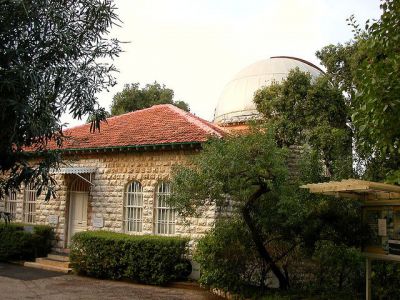


Lee Observatory, Beirut
The Lee Observatory, situated on the campus of the American University of Beirut in Lebanon, holds a distinguished place in the history of astronomy in the Middle East. Established in 1873, it is celebrated as the region's first modern astronomical observatory. The observatory was founded through the support of Henry Lee, a wealthy British merchant from Manchester, whose generous contributions were instrumental in its construction.
The observatory was initially led by Doctor Cornelius Van Dyck, an avid amateur astronomer who personally acquired much of the initial equipment. Under his guidance, the Lee Observatory not only served as a center for astronomical observations but also functioned as a meteorological station, playing a critical role in weather forecasting for the Middle East.
Throughout its history, the observatory has been managed by various directors and assistants who have contributed significantly to its development. Among them were Professors Mansour Jurdak and Owen Gingerich, who were pivotal in organizing public engagement events such as the "Open Nights Observatory," which helped to popularize astronomy. They also made valuable additions to the observatory's library.
A notable contributor, Saad Sami Haddad, enhanced the observatory’s role in scientific research through his meticulous documentation of sunspots, which were regularly reported to the International Sunspot Research Center in Zurich. His work included the creation of a detailed sky map documenting stars up to the 5th magnitude and conducting statistical analyses on sunspot activities, revealing important asymmetries in their occurrences.
Today, the Lee Observatory continues to serve primarily an academic role, focusing on education and research in the field of astronomy, maintaining its status as a beacon of scientific inquiry in the Middle East.
The observatory was initially led by Doctor Cornelius Van Dyck, an avid amateur astronomer who personally acquired much of the initial equipment. Under his guidance, the Lee Observatory not only served as a center for astronomical observations but also functioned as a meteorological station, playing a critical role in weather forecasting for the Middle East.
Throughout its history, the observatory has been managed by various directors and assistants who have contributed significantly to its development. Among them were Professors Mansour Jurdak and Owen Gingerich, who were pivotal in organizing public engagement events such as the "Open Nights Observatory," which helped to popularize astronomy. They also made valuable additions to the observatory's library.
A notable contributor, Saad Sami Haddad, enhanced the observatory’s role in scientific research through his meticulous documentation of sunspots, which were regularly reported to the International Sunspot Research Center in Zurich. His work included the creation of a detailed sky map documenting stars up to the 5th magnitude and conducting statistical analyses on sunspot activities, revealing important asymmetries in their occurrences.
Today, the Lee Observatory continues to serve primarily an academic role, focusing on education and research in the field of astronomy, maintaining its status as a beacon of scientific inquiry in the Middle East.
Want to visit this sight? Check out these Self-Guided Walking Tours in Beirut. Alternatively, you can download the mobile app "GPSmyCity: Walks in 1K+ Cities" from Apple App Store or Google Play Store. The app turns your mobile device to a personal tour guide and it works offline, so no data plan is needed when traveling abroad.
Download The GPSmyCity App



Lee Observatory on Map
Sight Name: Lee Observatory
Sight Location: Beirut, Lebanon (See walking tours in Beirut)
Sight Type: Attraction/Landmark
Sight Location: Beirut, Lebanon (See walking tours in Beirut)
Sight Type: Attraction/Landmark
Nearby Sights
Walking Tours in Beirut, Lebanon

Create Your Own Walk in Beirut
Creating your own self-guided walk in Beirut is easy and fun. Choose the city attractions that you want to see and a walk route map will be created just for you. You can even set your hotel as the start point of the walk.

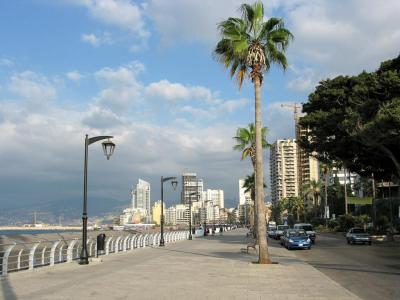
Seaside Walking Tour
If you wish to unwind or, perhaps, seek some quality time with your family and friends in a completely safe environment, while in Beirut, the local seaside area offers ample opportunities for both. Lined with palm trees, the city's waterfront guarantees a truly joyful experience and is as much fun for watching the Mediterranean, beautiful people and breathing the air as it is for exploring... view more
Tour Duration: 2 Hours
Travel Distance: 3.2 Km or 2 Miles
Tour Duration: 2 Hours
Travel Distance: 3.2 Km or 2 Miles

Beirut Downtown Walking Tour
How many times can a city die? Beirut, in 5,000 years, has died and come back many times. Archeological digs downtown have revealed Phoenician, Greek, Roman, Byzantine, Arab, Crusader and Ottoman remains and signs of influence.
In 140 BC the city was destroyed by Diodotus Tryphon, a king of the Seleucid Empire. His Hellenistic city lies over the Phoenician one. Pompey the Great arrived in 64 BC... view more
Tour Duration: 2 Hours
Travel Distance: 3.3 Km or 2.1 Miles
In 140 BC the city was destroyed by Diodotus Tryphon, a king of the Seleucid Empire. His Hellenistic city lies over the Phoenician one. Pompey the Great arrived in 64 BC... view more
Tour Duration: 2 Hours
Travel Distance: 3.3 Km or 2.1 Miles