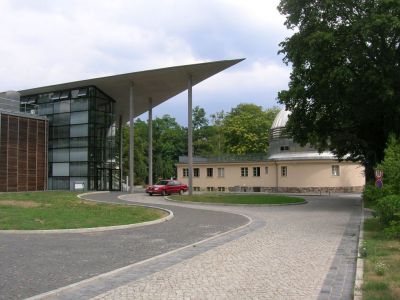


Leibniz Institute for Astrophysics, Potsdam
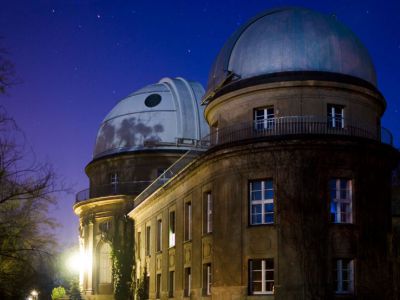
The Leibniz Institute for Astrophysics Potsdam (AIP) is a German research institute specializing in astrophysics. It serves as the successor to the Berlin Observatory, founded in 1700, and the Astrophysical Observatory Potsdam (AOP), established in 1874. Notably, the AOP was the first observatory in the world to focus specifically on astrophysical research. The AIP was established in 1992 following the reunification of Germany as part of a restructuring effort. Additionally, the AIP manages the Einstein Tower solar observatory and the historic great refractor telescope situated on the Telegrafenberg in Potsdam.
The AIP conducts research in diverse astrophysical areas, including cosmic magnetic fields, solar and stellar physics, stellar and galactic evolution, extragalactic astrophysics, and cosmology. Renowned for its expertise in spectroscopy and robotic telescope technologies, the institute collaborates on major international projects like the Large Binocular Telescope in Arizona and contributes to instrumentation for large telescopes, such as the ESO's Very Large Telescope. The AIP also participates in e-science projects, enhancing digital and computational tools for astronomy.
The Berlin Observatory gained international fame in 1846 when Johann Galle discovered Neptune. Notable achievements include Eugen Goldstein's discovery of canal rays in 1886 and Karl Küstner's observation of Earth's pole altitude variation in 1888. Under Wilhelm Foerster's leadership, the observatory affiliated with the University of Berlin and helped establish astronomical observatories in Potsdam, including the AOP in 1874, with the Berlin Observatory moving to Babelsberg in 1913.
Today, the AIP continues this legacy of astronomical excellence, contributing significantly to the global understanding of the universe through its research, technology development, and international collaborations.
The AIP conducts research in diverse astrophysical areas, including cosmic magnetic fields, solar and stellar physics, stellar and galactic evolution, extragalactic astrophysics, and cosmology. Renowned for its expertise in spectroscopy and robotic telescope technologies, the institute collaborates on major international projects like the Large Binocular Telescope in Arizona and contributes to instrumentation for large telescopes, such as the ESO's Very Large Telescope. The AIP also participates in e-science projects, enhancing digital and computational tools for astronomy.
The Berlin Observatory gained international fame in 1846 when Johann Galle discovered Neptune. Notable achievements include Eugen Goldstein's discovery of canal rays in 1886 and Karl Küstner's observation of Earth's pole altitude variation in 1888. Under Wilhelm Foerster's leadership, the observatory affiliated with the University of Berlin and helped establish astronomical observatories in Potsdam, including the AOP in 1874, with the Berlin Observatory moving to Babelsberg in 1913.
Today, the AIP continues this legacy of astronomical excellence, contributing significantly to the global understanding of the universe through its research, technology development, and international collaborations.
Want to visit this sight? Check out these Self-Guided Walking Tours in Potsdam. Alternatively, you can download the mobile app "GPSmyCity: Walks in 1K+ Cities" from Apple App Store or Google Play Store. The app turns your mobile device to a personal tour guide and it works offline, so no data plan is needed when traveling abroad.
Download The GPSmyCity App



Leibniz Institute for Astrophysics on Map
Sight Name: Leibniz Institute for Astrophysics
Sight Location: Potsdam, Germany (See walking tours in Potsdam)
Sight Type: Attraction/Landmark
Sight Location: Potsdam, Germany (See walking tours in Potsdam)
Sight Type: Attraction/Landmark
Nearby Sights
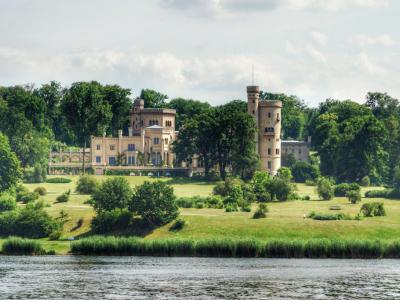
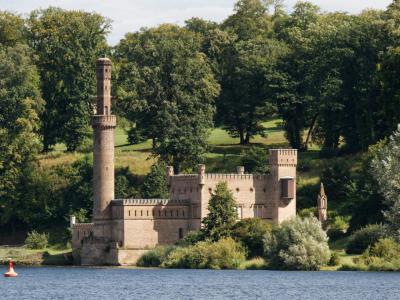
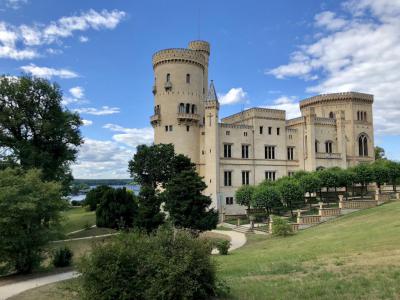
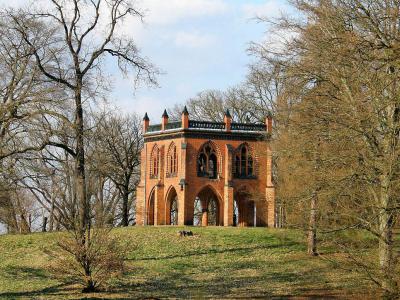
Walking Tours in Potsdam, Germany

Create Your Own Walk in Potsdam
Creating your own self-guided walk in Potsdam is easy and fun. Choose the city attractions that you want to see and a walk route map will be created just for you. You can even set your hotel as the start point of the walk.
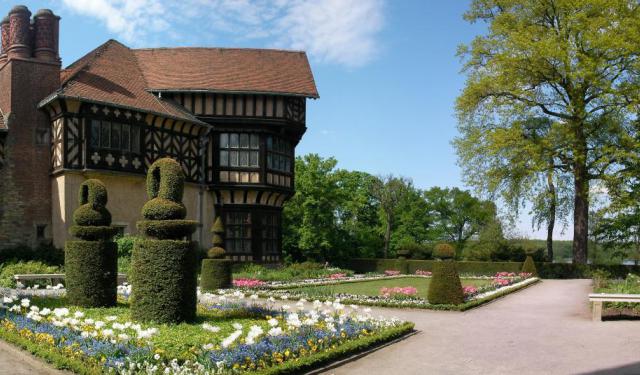
Neuer Garten Walking Tour
Laid out at the behest of Friedrich William II in 1787, Potsdam's Neuer Garten (New Garden) was indeed "new" compared to the already in place Sanssouci Park.
Between 1816 and 1828, the area was modified further as an English-style, open landscape garden, with an aim to reproduce nature - trees and plants were left to grow naturally, unshaped and untrimmed. Rural life was also... view more
Tour Duration: 2 Hours
Travel Distance: 2.8 Km or 1.7 Miles
Between 1816 and 1828, the area was modified further as an English-style, open landscape garden, with an aim to reproduce nature - trees and plants were left to grow naturally, unshaped and untrimmed. Rural life was also... view more
Tour Duration: 2 Hours
Travel Distance: 2.8 Km or 1.7 Miles
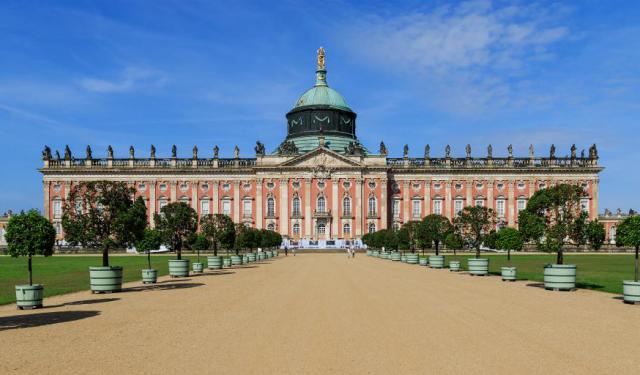
Sanssouci Park Walking Tour
Sanssouci Park is a unique Potsdam landmark that occupies 290 hectares in the heart of the city. The Park is named after the Sanssouci Palace that it surrounds, which in turn takes its name from the French phrase "sans souci", which means carefree, and implies that the palace was designated as a place of fun, rather than a seat of power.
Indeed, the Sanssouci Palace was built in 1747... view more
Tour Duration: 2 Hours
Travel Distance: 3.9 Km or 2.4 Miles
Indeed, the Sanssouci Palace was built in 1747... view more
Tour Duration: 2 Hours
Travel Distance: 3.9 Km or 2.4 Miles

Potsdam City Center and Sanssouci Palace Walking Tour
Potsdam was likely founded during the seventh century by the Hevelli tribe. The town was mentioned by the name of Poztupimi in a document from Emperor Otto III. The name likely came from an old Western Slavonic term roughly meaning "beneath the oaks."
By the early 1300s, a small town had formed with a town charter. By 1573 the town had around 2,000 people living there. Potsdam rose to... view more
Tour Duration: 2 Hours
Travel Distance: 3.8 Km or 2.4 Miles
By the early 1300s, a small town had formed with a town charter. By 1573 the town had around 2,000 people living there. Potsdam rose to... view more
Tour Duration: 2 Hours
Travel Distance: 3.8 Km or 2.4 Miles
City Walks Overview
