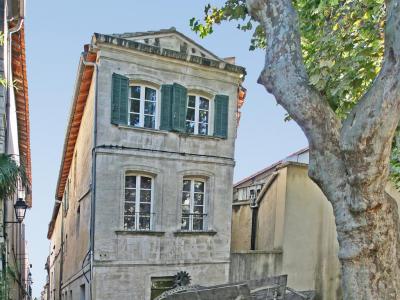


Maison de Jean-Henri Fabre (House of Jean-Henri Fabre), Avignon
The House of Jean-Henri Fabre in Avignon serves as a tribute to the life and work of the renowned scientist, naturalist, and entomologist Jean-Henri Fabre. Born on December 21, 1823, in Saint Léons Lévézou (Aveyron), Fabre moved to Avignon in 1853, where he established his most famous residence. This one-story home, notable for its large wheel at the front, is a recognizable landmark on Dyers Street (Rue des Teinturiers).
The house, meticulously restored to reflect the rustic spirit of the Fabre family's late 19th-century life, features a study wing built by Fabre himself, providing a secluded space for his work away from the household areas. Upon entering through the entrance hall, visitors are greeted with period furniture and restored floors and walls that offer a glimpse into Fabre's daily life.
Inside, every detail-from the "butterfly floor" to the floral tapestries-echoes the era in which Fabre lived. The home retains all of its original furnishings, including the dining table, a glass-fronted bookcase, a games table, and a harmonium Fabre used to compose music for his poems. The house showcases more than a hundred of Fabre's watercolors, along with over 13,000 herbarium plates, of which more than 12,000 have been carefully restored. These plates are vital records of the region's floristic history.
The former kitchen now serves as a gallery showcasing key moments of Fabre's life, including portraits, awards, and letters highlighting his connections with figures like Charles Darwin and Louis Pasteur. It also features a graphic novel about Fabre's life created for the exhibit. The research room, resembling a small natural history museum, displays Fabre's research tools and a collection of 1,300 objects and specimens. This is where he wrote much of his renowned Entomological memories (Souvenirs entomologiques).
The "cinema" room showcases Fabre's contributions to science, literature, and film, featuring Henri Diamant-Berger's 1951 film Monsieur Fabre with Pierre Fresnay, interviews with current researchers, and a continuous screening of Fabre and his son Paul-Henri's 1912 educational short, Evolution of the cicada (Évolution de la cigale).
This house not only honors Fabre's scientific contributions but also celebrates his passion for art and education, offering a comprehensive look into the life of a man whose work bridged the gap between science and the broader public.
The house, meticulously restored to reflect the rustic spirit of the Fabre family's late 19th-century life, features a study wing built by Fabre himself, providing a secluded space for his work away from the household areas. Upon entering through the entrance hall, visitors are greeted with period furniture and restored floors and walls that offer a glimpse into Fabre's daily life.
Inside, every detail-from the "butterfly floor" to the floral tapestries-echoes the era in which Fabre lived. The home retains all of its original furnishings, including the dining table, a glass-fronted bookcase, a games table, and a harmonium Fabre used to compose music for his poems. The house showcases more than a hundred of Fabre's watercolors, along with over 13,000 herbarium plates, of which more than 12,000 have been carefully restored. These plates are vital records of the region's floristic history.
The former kitchen now serves as a gallery showcasing key moments of Fabre's life, including portraits, awards, and letters highlighting his connections with figures like Charles Darwin and Louis Pasteur. It also features a graphic novel about Fabre's life created for the exhibit. The research room, resembling a small natural history museum, displays Fabre's research tools and a collection of 1,300 objects and specimens. This is where he wrote much of his renowned Entomological memories (Souvenirs entomologiques).
The "cinema" room showcases Fabre's contributions to science, literature, and film, featuring Henri Diamant-Berger's 1951 film Monsieur Fabre with Pierre Fresnay, interviews with current researchers, and a continuous screening of Fabre and his son Paul-Henri's 1912 educational short, Evolution of the cicada (Évolution de la cigale).
This house not only honors Fabre's scientific contributions but also celebrates his passion for art and education, offering a comprehensive look into the life of a man whose work bridged the gap between science and the broader public.
Want to visit this sight? Check out these Self-Guided Walking Tours in Avignon. Alternatively, you can download the mobile app "GPSmyCity: Walks in 1K+ Cities" from Apple App Store or Google Play Store. The app turns your mobile device to a personal tour guide and it works offline, so no data plan is needed when traveling abroad.
Download The GPSmyCity App



Maison de Jean-Henri Fabre (House of Jean-Henri Fabre) on Map
Sight Name: Maison de Jean-Henri Fabre (House of Jean-Henri Fabre)
Sight Location: Avignon, France (See walking tours in Avignon)
Sight Type: Attraction/Landmark
Sight Location: Avignon, France (See walking tours in Avignon)
Sight Type: Attraction/Landmark
Nearby Sights
Walking Tours in Avignon, France

Create Your Own Walk in Avignon
Creating your own self-guided walk in Avignon is easy and fun. Choose the city attractions that you want to see and a walk route map will be created just for you. You can even set your hotel as the start point of the walk.
A Walk Through Avignon's Medeval Old Town
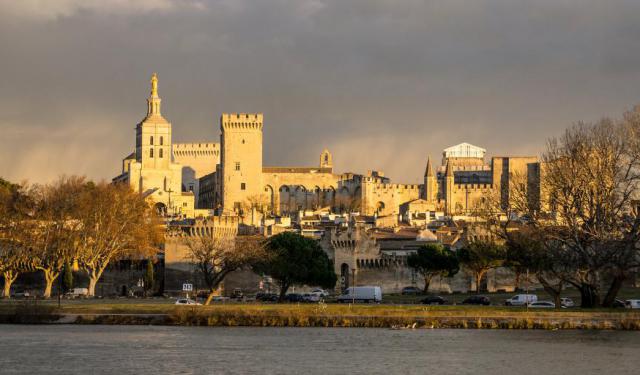
The thing about a wall around a city is to keep unwanted visitors out. But the massive walls encircling Avignon tend to keep visitors in. And the visitors don't mind it. Is this a mystery? Not when one considers what is inside the walls of Avignon. And forget driving. Park the car and walk.
First encounter is the Popes' Palace. This awesome mountain of a palace was built in the 1300s.... view more
Tour Duration: 2 Hours
Travel Distance: 3 Km or 1.9 Miles
First encounter is the Popes' Palace. This awesome mountain of a palace was built in the 1300s.... view more
Tour Duration: 2 Hours
Travel Distance: 3 Km or 1.9 Miles
Discover Avignon's Architectural Jewels on Foot
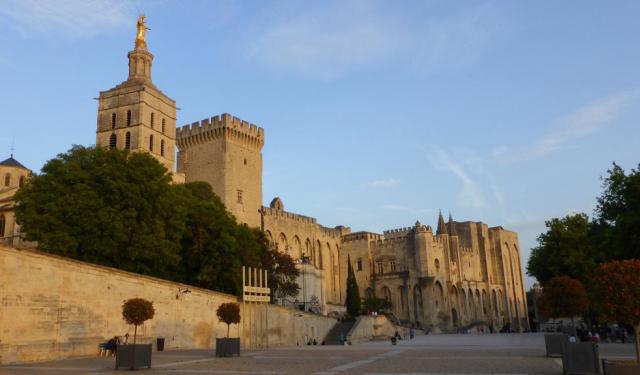
Centuries of history in Avignon are well seen in the stones of some of France’s best preserved architectural monuments. The city's architecture may well not be as diverse as elsewhere in the country, but it is really difficult to find another place whose history is just as complicated and dynamic as Avignon's.
Being one of only two cities on earth that can claim to be the... view more
Tour Duration: 1 Hour
Travel Distance: 2.4 Km or 1.5 Miles
Being one of only two cities on earth that can claim to be the... view more
Tour Duration: 1 Hour
Travel Distance: 2.4 Km or 1.5 Miles