


Mineralogical Museum, Bishkek
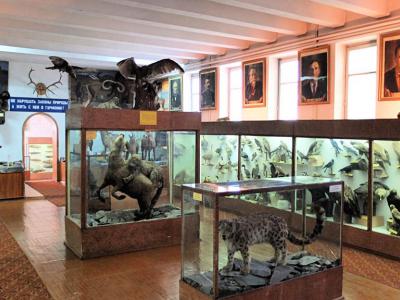
The Mineralogical Museum in Bishkek, located on the second floor of the Bishkek Mining Institute on Chui Avenue, serves as a hub for geological and paleontological exploration. Operated by the State Agency on Geology and Mineral Resources of the Kyrgyz Republic, the museum is a visual repository promoting geological education, attracting school students, university learners, teachers, and curious visitors alike.
Founded in 1954 to support the Mining Institute, the museum consists of a single hall divided into four thematic sections: chronicles Kyrgyzstan's geological surveys since 1938, honoring notable geologists and prospectors who discovered valuable mineral deposits; displays around 1,000 mineral samples, including iron, copper, and precious metals from key sites like Kumtor and Jerooy; 1,650 rock specimens, decorative stones, and volcanic formations, along with souvenirs crafted from local minerals; non-metallic minerals, building materials, and a paleontological collection of 4,000 fossils from the Kyrgyz Tien Shan.
Of particular interest are rare finds like local stalactites, semi-precious stones, and unique gypsum crystals up to 60 cm tall. The museum also boasts significant paleontological contributions, including part of a petrified tree trunk and a detail of a baby mammoth skeleton gifted by Yakut geologists in 1999. Moscow paleontologists added dinosaur remains discovered in Kyrgyzstan the following year, further enhancing the museum's prehistoric collection.
Admission to the museum is free, but no formal guided tours are offered. Visitors can explore independently or seek insights from students and faculty of the institute. With its ever-growing collection fueled by contributions from geological expeditions, the Mineralogical Museum continues to provide a window into the rich natural history and geology of Kyrgyzstan.
Founded in 1954 to support the Mining Institute, the museum consists of a single hall divided into four thematic sections: chronicles Kyrgyzstan's geological surveys since 1938, honoring notable geologists and prospectors who discovered valuable mineral deposits; displays around 1,000 mineral samples, including iron, copper, and precious metals from key sites like Kumtor and Jerooy; 1,650 rock specimens, decorative stones, and volcanic formations, along with souvenirs crafted from local minerals; non-metallic minerals, building materials, and a paleontological collection of 4,000 fossils from the Kyrgyz Tien Shan.
Of particular interest are rare finds like local stalactites, semi-precious stones, and unique gypsum crystals up to 60 cm tall. The museum also boasts significant paleontological contributions, including part of a petrified tree trunk and a detail of a baby mammoth skeleton gifted by Yakut geologists in 1999. Moscow paleontologists added dinosaur remains discovered in Kyrgyzstan the following year, further enhancing the museum's prehistoric collection.
Admission to the museum is free, but no formal guided tours are offered. Visitors can explore independently or seek insights from students and faculty of the institute. With its ever-growing collection fueled by contributions from geological expeditions, the Mineralogical Museum continues to provide a window into the rich natural history and geology of Kyrgyzstan.
Want to visit this sight? Check out these Self-Guided Walking Tours in Bishkek. Alternatively, you can download the mobile app "GPSmyCity: Walks in 1K+ Cities" from Apple App Store or Google Play Store. The app turns your mobile device to a personal tour guide and it works offline, so no data plan is needed when traveling abroad.
Download The GPSmyCity App



Mineralogical Museum on Map
Sight Name: Mineralogical Museum
Sight Location: Bishkek, Kyrgyzstan (See walking tours in Bishkek)
Sight Type: Museum/Gallery
Sight Location: Bishkek, Kyrgyzstan (See walking tours in Bishkek)
Sight Type: Museum/Gallery
Nearby Sights

Walking Tours in Bishkek, Kyrgyzstan

Create Your Own Walk in Bishkek
Creating your own self-guided walk in Bishkek is easy and fun. Choose the city attractions that you want to see and a walk route map will be created just for you. You can even set your hotel as the start point of the walk.
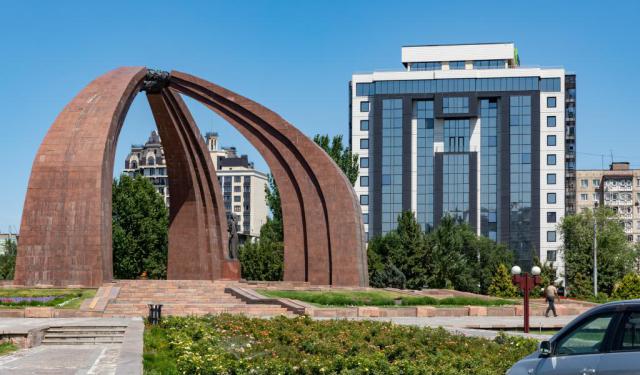
A Walk Through Bishkek's Lively Downtown
The capital city of Kyrgyzstan, Bishkek, is set against the picturesque backdrop of the snow-capped Tian Shan mountains at an altitude of 800 meters above sea level.
Compared to other major cities in Central Asia, Bishkek has a relatively short history. It was founded in 1825, as the Pishpek fortress, during the Russian colonization of the region. The fortress served as an administrative... view more
Tour Duration: 2 Hours
Travel Distance: 3.7 Km or 2.3 Miles
Compared to other major cities in Central Asia, Bishkek has a relatively short history. It was founded in 1825, as the Pishpek fortress, during the Russian colonization of the region. The fortress served as an administrative... view more
Tour Duration: 2 Hours
Travel Distance: 3.7 Km or 2.3 Miles
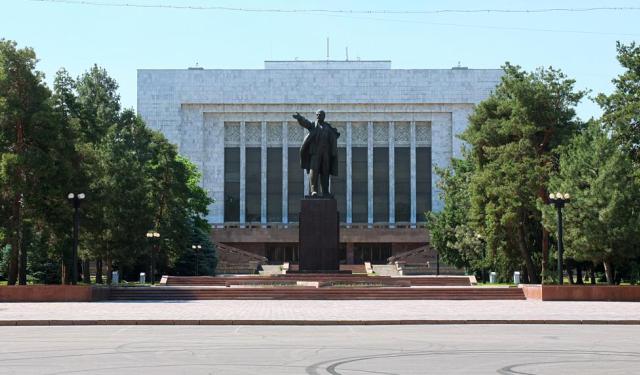
Bishkek's Soviet Era Architecture and Monuments Tour
While nomadic communities of yurt-living, horse-riding sheep herders are still thriving in the most remote valleys of Kyrgyzstan, the capital city of Bishkek shows a different facet of this Central Asian nation.
Built practically from scratch during the Soviet era, Bishkek experienced significant transformation in terms of urban planning and is packed to the rim with a well-preserved... view more
Tour Duration: 2 Hours
Travel Distance: 3.6 Km or 2.2 Miles
Built practically from scratch during the Soviet era, Bishkek experienced significant transformation in terms of urban planning and is packed to the rim with a well-preserved... view more
Tour Duration: 2 Hours
Travel Distance: 3.6 Km or 2.2 Miles