

Monastery of St. Nicholas Arena, Catania (must see)
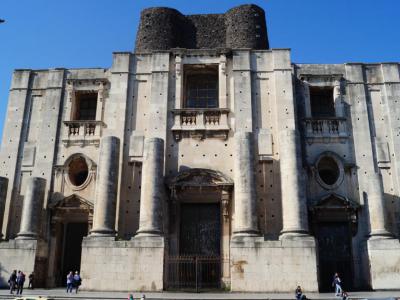
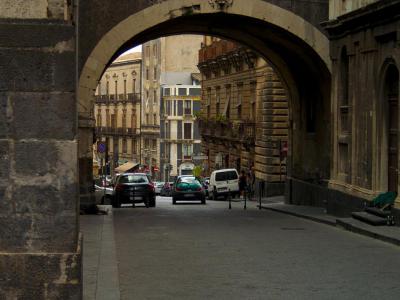
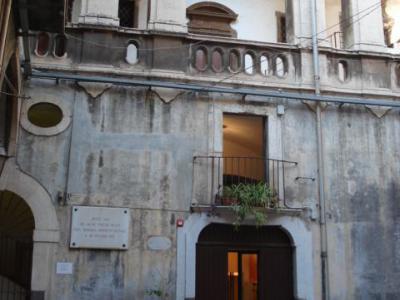
The Monastery of Saint Nicholas Arena is one of the largest Benedictine monasteries in Europe. Founded in 1558, it was established by Benedictine monks whose wealth and noble origins earned the monastery the reputation of being a true “palace for monks”. The name “Arena” does not refer to a Roman amphitheater, but to the red volcanic sand characteristic of the area on the slopes of Mount Etna where the order first settled before moving into the city.
The monastery’s survival through natural disaster is central to its story. During the 1669 eruption of Mount Etna, lava flows reached the complex but did not destroy it; the monks constructed a massive stone bulwark that successfully diverted the lava. The eruption instead raised the ground level around the monastery and reshaped the surrounding landscape. It was the catastrophic earthquake of 1693, not the lava, that flattened much of the structure. Reconstruction began in 1702, with the new monastery built directly over what remained of the earlier complex.
Much of the monastery’s distinctive late-Baroque character, especially the ornate window frames and exuberant southern façade, was shaped by Antonino Amato and Francesco Battaglia. The complex expanded with new cloisters, including the rebuilt Marble Cloister and the newly added Eastern Cloister, complemented by long corridors, staircases, and even a hanging garden. Subterranean spaces preserve visible traces of the 1669 lava flow pressed directly against the monastery walls.
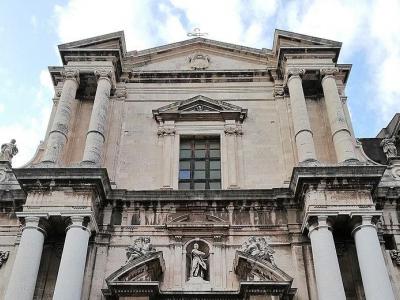
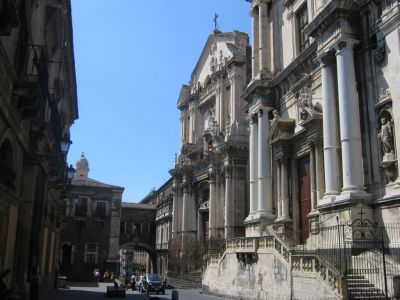
Beside the monastery stands the vast Church of San Nicolò l’Arena, the largest church in Sicily, whose unfinished façade and columns reflect financial strain and political upheaval during the 19th century. Today, as part of the University of Catania and a UNESCO World Heritage Site, the monastery stands as a world-class example of adaptive reuse.
The monastery’s survival through natural disaster is central to its story. During the 1669 eruption of Mount Etna, lava flows reached the complex but did not destroy it; the monks constructed a massive stone bulwark that successfully diverted the lava. The eruption instead raised the ground level around the monastery and reshaped the surrounding landscape. It was the catastrophic earthquake of 1693, not the lava, that flattened much of the structure. Reconstruction began in 1702, with the new monastery built directly over what remained of the earlier complex.
Much of the monastery’s distinctive late-Baroque character, especially the ornate window frames and exuberant southern façade, was shaped by Antonino Amato and Francesco Battaglia. The complex expanded with new cloisters, including the rebuilt Marble Cloister and the newly added Eastern Cloister, complemented by long corridors, staircases, and even a hanging garden. Subterranean spaces preserve visible traces of the 1669 lava flow pressed directly against the monastery walls.
Beside the monastery stands the vast Church of San Nicolò l’Arena, the largest church in Sicily, whose unfinished façade and columns reflect financial strain and political upheaval during the 19th century. Today, as part of the University of Catania and a UNESCO World Heritage Site, the monastery stands as a world-class example of adaptive reuse.
Want to visit this sight? Check out these Self-Guided Walking Tours in Catania. Alternatively, you can download the mobile app "GPSmyCity: Walks in 1K+ Cities" from Apple App Store or Google Play Store. The app turns your mobile device to a personal tour guide and it works offline, so no data plan is needed when traveling abroad.
Download The GPSmyCity App



Monastery of St. Nicholas Arena on Map
Sight Name: Monastery of St. Nicholas Arena
Sight Location: Catania, Italy (See walking tours in Catania)
Sight Type: Religious
Guide(s) Containing This Sight:
Sight Location: Catania, Italy (See walking tours in Catania)
Sight Type: Religious
Guide(s) Containing This Sight:
Nearby Sights

Walking Tours in Catania, Italy

Create Your Own Walk in Catania
Creating your own self-guided walk in Catania is easy and fun. Choose the city attractions that you want to see and a walk route map will be created just for you. You can even set your hotel as the start point of the walk.
Discover Catania's Historical Churches on Foot
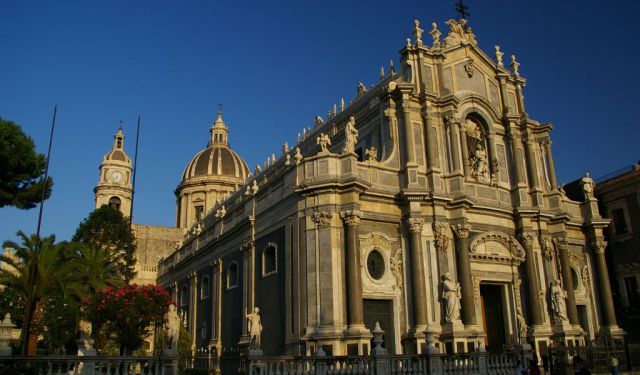
Just as many other Italian destinations, the Sicilian city of Catania is full of churches, especially in the historic center, where the presence of religious sites is particularly high! A good number of local churches date back centuries, and as such represent marvelous pieces of architecture, adding much character to the area. It is also commonplace to find inside most of them, be it a duomo,... view more
Tour Duration: 1 Hour(s)
Travel Distance: 1.6 Km or 1 Miles
Tour Duration: 1 Hour(s)
Travel Distance: 1.6 Km or 1 Miles
A Walk Through Catania’s Baroque Old Town
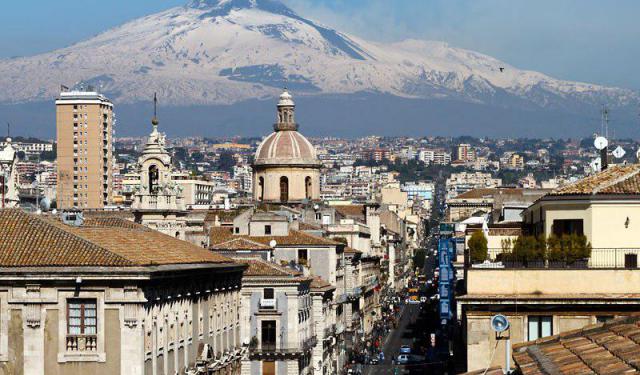
Most cities avoid danger. But here, the danger is part of the experience. Catania settled beside a volcano and stayed. Lava flows, earthquakes, and ash are a living memory here, shaping everything from building materials to local legends.
Catania is one of Sicily’s oldest cities, with a history shaped by colonization, conquest, natural disaster, and repeated renewal. It was founded in 729 BC... view more
Tour Duration: 2 Hour(s)
Travel Distance: 3.8 Km or 2.4 Miles
Catania is one of Sicily’s oldest cities, with a history shaped by colonization, conquest, natural disaster, and repeated renewal. It was founded in 729 BC... view more
Tour Duration: 2 Hour(s)
Travel Distance: 3.8 Km or 2.4 Miles