


Monumental Cemetery of Bonaria, Cagliari
Heading towards Via Roma from the basilica, on your right-hand side you will find the entrance to the Monumental Cemetery of Bonaria and the adjoining Park of Bonaria. The cemetery, inaugurated in 1829, was designed by Damiani and Cima architects on the site of an ancient graveyard already in use during Carthaginian-Roman and early-Christian times. Before that, in Cagliari people used to bury their dead in the churches or their surroundings, resulting in several hygienic problems. Already during the cholera epidemic of 1816, they were forced to look for some space out of the city to bury the casualties, so the need for a big cemetery started being imperative. Crammed with works of art and hosting the graves of local personalities, it’s an open-air museum totally worth including in your list when deciding what to do in Cagliari. Right on the left side of the cemetery, there is the Bonaria Park where you can go relax and enjoy the beautiful view of Castello quarter. There is no entrance fee to enter the cemetery.
The Monumental Cemetery of Bonaria is located in Cagliari, Sardinia. In use between 1829 and 1968, this monumental cemetery originally occupied an area at the base of the hill of Bonaria, and over time expanded upwards. The main entrance is located in Piazza Cimitero, with a second entrance in Ravenna, at the Basilica of Bonaria. Several famous people were buried in Bonaria, including the canonical archaeologist Giovanni Spano, the tenor Piero Schiavazzi and General Carlo Sanna. The oldest part of the cemetery is the flat area at the base of the hill, alongside the boundary wall. This area is divided into rectangular areas, with a neoclassical Chapel at its centre, around which are burials of children. Subsequent extensions expanded th grounds to the top of the hill. The cemetery contains many artistic memorials and burials of notable people, including the mayor of Cagliari Ottone Baccaredda, the historian Pietro Martini, the canon and archaeologist Giovanni Spano (buried in a tomb he himself designed and built, reusing archaeological remains). Other interesting tombs and chapels were built between the end of the 19th and early 20th centuries by artists such as Giuseppe Sartorio, Tito Sarrocchi, Cosimo Fadda, Andrea Ugolini, Emanuele Giacobbe, Giovanni Pandiani and others, providing a wide variety of tastes and styles, from neoclassical through Realism and Symbolism to Art Nouveau. The current main entrance, with adjoining caretaker's accommodation, was built in 1985. Its heavy cubic structure in concrete was the cause of some controversy. To the left of the entrance are the memorials of many young soldiers who fell in the First World War. Opposite is the Chapelle family mausoleum (1910) containing a massive marble statue of the Prophet Ezekiel, by Giuseppe Sartorio. Past San Bardilio are four squares that formed the core of the original graveyard. These squarescontained some dilapidated monuments, including the grave of Giovanni Marghinotti (1798-1865). A winged Genius marks the grave of Giuseppina Ara dei conti Ciarella, sculpted by Agostino Allegri (1870). The monument to the Parisian banker Victor Camille Fevrier, is a marble bust of the deceased, draped by an angel, by Giuseppe Sartorio (1898). The upper part of the cemetery on the hill of Bonaria houses several rows of vaults and charnel houses, located along the east wall and walls arranged parallel to it. In this area holds the Blessed Nicola da Gesturi, of the Capuchins.
A sumptuous and ghostly art gallery outdoors. The streets of chapels and headstones in the cemetery occupy the Bonaria hill with funerary architecture and sculptures, works by the most popular artists who were active in Cagliari from half 19th century to the early 20th century. They reflect the taste of noble and high bourgeois families of the time, who rivalled against each other in their displays of wealth and power through funeral monuments. Up until Napoleon’s decree that forbid burials in sacred places and in the centre of the city, in Cagliari the dead were buried in or near churches, with tragic consequences, including an epidemic of cholera in 1816. The cemetery was made at the foot of the hill, then in the periphery of the town, and had already been used as burial site during the Punic-Roman and paleo Christian eras. It was built by Napoleon and consecrated in 1828. Various enlargements took it all the way to the top of the hill. It lost its function in 1968, and since then it has crystallised: no more suffering, but serenity, families without descendants, and oblivion. ***PH***
The Monumental Cemetery of Bonaria is located in Cagliari, Sardinia. In use between 1829 and 1968, this monumental cemetery originally occupied an area at the base of the hill of Bonaria, and over time expanded upwards. The main entrance is located in Piazza Cimitero, with a second entrance in Ravenna, at the Basilica of Bonaria. Several famous people were buried in Bonaria, including the canonical archaeologist Giovanni Spano, the tenor Piero Schiavazzi and General Carlo Sanna. The oldest part of the cemetery is the flat area at the base of the hill, alongside the boundary wall. This area is divided into rectangular areas, with a neoclassical Chapel at its centre, around which are burials of children. Subsequent extensions expanded th grounds to the top of the hill. The cemetery contains many artistic memorials and burials of notable people, including the mayor of Cagliari Ottone Baccaredda, the historian Pietro Martini, the canon and archaeologist Giovanni Spano (buried in a tomb he himself designed and built, reusing archaeological remains). Other interesting tombs and chapels were built between the end of the 19th and early 20th centuries by artists such as Giuseppe Sartorio, Tito Sarrocchi, Cosimo Fadda, Andrea Ugolini, Emanuele Giacobbe, Giovanni Pandiani and others, providing a wide variety of tastes and styles, from neoclassical through Realism and Symbolism to Art Nouveau. The current main entrance, with adjoining caretaker's accommodation, was built in 1985. Its heavy cubic structure in concrete was the cause of some controversy. To the left of the entrance are the memorials of many young soldiers who fell in the First World War. Opposite is the Chapelle family mausoleum (1910) containing a massive marble statue of the Prophet Ezekiel, by Giuseppe Sartorio. Past San Bardilio are four squares that formed the core of the original graveyard. These squarescontained some dilapidated monuments, including the grave of Giovanni Marghinotti (1798-1865). A winged Genius marks the grave of Giuseppina Ara dei conti Ciarella, sculpted by Agostino Allegri (1870). The monument to the Parisian banker Victor Camille Fevrier, is a marble bust of the deceased, draped by an angel, by Giuseppe Sartorio (1898). The upper part of the cemetery on the hill of Bonaria houses several rows of vaults and charnel houses, located along the east wall and walls arranged parallel to it. In this area holds the Blessed Nicola da Gesturi, of the Capuchins.
A sumptuous and ghostly art gallery outdoors. The streets of chapels and headstones in the cemetery occupy the Bonaria hill with funerary architecture and sculptures, works by the most popular artists who were active in Cagliari from half 19th century to the early 20th century. They reflect the taste of noble and high bourgeois families of the time, who rivalled against each other in their displays of wealth and power through funeral monuments. Up until Napoleon’s decree that forbid burials in sacred places and in the centre of the city, in Cagliari the dead were buried in or near churches, with tragic consequences, including an epidemic of cholera in 1816. The cemetery was made at the foot of the hill, then in the periphery of the town, and had already been used as burial site during the Punic-Roman and paleo Christian eras. It was built by Napoleon and consecrated in 1828. Various enlargements took it all the way to the top of the hill. It lost its function in 1968, and since then it has crystallised: no more suffering, but serenity, families without descendants, and oblivion. ***PH***
Want to visit this sight? Check out these Self-Guided Walking Tours in Cagliari. Alternatively, you can download the mobile app "GPSmyCity: Walks in 1K+ Cities" from Apple App Store or Google Play Store. The app turns your mobile device to a personal tour guide and it works offline, so no data plan is needed when traveling abroad.
Download The GPSmyCity App



Monumental Cemetery of Bonaria on Map
Sight Name: Monumental Cemetery of Bonaria
Sight Location: Cagliari, Italy (See walking tours in Cagliari)
Sight Type: Attraction/Landmark
Sight Location: Cagliari, Italy (See walking tours in Cagliari)
Sight Type: Attraction/Landmark
Nearby Sights

Walking Tours in Cagliari, Italy

Create Your Own Walk in Cagliari
Creating your own self-guided walk in Cagliari is easy and fun. Choose the city attractions that you want to see and a walk route map will be created just for you. You can even set your hotel as the start point of the walk.
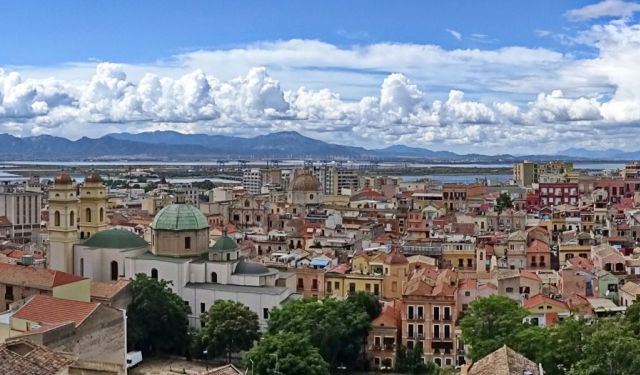
Cagliari Introduction Walking Tour
Welcome to Cagliari, Sardinia’s beating heart! Perched along the shimmering Mediterranean, this sun-soeaked city blends centuries-old history with modern charm. With stunning beaches, colorful lagoons, and lush greenery, it’s also a place where natural beauty meets cultural riches.
Cagliari’s story began long before our time. Around the 8th century BC, the Phoenicians founded Karaly as a... view more
Tour Duration: 2 Hours
Travel Distance: 2.9 Km or 1.8 Miles
Cagliari’s story began long before our time. Around the 8th century BC, the Phoenicians founded Karaly as a... view more
Tour Duration: 2 Hours
Travel Distance: 2.9 Km or 1.8 Miles