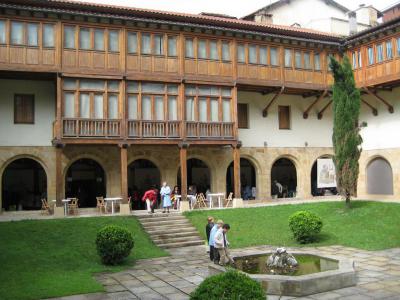


Museo de Arte Sacro de Bilbao (Diocesan Museum of Sacred Art of Bilbao), Bilbao
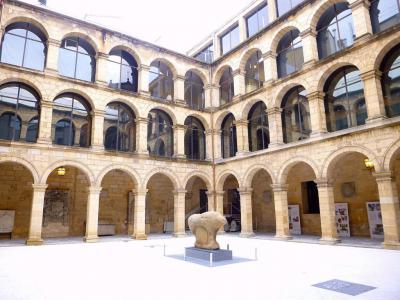
Diocesan Museum of Sacred Art is a hidden cultural gem housed in the former Convent of the Incarnation, a Dominican foundation dating back to 1513. Restored and opened to visitors in 1995, the museum integrates medieval and Renaissance architecture with modern museography.
Inside, the museum preserves a remarkable collection of more than 2,000 ecclesiastical artifacts, with approximately 500 items on permanent display. These include intricate sculpture, painting, metalwork, and liturgical garments, spanning from the 12th to the 20th century. The exhibits are arranged thematically and chronologically across categories such as sculpture–painting, metalwork, and vestments.
Among the museum’s highlights is a large-scale painting: Luis Paret’s “Martirio de Santa Lucía” (or “Martyrdom of Saint Lucy”), over two meters tall-an unusual format for the artist-which was featured in the 2021 “Paret in Bilbao: Sacred and Profane Art” exhibition. Additionally, visitors will find a compelling series of fifteen canvases from the workshop of Luca Giordano depicting the life of Christ, works by artists such as Pierre Mignard, Antonio Carnicero, Julio Romero de Torres, and standout pieces like a polychrome wooden “Virgin and Child ” by Luis Salvador Carmona.
The museum also boasts an impressive collection of liturgical silverware and sacred ornaments, including chalices, monstrances, and votive crowns-many of which survived centuries of turmoil and are of exceptional rarity. A particularly memorable artifact is the life-size silver pelican used as a tabernacle, imported from Peru in 1766.
Adding a personal and intimate touch, the museum reconstructs the workshop of Eloy García, Bilbao’s last traditional goldsmith. It houses his tools, unfinished pieces, designs, and even his work coat, evoking the atmosphere of a craftsman mid-creation. For those seeking an interactive experience, the museum also features an escape-room-style activity, “La abadía de Atxuri”, meaning The Abbey of Atxuri.
Inside, the museum preserves a remarkable collection of more than 2,000 ecclesiastical artifacts, with approximately 500 items on permanent display. These include intricate sculpture, painting, metalwork, and liturgical garments, spanning from the 12th to the 20th century. The exhibits are arranged thematically and chronologically across categories such as sculpture–painting, metalwork, and vestments.
Among the museum’s highlights is a large-scale painting: Luis Paret’s “Martirio de Santa Lucía” (or “Martyrdom of Saint Lucy”), over two meters tall-an unusual format for the artist-which was featured in the 2021 “Paret in Bilbao: Sacred and Profane Art” exhibition. Additionally, visitors will find a compelling series of fifteen canvases from the workshop of Luca Giordano depicting the life of Christ, works by artists such as Pierre Mignard, Antonio Carnicero, Julio Romero de Torres, and standout pieces like a polychrome wooden “Virgin and Child ” by Luis Salvador Carmona.
The museum also boasts an impressive collection of liturgical silverware and sacred ornaments, including chalices, monstrances, and votive crowns-many of which survived centuries of turmoil and are of exceptional rarity. A particularly memorable artifact is the life-size silver pelican used as a tabernacle, imported from Peru in 1766.
Adding a personal and intimate touch, the museum reconstructs the workshop of Eloy García, Bilbao’s last traditional goldsmith. It houses his tools, unfinished pieces, designs, and even his work coat, evoking the atmosphere of a craftsman mid-creation. For those seeking an interactive experience, the museum also features an escape-room-style activity, “La abadía de Atxuri”, meaning The Abbey of Atxuri.
Want to visit this sight? Check out these Self-Guided Walking Tours in Bilbao. Alternatively, you can download the mobile app "GPSmyCity: Walks in 1K+ Cities" from Apple App Store or Google Play Store. The app turns your mobile device to a personal tour guide and it works offline, so no data plan is needed when traveling abroad.
Download The GPSmyCity App



Museo de Arte Sacro de Bilbao (Diocesan Museum of Sacred Art of Bilbao) on Map
Sight Name: Museo de Arte Sacro de Bilbao (Diocesan Museum of Sacred Art of Bilbao)
Sight Location: Bilbao, Spain (See walking tours in Bilbao)
Sight Type: Museum/Gallery
Sight Location: Bilbao, Spain (See walking tours in Bilbao)
Sight Type: Museum/Gallery
Nearby Sights
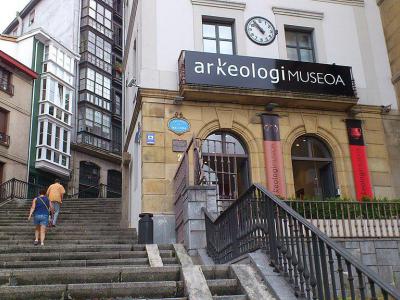
Walking Tours in Bilbao, Spain

Create Your Own Walk in Bilbao
Creating your own self-guided walk in Bilbao is easy and fun. Choose the city attractions that you want to see and a walk route map will be created just for you. You can even set your hotel as the start point of the walk.
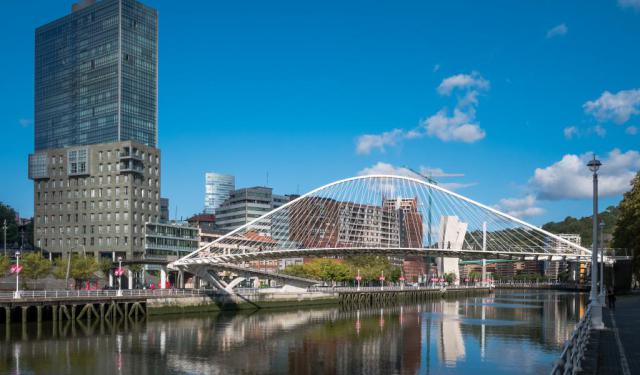
Bilbao Introduction Walking Tour
Officially founded in 1300 AD by the Lord of Biscay, Bilbao began as a small port settlement. Its sheltered estuary allowed ships to load wool, iron, and other goods bound for northern Europe, while merchants imported salt, wine, and luxury items. The name "Bilbao" likely comes from the Basque words bil, meaning "settlement," and bao, meaning "estuary"-a fitting... view more
Tour Duration: 2 Hour(s)
Travel Distance: 4.1 Km or 2.5 Miles
Tour Duration: 2 Hour(s)
Travel Distance: 4.1 Km or 2.5 Miles
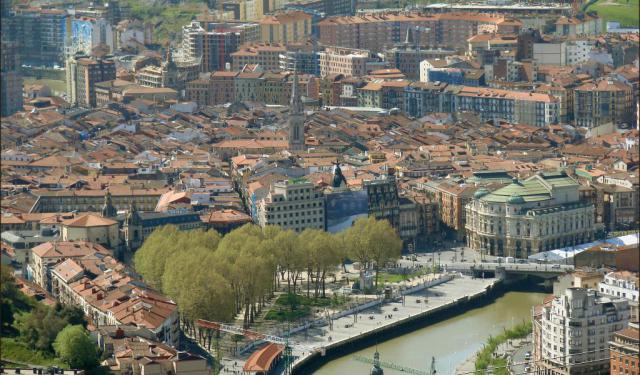
Bilbao's Old Town Walking Tour
Bilbao's old town, also known as The Seven Streets, is the medieval heart of the city. Indeed, this ancient neighborhood, a place where the city began and which had been fortified by walls until the late 19th century, today consists of seven main streets and many narrow alleys – called cantons (kantoi, cantón) – that connect them.
Often regarded as a jewel of Basque architecture and... view more
Tour Duration: 1 Hour(s)
Travel Distance: 1.6 Km or 1 Miles
Often regarded as a jewel of Basque architecture and... view more
Tour Duration: 1 Hour(s)
Travel Distance: 1.6 Km or 1 Miles