


National Museum of Pakistan, Karachi (must see)
The National Museum of Pakistan is the country's premier cultural institution, dedicated to preserving and presenting Pakistan's archaeological, historical, cultural, and artistic heritage. Established in April 1950, the museum was created after the Partition of British India and initially housed in Frere Hall. It incorporated many collections formerly kept in the Victoria Museum before moving to its present, purpose-built building in Burns Garden in 1970.
Since then, it has developed into an essential destination for anyone interested in the region's past, tracing history from prehistoric times through the Indus Valley Civilization, the Gandhara and Islamic periods, and the creation of modern Pakistan. The museum houses tens of thousands of priceless artifacts displayed across 11 thematic galleries. Notably, its Coin Gallery alone contains more than 58,000 ancient coins, which represent a major highlight of the institution's collection. Across the other galleries, visitors can explore world-renowned archaeological discoveries from Mohenjo-daro and Harappa, including the famous "Priest-King" sculpture, Gandharan Buddhist art, rare Qur'an manuscripts, Islamic calligraphy, miniature paintings, arms and armor, ceramics, and woodwork. The museum's ethnographic displays also highlight Pakistan's cultural diversity, showcasing regional costumes, musical instruments, jewelry, and household objects from various communities.
Beyond preserving artifacts, the National Museum of Pakistan serves as a vital center for research, education, and cultural awareness. It features an on-site restoration laboratory, an auditorium, and a specialized archaeological library containing over 70,000 books and publications. The museum regularly organizes temporary exhibitions, workshops, lectures, and educational programs. These public initiatives continue to help students, researchers, and international travelers gain a deeper understanding of the ancient civilizations that have shaped the region over thousands of years.
Want to visit this sight? Check out these Self-Guided Walking Tours in Karachi. Alternatively, you can download the mobile app "GPSmyCity: Walks in 1K+ Cities" from Apple App Store or Google Play Store. The app turns your mobile device to a personal tour guide and it works offline, so no data plan is needed when traveling abroad.
Download The GPSmyCity App



National Museum of Pakistan on Map
Sight Name: National Museum of Pakistan
Sight Location: Karachi, Pakistan (See walking tours in Karachi)
Sight Type: Museum/Gallery
Guide(s) Containing This Sight:
Sight Location: Karachi, Pakistan (See walking tours in Karachi)
Sight Type: Museum/Gallery
Guide(s) Containing This Sight:
Nearby Sights


Walking Tours in Karachi, Pakistan
Create Your Own Walk in Karachi
Creating your own self-guided walk in Karachi is easy and fun. Choose the city attractions that you want to see and a walk route map will be created just for you. You can even set your hotel as the start point of the walk.
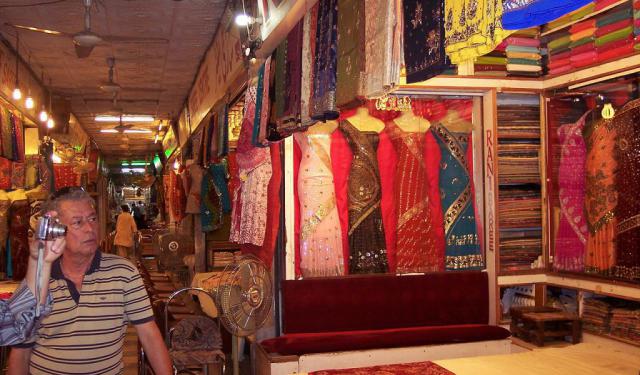
Shopping in Saddar
Karachi is city with a variety of shopping locations, yet its true charm lies in the bazaars (marketplaces). Karachi's most populated shopping area is Saddar. Saddar contains a large number of diverse markets and shops where people can find anything.
Tour Duration: 1 Hour
Travel Distance: 1.7 Km or 1.1 Miles
Tour Duration: 1 Hour
Travel Distance: 1.7 Km or 1.1 Miles

Karachi's Architectural Jewels
Despite the vague buildings throughout the city, Karachi is actually a region with a special cultural life. Karachi contains several sites which deserve the attention of tourists and local culture-loving habitants.
Tour Duration: 2 Hours
Travel Distance: 3.6 Km or 2.2 Miles
Tour Duration: 2 Hours
Travel Distance: 3.6 Km or 2.2 Miles
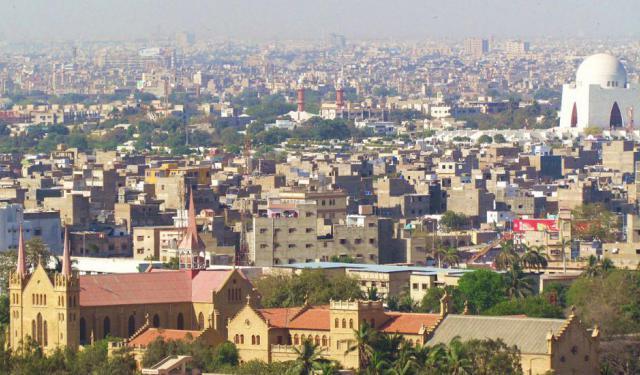
Karachi Downtown Walking Tour
Karachi is a huge, vibrant metropolis, one of Pakistan's most secular and socially liberal. The city boasts abundant and diverse architecture, comprising both contemporary and traditional Pakistani-style buildings, such as the Merewether Clock Tower and the National Museum of Pakistan. To explore these and other prominent sites of Karachi, follow this orientation walk.
Tour Duration: 3 Hours
Travel Distance: 6 Km or 3.7 Miles
Tour Duration: 3 Hours
Travel Distance: 6 Km or 3.7 Miles
City Walks Overview
