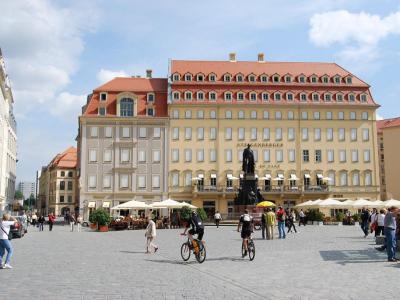


Neumarkt (New Market Square), Dresden
New Market Square, located in the heart of Dresden, is a historically significant square that has experienced extensive transformations over the centuries. Originally established on a slight elevation above the flood-prone Elbe River, this area began as a small village surrounding the Church of Our Lady.
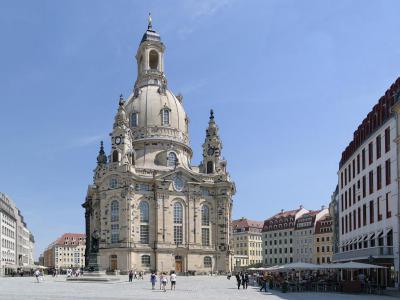
The New Market flourished during the reign of August II the Strong, a period marked by the adoption of the Baroque architectural style. This era saw the construction of the current Church of Our Lady and numerous surrounding structures. The square further evolved in the 18th century following damage from the Seven Years' War, with many buildings being restored or reconstructed in the Rococo/Late Baroque style.
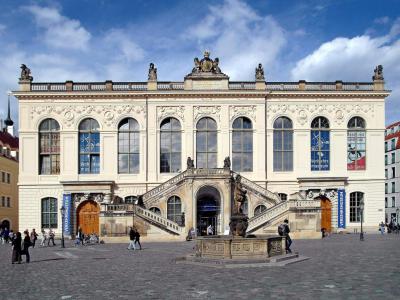
By the 19th and early 20th centuries, the New Market Square underwent few changes, with significant renovations such as the completion of the Johanneum in 1873 and the construction of the Albertinum and the Academy of Fine Arts by the late 1800s. However, the area was nearly obliterated during the Allied bombing in World War II.
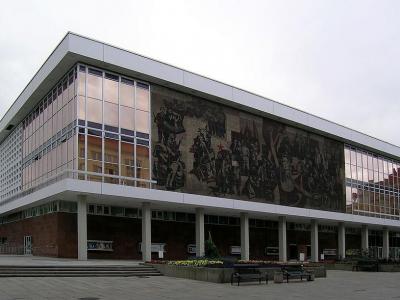
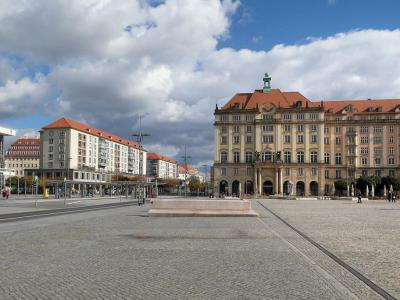
Following the war, Dresden fell under Soviet control and later became part of the German Democratic Republic. During this time, the square was largely left bare and undeveloped, while the edge of its boundary was met by the socialist-modernist Palace of Culture.
The New Market Square is now divided into eight distinct "quarters," each executed as a separate historical project. The approach has been to painstakingly rebuild architectural keystones either entirely to their original blueprints or to accurately replicate their historic Baroque and Rococo facades. Today, these primary quarters stand fully complete, transforming the plaza back into a vibrant, pedestrian-friendly civic heart. As of 2026, the final missing structural link on the square's southern edge-the iconic, freestanding Hotel Stadt Rom-is entering its final execution phase, signaling the near-total structural revival of this storied space.
The New Market flourished during the reign of August II the Strong, a period marked by the adoption of the Baroque architectural style. This era saw the construction of the current Church of Our Lady and numerous surrounding structures. The square further evolved in the 18th century following damage from the Seven Years' War, with many buildings being restored or reconstructed in the Rococo/Late Baroque style.
By the 19th and early 20th centuries, the New Market Square underwent few changes, with significant renovations such as the completion of the Johanneum in 1873 and the construction of the Albertinum and the Academy of Fine Arts by the late 1800s. However, the area was nearly obliterated during the Allied bombing in World War II.
Following the war, Dresden fell under Soviet control and later became part of the German Democratic Republic. During this time, the square was largely left bare and undeveloped, while the edge of its boundary was met by the socialist-modernist Palace of Culture.
The New Market Square is now divided into eight distinct "quarters," each executed as a separate historical project. The approach has been to painstakingly rebuild architectural keystones either entirely to their original blueprints or to accurately replicate their historic Baroque and Rococo facades. Today, these primary quarters stand fully complete, transforming the plaza back into a vibrant, pedestrian-friendly civic heart. As of 2026, the final missing structural link on the square's southern edge-the iconic, freestanding Hotel Stadt Rom-is entering its final execution phase, signaling the near-total structural revival of this storied space.
Want to visit this sight? Check out these Self-Guided Walking Tours in Dresden. Alternatively, you can download the mobile app "GPSmyCity: Walks in 1K+ Cities" from Apple App Store or Google Play Store. The app turns your mobile device to a personal tour guide and it works offline, so no data plan is needed when traveling abroad.
Download The GPSmyCity App



Neumarkt (New Market Square) on Map
Sight Name: Neumarkt (New Market Square)
Sight Location: Dresden, Germany (See walking tours in Dresden)
Sight Type: Attraction/Landmark
Guide(s) Containing This Sight:
Sight Location: Dresden, Germany (See walking tours in Dresden)
Sight Type: Attraction/Landmark
Guide(s) Containing This Sight:
Nearby Sights
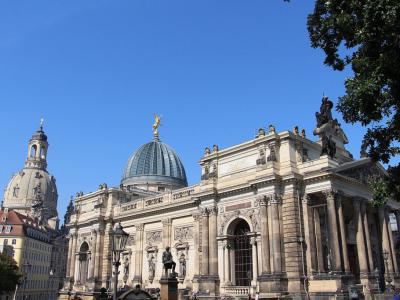
Walking Tours in Dresden, Germany

Create Your Own Walk in Dresden
Creating your own self-guided walk in Dresden is easy and fun. Choose the city attractions that you want to see and a walk route map will be created just for you. You can even set your hotel as the start point of the walk.
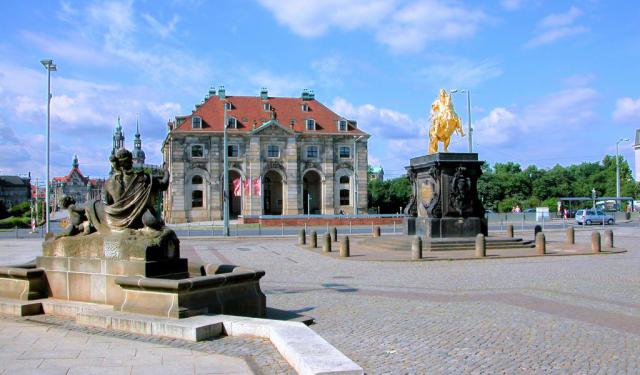
Exploring Dresden New Town on Foot
Dresden’s New Town occupies the northern bank of the Elbe, directly opposite the historic Old Town. Despite its name, it is far from new. The area was settled in the Middle Ages and was historically known as Old Dresden. It was incorporated into Dresden in 1549 under Elector Moritz but remained a relatively modest settlement for centuries compared with the more prestigious city on the opposite... view more
Tour Duration: 1 Hour
Travel Distance: 2.2 Km or 1.4 Miles
Tour Duration: 1 Hour
Travel Distance: 2.2 Km or 1.4 Miles
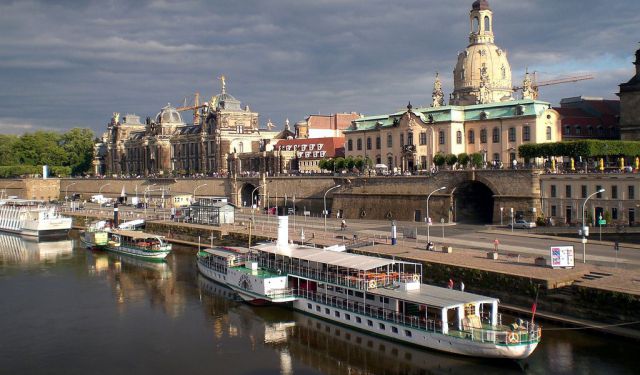
A Walk Through Dresden's Historic Old Town
Dresden’s reputation as a city of art and architecture has earned it the nickname “Florence on the Elbe.”
Dresden, the capital of Saxony, lies on the banks of the River Elbe in eastern Germany. The area may have been settled by Neolithic communities as early as 7500 BC, but Dresden’s documented history begins much later. The city developed within the Margraviate of Meissen, a territory... view more
Tour Duration: 2 Hours
Travel Distance: 2.5 Km or 1.6 Miles
Dresden, the capital of Saxony, lies on the banks of the River Elbe in eastern Germany. The area may have been settled by Neolithic communities as early as 7500 BC, but Dresden’s documented history begins much later. The city developed within the Margraviate of Meissen, a territory... view more
Tour Duration: 2 Hours
Travel Distance: 2.5 Km or 1.6 Miles
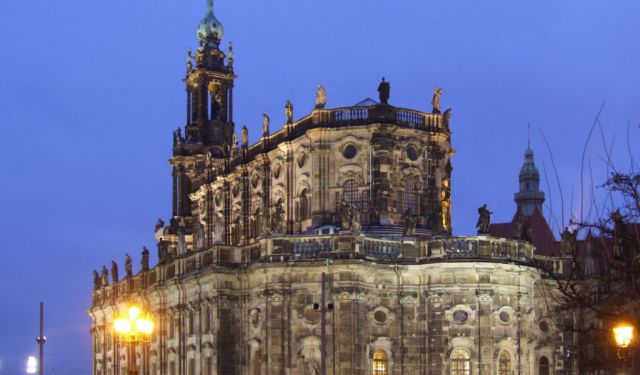
Dresden's Architectural Jewels
If there is one thing Dresden is particularly famous for, it is the magnificent architecture. Although known primarily for its Baroque buildings, the city has several other architectural styles present too, such as Renaissance, Historicism, Modernism and Post-modernism.
Much of downtown Dresden was destroyed in February 1945 by Allied bombing, which in turn prompted the rebuilding of the... view more
Tour Duration: 1 Hour
Travel Distance: 1.9 Km or 1.2 Miles
Much of downtown Dresden was destroyed in February 1945 by Allied bombing, which in turn prompted the rebuilding of the... view more
Tour Duration: 1 Hour
Travel Distance: 1.9 Km or 1.2 Miles