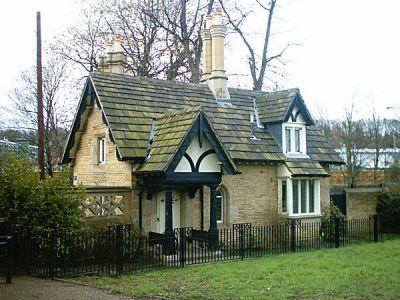


Norfolk Heritage Park, Sheffield
Norfolk Heritage Park is a historic 28-hectare (69-acre) public park located south of Sheffield City Centre. The park is situated within the Norfolk Park residential suburb and is part of the former deer park associated with Sheffield Manor. The land was donated to the city of Sheffield by the Duke of Norfolk in the Victorian era, and the park became a popular destination during Queen Victoria's reign.
Norfolk Heritage Park opened to the public in 1848, making it one of the first parks in Britain to be freely accessible to the general public. The park's development began in 1841 under the direction of the 12th Duke of Norfolk, who owned the land. The park quickly became a favored location for leisure activities such as walking, playing sports, and taking carriage rides. Notably, the park also hosted Norfolk F.C., a football club that played its home games there from 1861 to 1880.
One of the most memorable events in the park's history occurred on 21 May 1897, when Queen Victoria visited during her Jubilee year. On this occasion, over 50,000 schoolchildren sang patriotic songs and hymns for the Queen, and a crowd of approximately 200,000 people, representing over two-thirds of Sheffield's population at the time, gathered to see her in the park.
Over time, the park fell into neglect, particularly during the late 20th century. However, a significant renovation effort in the late 20th century revitalized the park. In 1994, Norfolk Heritage Park was added to the English Heritage Register of Historic Parks and Gardens (Grade II), and the Friends of Norfolk Park group was established to support its preservation.
Today, Norfolk Heritage Park is not only a place of historical significance but also a vibrant community space. Since 2002, the park has hosted the annual Sheffield Fayre during the late Summer Bank Holiday. This event, which draws over 25,000 attendees, is the largest free event in South Yorkshire. The Fayre features the Sheffield Horticultural Show and the largest multi-period Living History Camp and Battle Re-enactment in Northern England, with over 600 re-enactors bringing history to life through battles, displays, music, and activities.
Norfolk Heritage Park opened to the public in 1848, making it one of the first parks in Britain to be freely accessible to the general public. The park's development began in 1841 under the direction of the 12th Duke of Norfolk, who owned the land. The park quickly became a favored location for leisure activities such as walking, playing sports, and taking carriage rides. Notably, the park also hosted Norfolk F.C., a football club that played its home games there from 1861 to 1880.
One of the most memorable events in the park's history occurred on 21 May 1897, when Queen Victoria visited during her Jubilee year. On this occasion, over 50,000 schoolchildren sang patriotic songs and hymns for the Queen, and a crowd of approximately 200,000 people, representing over two-thirds of Sheffield's population at the time, gathered to see her in the park.
Over time, the park fell into neglect, particularly during the late 20th century. However, a significant renovation effort in the late 20th century revitalized the park. In 1994, Norfolk Heritage Park was added to the English Heritage Register of Historic Parks and Gardens (Grade II), and the Friends of Norfolk Park group was established to support its preservation.
Today, Norfolk Heritage Park is not only a place of historical significance but also a vibrant community space. Since 2002, the park has hosted the annual Sheffield Fayre during the late Summer Bank Holiday. This event, which draws over 25,000 attendees, is the largest free event in South Yorkshire. The Fayre features the Sheffield Horticultural Show and the largest multi-period Living History Camp and Battle Re-enactment in Northern England, with over 600 re-enactors bringing history to life through battles, displays, music, and activities.
Want to visit this sight? Check out these Self-Guided Walking Tours in Sheffield. Alternatively, you can download the mobile app "GPSmyCity: Walks in 1K+ Cities" from Apple App Store or Google Play Store. The app turns your mobile device to a personal tour guide and it works offline, so no data plan is needed when traveling abroad.
Download The GPSmyCity App



Norfolk Heritage Park on Map
Sight Name: Norfolk Heritage Park
Sight Location: Sheffield, England (See walking tours in Sheffield)
Sight Type: Attraction/Landmark
Sight Location: Sheffield, England (See walking tours in Sheffield)
Sight Type: Attraction/Landmark
Nearby Sights
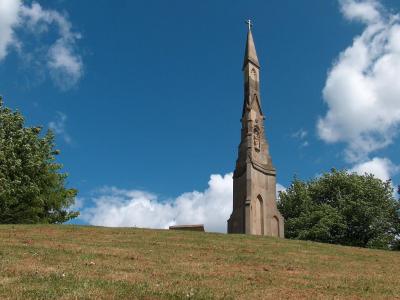
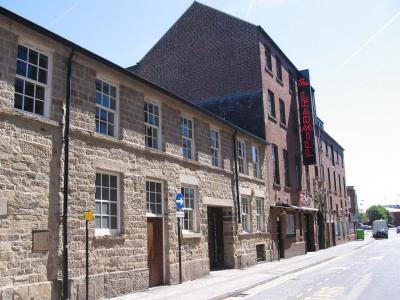


Walking Tours in Sheffield, England

Create Your Own Walk in Sheffield
Creating your own self-guided walk in Sheffield is easy and fun. Choose the city attractions that you want to see and a walk route map will be created just for you. You can even set your hotel as the start point of the walk.
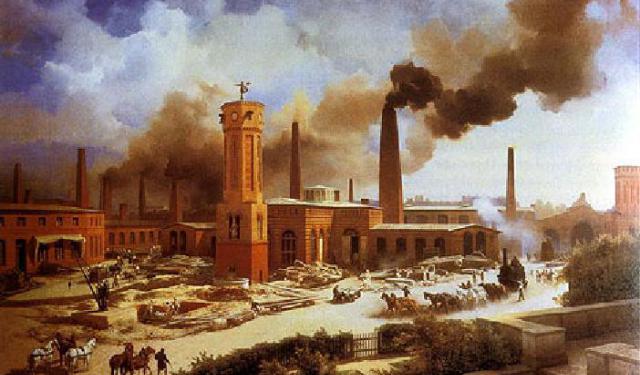
Industrial Revolution Heritage Walking Tour
Steeped in history, the city of Sheffield is famed for its contribution to the Industrial Revolution, largely due to the development of stainless steel. Indeed, the “Steel City” of the United Kingdom, it was internationally renowned as a major hub of steel manufacturing during the 19th century. So much so, in fact, that George Orwell once famously referred to it as “the ugliest town in the... view more
Tour Duration: 2 Hour(s)
Travel Distance: 3.1 Km or 1.9 Miles
Tour Duration: 2 Hour(s)
Travel Distance: 3.1 Km or 1.9 Miles
Sheffield's Historical Buildings
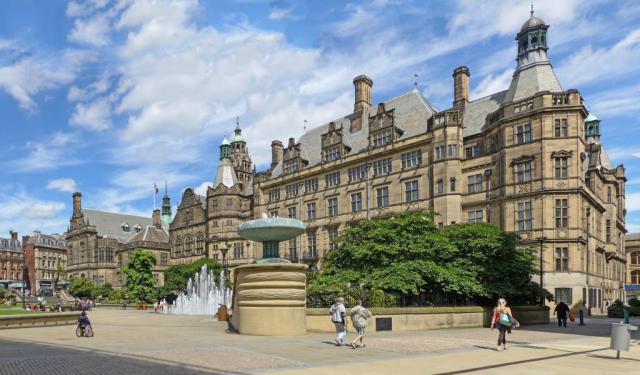
Part of Sheffield’s great heritage is manifested in buildings. The presence of historical sites, some rather imposing like the Sheffield Town Hall and City Hall, presiding over the area, and the others like the Church of St Marie, somewhat hidden from view in a built-up neighbourhood, provides a colourful illustration of the city's glorious past.
Constructed over a time-span ranging from... view more
Tour Duration: 2 Hour(s)
Travel Distance: 2.9 Km or 1.8 Miles
Constructed over a time-span ranging from... view more
Tour Duration: 2 Hour(s)
Travel Distance: 2.9 Km or 1.8 Miles

Sheffield Introduction Walking Tour
Sheffield takes its name from the river Sheaf, which runs through the city. Field, of course, is an open space. The city sits at the confluence of the rivers Don and Sheaf. Don is the master stream. Its tributaries are the Loxely, Porter Brook, Rivelin, and Sheaf. There were settlements in this area as far back as 12,000 years ago.
After the Romans, settlements were Anglo-Saxon and Danish. With... view more
Tour Duration: 1 Hour(s)
Travel Distance: 1.7 Km or 1.1 Miles
After the Romans, settlements were Anglo-Saxon and Danish. With... view more
Tour Duration: 1 Hour(s)
Travel Distance: 1.7 Km or 1.1 Miles