


Obelisque d'Arles (Arles Obelisk), Arles
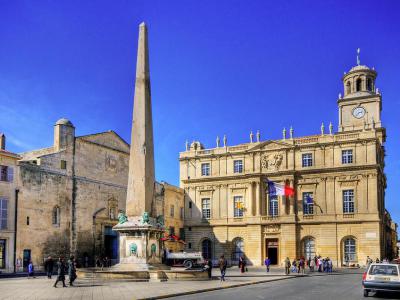
The Arles Obelisk stands proudly at the center of Republic Square, serving as one of the city’s most iconic landmarks and a testament to its Roman heritage. Carved from a single block of granite, the monument dates to the 4th century AD, when it originally adorned the Roman circus of Arles, a grand arena once used for chariot races. After the fall of the Roman Empire, the obelisk was lost to time, later rediscovered in fragments during the 17th century and re-erected in 1676.
The monument’s reinstallation marked a civic celebration of Arles’s ancient past, at a time when the city sought to reconnect with its classical roots. A gilded sun once crowned the obelisk, reflecting the light of Provence, though it has since been replaced by a bronze globe and later a weather vane. Standing over 20 meters tall, it commands attention amid the harmonious surroundings of Republic Square, flanked by the City Hall and Saint Trophime Church. Interestingly, unlike other Roman monuments, the obelisk lacks inscriptions.
Given it has been recognized as a historic monument since 1840, the obelisk has seen countless dawns and dusks. Yet, watching it shine in the center of the Republic Square remains an experience to be enjoyed. Cherry on top, it is on the UNESCO World Heritage list of Roman and Romanesque monuments since 1981.
The monument’s reinstallation marked a civic celebration of Arles’s ancient past, at a time when the city sought to reconnect with its classical roots. A gilded sun once crowned the obelisk, reflecting the light of Provence, though it has since been replaced by a bronze globe and later a weather vane. Standing over 20 meters tall, it commands attention amid the harmonious surroundings of Republic Square, flanked by the City Hall and Saint Trophime Church. Interestingly, unlike other Roman monuments, the obelisk lacks inscriptions.
Given it has been recognized as a historic monument since 1840, the obelisk has seen countless dawns and dusks. Yet, watching it shine in the center of the Republic Square remains an experience to be enjoyed. Cherry on top, it is on the UNESCO World Heritage list of Roman and Romanesque monuments since 1981.
Want to visit this sight? Check out these Self-Guided Walking Tours in Arles. Alternatively, you can download the mobile app "GPSmyCity: Walks in 1K+ Cities" from Apple App Store or Google Play Store. The app turns your mobile device to a personal tour guide and it works offline, so no data plan is needed when traveling abroad.
Download The GPSmyCity App



Obelisque d'Arles (Arles Obelisk) on Map
Sight Name: Obelisque d'Arles (Arles Obelisk)
Sight Location: Arles, France (See walking tours in Arles)
Sight Type: Attraction/Landmark
Guide(s) Containing This Sight:
Sight Location: Arles, France (See walking tours in Arles)
Sight Type: Attraction/Landmark
Guide(s) Containing This Sight:
Nearby Sights



Walking Tours in Arles, France

Create Your Own Walk in Arles
Creating your own self-guided walk in Arles is easy and fun. Choose the city attractions that you want to see and a walk route map will be created just for you. You can even set your hotel as the start point of the walk.
Arles Introduction Walking Tour
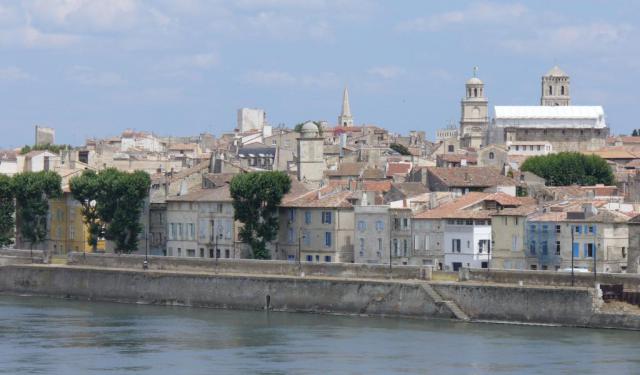
While living in Arles, Vincent van Gogh wrote to his brother Theo about the “soft and tender light” of the region. Although he called the town home for only 15 months, this brief period became the most productive of his career, yielding more than 300 works.
The town’s name comes from the ancient Ligurian and Celtic term Arelate, meaning “the dwelling by the marshes,” a nod to its... view more
Tour Duration: 1 Hour(s)
Travel Distance: 1.3 Km or 0.8 Miles
The town’s name comes from the ancient Ligurian and Celtic term Arelate, meaning “the dwelling by the marshes,” a nod to its... view more
Tour Duration: 1 Hour(s)
Travel Distance: 1.3 Km or 0.8 Miles
Vincent van Gogh Walking Tour
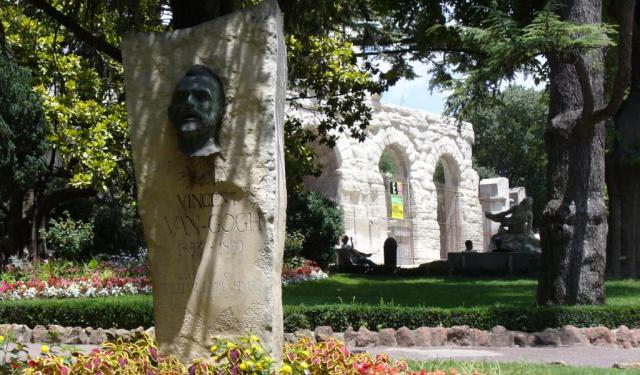
"There's no place quite like it for painters. It's so beautiful and peaceful..." These words, reportedly attributed to Vincent van Gogh, emphasize the beauty and exceptional qualities of Arles with which the renowned Dutch painter had a special connection.
Vincent van Gogh moved to this town in 1888, after having worked in Paris for two years. In the late 19th century,... view more
Tour Duration: 1 Hour(s)
Travel Distance: 2.1 Km or 1.3 Miles
Vincent van Gogh moved to this town in 1888, after having worked in Paris for two years. In the late 19th century,... view more
Tour Duration: 1 Hour(s)
Travel Distance: 2.1 Km or 1.3 Miles