

Old Jaffa Museum of Antiquities, Tel Aviv
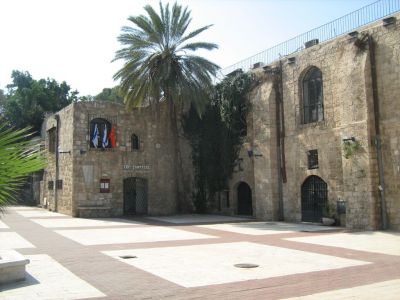
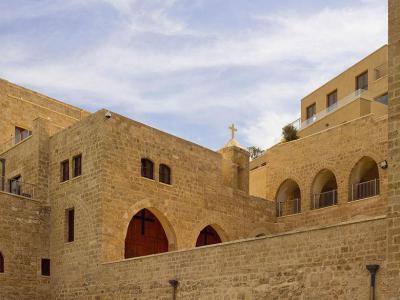
The Old Jaffa Museum of Antiquities stands on a hill in the historic core of Jaffa, and its setting already tells much of its story. The museum is housed in the so-called “Ancient Saraya,” an Ottoman-era government building constructed on top of the remains of an 11th-century Crusader fortress. Over the centuries, as Jaffa passed through repeated conquests, the structure itself was rebuilt and repurposed-serving at different times as an administrative centre, a post office, and even a prison-before becoming a museum in the 20th century.
Inside, the museum offers a compact yet evocative collection focused on the deep archaeological past of Jaffa. The permanent displays trace the succession of civilizations that shaped the city, beginning with the Stone Age and continuing through the Canaanites, Egyptians, Persians, Philistines, Phoenicians, Greeks, Hasmoneans, Romans, Byzantines, Ottomans, and the British.
The central excavation area is located within the ground floor of the museum, often visible through glass-protected sections of the floor. It reveals the foundations of Jaffa from the 3rd century BC Hellenistic period through to the Roman period of the 2nd century AD. Visitors can see the remains of three distinct buildings, including a three-room basement complex and walls from a Jewish dwelling that was abandoned during the Great Revolt in 67 AD.
Beneath the main museum levels, large vaulted chambers represent relics of an olive-oil soap factory. After the Ottoman government moved its headquarters, the building was purchased by the Damiani family, who converted the space and began producing “clean” soap. As it was devoid of pig fat, the soap became a major export from Jaffa to the rest of the Ottoman Empire. Once you find yourself underground, look for the original stone troughs and vaults once used for mixing raw materials and storing the finished soap blocks.
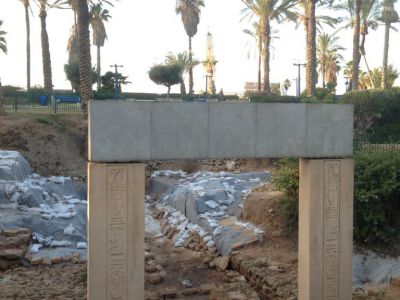
Other notable pieces include a reproduction of the 8th-century BC annals of the Assyrian king Sennacherib, authentic Egyptian gate inscriptions from the reign of Ramses II, and personal items from a Jewish family who lived here during the Roman period, around 2,000 years ago. Alongside these antiquities, the museum also hosts rotating contemporary art exhibitions. Visitors should note that the museum has recently faced periods of closure and reorganization, so checking ahead is advisable.
Inside, the museum offers a compact yet evocative collection focused on the deep archaeological past of Jaffa. The permanent displays trace the succession of civilizations that shaped the city, beginning with the Stone Age and continuing through the Canaanites, Egyptians, Persians, Philistines, Phoenicians, Greeks, Hasmoneans, Romans, Byzantines, Ottomans, and the British.
The central excavation area is located within the ground floor of the museum, often visible through glass-protected sections of the floor. It reveals the foundations of Jaffa from the 3rd century BC Hellenistic period through to the Roman period of the 2nd century AD. Visitors can see the remains of three distinct buildings, including a three-room basement complex and walls from a Jewish dwelling that was abandoned during the Great Revolt in 67 AD.
Beneath the main museum levels, large vaulted chambers represent relics of an olive-oil soap factory. After the Ottoman government moved its headquarters, the building was purchased by the Damiani family, who converted the space and began producing “clean” soap. As it was devoid of pig fat, the soap became a major export from Jaffa to the rest of the Ottoman Empire. Once you find yourself underground, look for the original stone troughs and vaults once used for mixing raw materials and storing the finished soap blocks.
Other notable pieces include a reproduction of the 8th-century BC annals of the Assyrian king Sennacherib, authentic Egyptian gate inscriptions from the reign of Ramses II, and personal items from a Jewish family who lived here during the Roman period, around 2,000 years ago. Alongside these antiquities, the museum also hosts rotating contemporary art exhibitions. Visitors should note that the museum has recently faced periods of closure and reorganization, so checking ahead is advisable.
Want to visit this sight? Check out these Self-Guided Walking Tours in Tel Aviv. Alternatively, you can download the mobile app "GPSmyCity: Walks in 1K+ Cities" from Apple App Store or Google Play Store. The app turns your mobile device to a personal tour guide and it works offline, so no data plan is needed when traveling abroad.
Download The GPSmyCity App



Old Jaffa Museum of Antiquities on Map
Sight Name: Old Jaffa Museum of Antiquities
Sight Location: Tel Aviv, Israel (See walking tours in Tel Aviv)
Sight Type: Museum/Gallery
Guide(s) Containing This Sight:
Sight Location: Tel Aviv, Israel (See walking tours in Tel Aviv)
Sight Type: Museum/Gallery
Guide(s) Containing This Sight:
Nearby Sights
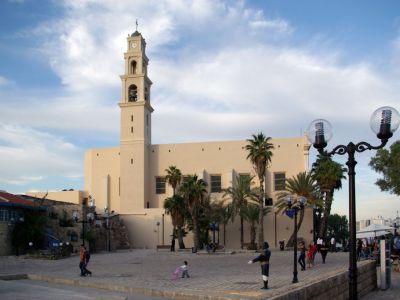
Walking Tours in Tel Aviv, Israel

Create Your Own Walk in Tel Aviv
Creating your own self-guided walk in Tel Aviv is easy and fun. Choose the city attractions that you want to see and a walk route map will be created just for you. You can even set your hotel as the start point of the walk.
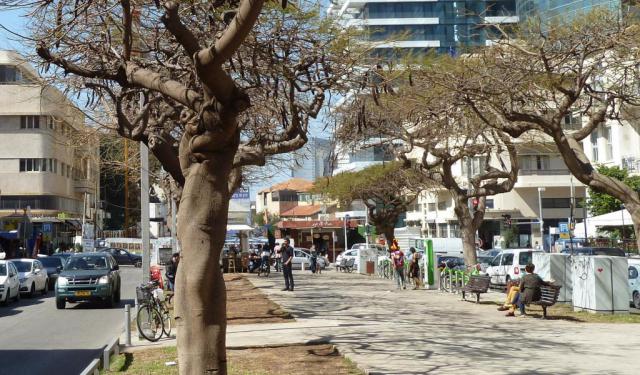
Tel Aviv White City Architecture Tour
The White City area of Tel Aviv showcases a particular style of architecture that was brought from Germany by the first Jewish settlers in the 1930s. Considered “hottest” at the time, the Bauhaus (or International) architecture is represented by nearly 4,000 buildings in Tel Aviv. Although some of them feature elements typical of Modernism, they are distinguished by the more rigorous rules of... view more
Tour Duration: 2 Hours
Travel Distance: 3.6 Km or 2.2 Miles
Tour Duration: 2 Hours
Travel Distance: 3.6 Km or 2.2 Miles
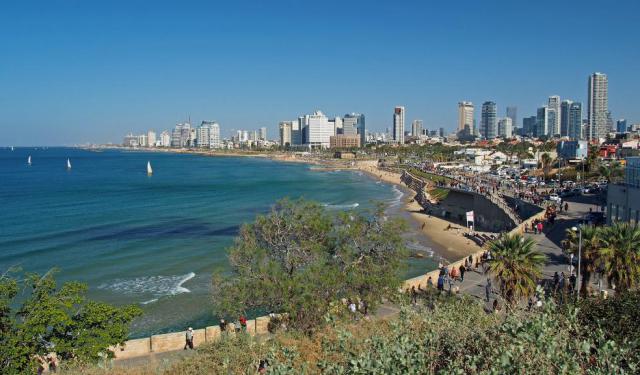
A Walk Along the Seashore
In warm weather, there is no better way to enjoy yourself than right next to the water, especially in Tel Aviv. Composed of 13 official beaches, all of which are very well looked after and fitted with various facilities, Tel Aviv's coastal strip spans over a dozen kilometers, with many luxury hotels in the background, booming with events and happenings.
The beautiful Seashore area... view more
Tour Duration: 2 Hours
Travel Distance: 4.7 Km or 2.9 Miles
The beautiful Seashore area... view more
Tour Duration: 2 Hours
Travel Distance: 4.7 Km or 2.9 Miles
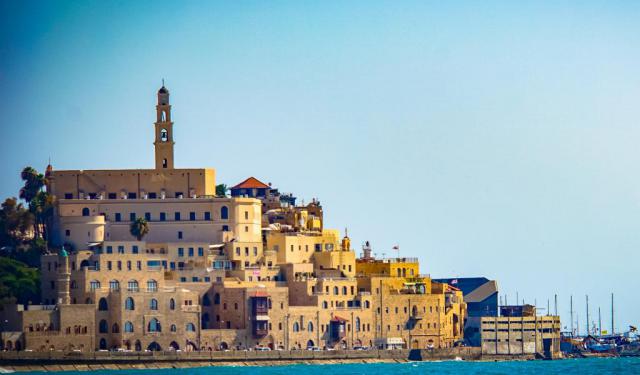
Tel Aviv City Center Walking Tour
The second largest metropolis in Israel, Tel Aviv started off as a humble settlement on the outskirts of the ancient city of Jaffa in the then part of Ottoman Syria. On 11 April 1909, 66 Jewish families gathered on a desolate sand dune to parcel out land via lottery organized by the Ahuzat Bayit building society.
The lottery used 120 seashells collected on the beach, in which the society... view more
Tour Duration: 2 Hours
Travel Distance: 3.6 Km or 2.2 Miles
The lottery used 120 seashells collected on the beach, in which the society... view more
Tour Duration: 2 Hours
Travel Distance: 3.6 Km or 2.2 Miles
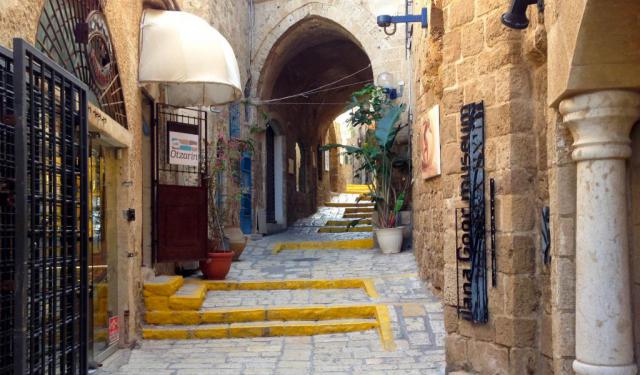
A Walk in The Old City of Jaffa
According to Greek mythology, the Aethiopian princess Andromeda was chained to a rock off Jaffa’s coast, awaiting rescue by the hero Perseus, who later married her.
The Old City of Jaffa, today part of Tel Aviv, is one of the oldest port cities on the Mediterranean coast, with records dating back to the 15th century BC. With a history spanning more than 4,000 years, it remains one of the... view more
Tour Duration: 2 Hours
Travel Distance: 2.1 Km or 1.3 Miles
The Old City of Jaffa, today part of Tel Aviv, is one of the oldest port cities on the Mediterranean coast, with records dating back to the 15th century BC. With a history spanning more than 4,000 years, it remains one of the... view more
Tour Duration: 2 Hours
Travel Distance: 2.1 Km or 1.3 Miles