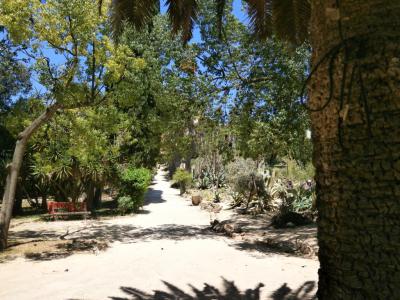


Orto Botanico di Cagliari (Botanical Garden of Cagliari), Cagliari
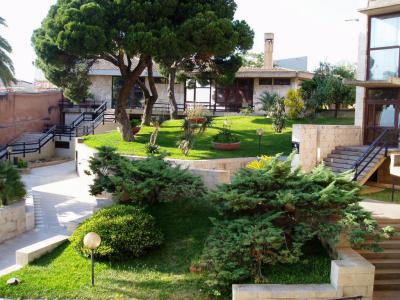
Inside the Garden there are vestiges of the pre-Roman and Roman periods, among these: the Roman well, called libarium, where the actors who performed in the nearby amphitheater drank; the Gennari cave, a Calidarium; a Roman cistern and a section of the Roman aqueduct which, from Villamassargia, brought water to the city. The vegetable garden has recently been replanted. Today the vegetable garden, which is basically organized on an area of 5 ha, features tree and shrub species typical of the vegetation belts of Sardinia and the Mediterranean, including superb specimens of Ceratonia siliqua, Pinus halepensis, Olea europea, Rhamnus alaternus, Pistacia lentiscus, Quercus ilex, Arbutus unedo, Erica scoparia, Quercus coccifera, Juniperus spp., Buxus balearica and Buxus sempervirens, gigantic Ficus magnolioides, a palm grove with numerous species of different genera, beautiful specimens of cypresses and Sterculias, a collection of around 1,000 succulent plants, rocky areas populated by Agave, Yucca, Aloe, Cereus, Euphorbia, Opuntia, Dracaena draco, while in the various tanks there are specimens of Nymphaea, Nelumbo and papyrus.
The Botanical Garden was inaugurated in 1866 under the direction of Prof. Patrizio Gennari. Nowadays, it contains around 2000 plant species, mainly originating from the Mediterranean, but with a good presence of succulents and tropical plants. The garden is divided into three main sections: Mediterranean plants, which represent the three bands of Sardinian vegetation as well as species from Australia, California and Chile; Succulents, around 1000 units of plants such as Echinocereus, Euphorbia, Lamphrantus, Mammillaria, Opuntia, etc, grown in greenhouses and outdoors, almost equally divided between species of African and American origins; Tropical plants. In all, the garden contains approximately 600 trees and 550 shrubs. Of special value is the area dedicated to the palm collection (extending for 4000 m2) with approximately 60 specimens of Euphorbia canariensis, covering 100 m2. The garden area is also of considerable archaeological importance due to the presence of cisterns and wells from the Roman era.
The Botanical Garden of Cagliari, whose surface area is approximately 5 hectares, occupies the lower portion of the Palabanda Valley, the bottom of which widens from the higher, more steep and rugged portion, which hosts the Roccaglie della Biodiversity, up to the entrance located in the lowest part, where the Gymnospermae sector is located. The garden stands on an archaeological area between the Roman Amphitheatre, the Capuchin Garden (in which there is a quarry used for the construction of the Amphitheatre, later used as a prison and finally as a cistern) and the so-called Villa di Tigellio, an archaeological area which presents the remains of some Roman domus and a contemporary spa building. The Garden hosts three bottle cisterns from the Roman era in good condition, one of which can be visited, some tanks of probable Roman origin and an almost certainly more recent well. The garden borders the Roman Amphitheater along the north-east side in the upper part of the valley, with the university Department of Economics and Commerce to the north, with the Viale S. Ignazio da Laconi along the north and west sides and with the Civil Hospital along the east and south-east side.
A vast green space in the historic center of Cagliari , which preserves thousands of plant species, some very rare, from all over the world, and within it an archaeological area which houses a large number of Roman relics. The Botanical Garden, whose surface, similar to a trapezoid, is approximately five hectares, occupies the lower part of the Palabanda valley, in an area between the Roman Amphitheatre , the Capuchin Garden and Villa di Tigellio , where there are remains also of other Roman domus and a spa building. In 1820, talk began about the creation of a botanical garden in the valley which over the centuries belonged to the Jesuits, the Royal Heritage, various private individuals, until its purchase by the University. The works began in 1864 under the guidance of the founder Patrizio Gennari and followed the original project of the architect Gaetano Cima. ***PH***
The Botanical Garden was inaugurated in 1866 under the direction of Prof. Patrizio Gennari. Nowadays, it contains around 2000 plant species, mainly originating from the Mediterranean, but with a good presence of succulents and tropical plants. The garden is divided into three main sections: Mediterranean plants, which represent the three bands of Sardinian vegetation as well as species from Australia, California and Chile; Succulents, around 1000 units of plants such as Echinocereus, Euphorbia, Lamphrantus, Mammillaria, Opuntia, etc, grown in greenhouses and outdoors, almost equally divided between species of African and American origins; Tropical plants. In all, the garden contains approximately 600 trees and 550 shrubs. Of special value is the area dedicated to the palm collection (extending for 4000 m2) with approximately 60 specimens of Euphorbia canariensis, covering 100 m2. The garden area is also of considerable archaeological importance due to the presence of cisterns and wells from the Roman era.
The Botanical Garden of Cagliari, whose surface area is approximately 5 hectares, occupies the lower portion of the Palabanda Valley, the bottom of which widens from the higher, more steep and rugged portion, which hosts the Roccaglie della Biodiversity, up to the entrance located in the lowest part, where the Gymnospermae sector is located. The garden stands on an archaeological area between the Roman Amphitheatre, the Capuchin Garden (in which there is a quarry used for the construction of the Amphitheatre, later used as a prison and finally as a cistern) and the so-called Villa di Tigellio, an archaeological area which presents the remains of some Roman domus and a contemporary spa building. The Garden hosts three bottle cisterns from the Roman era in good condition, one of which can be visited, some tanks of probable Roman origin and an almost certainly more recent well. The garden borders the Roman Amphitheater along the north-east side in the upper part of the valley, with the university Department of Economics and Commerce to the north, with the Viale S. Ignazio da Laconi along the north and west sides and with the Civil Hospital along the east and south-east side.
A vast green space in the historic center of Cagliari , which preserves thousands of plant species, some very rare, from all over the world, and within it an archaeological area which houses a large number of Roman relics. The Botanical Garden, whose surface, similar to a trapezoid, is approximately five hectares, occupies the lower part of the Palabanda valley, in an area between the Roman Amphitheatre , the Capuchin Garden and Villa di Tigellio , where there are remains also of other Roman domus and a spa building. In 1820, talk began about the creation of a botanical garden in the valley which over the centuries belonged to the Jesuits, the Royal Heritage, various private individuals, until its purchase by the University. The works began in 1864 under the guidance of the founder Patrizio Gennari and followed the original project of the architect Gaetano Cima. ***PH***
Want to visit this sight? Check out these Self-Guided Walking Tours in Cagliari. Alternatively, you can download the mobile app "GPSmyCity: Walks in 1K+ Cities" from Apple App Store or Google Play Store. The app turns your mobile device to a personal tour guide and it works offline, so no data plan is needed when traveling abroad.
Download The GPSmyCity App



Orto Botanico di Cagliari (Botanical Garden of Cagliari) on Map
Sight Name: Orto Botanico di Cagliari (Botanical Garden of Cagliari)
Sight Location: Cagliari, Italy (See walking tours in Cagliari)
Sight Type: Park/Outdoor
Sight Location: Cagliari, Italy (See walking tours in Cagliari)
Sight Type: Park/Outdoor
Nearby Sights


Walking Tours in Cagliari, Italy

Create Your Own Walk in Cagliari
Creating your own self-guided walk in Cagliari is easy and fun. Choose the city attractions that you want to see and a walk route map will be created just for you. You can even set your hotel as the start point of the walk.
Cagliari Introduction Walking Tour
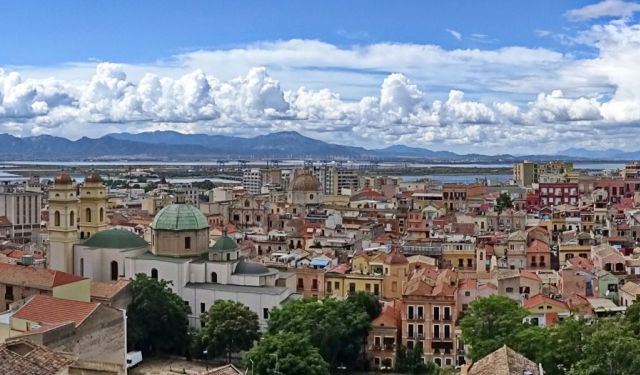
Welcome to Cagliari, Sardinia’s beating heart! Perched along the shimmering Mediterranean, this sun-soeaked city blends centuries-old history with modern charm. With stunning beaches, colorful lagoons, and lush greenery, it’s also a place where natural beauty meets cultural riches.
Cagliari’s story began long before our time. Around the 8th century BC, the Phoenicians founded Karaly as a... view more
Tour Duration: 2 Hours
Travel Distance: 2.9 Km or 1.8 Miles
Cagliari’s story began long before our time. Around the 8th century BC, the Phoenicians founded Karaly as a... view more
Tour Duration: 2 Hours
Travel Distance: 2.9 Km or 1.8 Miles