

Oskar Schindler's Factory, Krakow (must see)
Oskar Schindler’s Factory is one of the city’s most compelling places to encounter the history of the Second World War. Located in the Podgórze district, the former enamelware plant was taken over by the German industrialist Oskar Schindler in 1939. During the war, the factory produced metal goods for the German army, but it became far more significant for the lives it saved. By employing Jewish workers from the Kraków Ghetto and later from the Płaszów concentration camp, Schindler used his position and resources to protect more than a thousand people from deportation and death. His efforts—later documented in Thomas Keneally’s book and Steven Spielberg’s film Schindler’s List—turned the factory into an enduring symbol of individual courage within a brutal system.
Today, the site no longer operates as a factory but houses a major branch of the Historical Museum of the City of Kraków. The permanent exhibition Kraków Under Nazi Occupation 1939–1945 transforms the building into an immersive narrative space, guiding visitors through recreated streets, rooms, and archival displays that trace the city’s wartime experience.
The main attractions of the exhibition are Schindler’s office and the Płaszów Concentration Camp Room, both located on the third floor. Upon entering the museum, the ticket office is visible straight ahead. After passing it, a door on your right opens into a hall containing the elevator and the staircase leading to the upper floors, where the main exhibition unfolds. The layout of the exhibition is intuitive, guiding visitors through rooms and hallways in a natural sequence until they reach the next staircase.
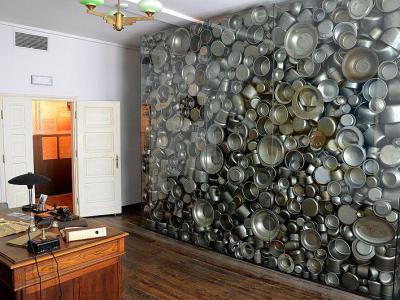
On the third floor, after progressing through several rooms, you will arrive at a hall depicting everyday life between 1941 and 1943. Two rooms are located on the right side of this hall. The second room is the more significant one—Schindler’s office—which features the famous glass installation ''Survivors’ Ark,'' filled with enamelware produced by the factory. After leaving the office and passing through three additional rooms, you will reach the Płaszów Concentration Camp Room. You will recognize it by its circular layout and the wooden gate reinforced with barbed wire. As its name suggests, the room is a re-creation of elements of the Płaszów camp and is designed to convey its tense, oppressive atmosphere.
Beyond these key attractions, the museum offers a broader portrait of daily life, resistance, and propaganda through photographs, documents, and objects once used in the factory. These displays appear throughout the exhibition’s rooms and corridors. Move with the narrative at your own pace, and you will gain a powerful understanding of Kraków’s wartime history.
Today, the site no longer operates as a factory but houses a major branch of the Historical Museum of the City of Kraków. The permanent exhibition Kraków Under Nazi Occupation 1939–1945 transforms the building into an immersive narrative space, guiding visitors through recreated streets, rooms, and archival displays that trace the city’s wartime experience.
The main attractions of the exhibition are Schindler’s office and the Płaszów Concentration Camp Room, both located on the third floor. Upon entering the museum, the ticket office is visible straight ahead. After passing it, a door on your right opens into a hall containing the elevator and the staircase leading to the upper floors, where the main exhibition unfolds. The layout of the exhibition is intuitive, guiding visitors through rooms and hallways in a natural sequence until they reach the next staircase.
On the third floor, after progressing through several rooms, you will arrive at a hall depicting everyday life between 1941 and 1943. Two rooms are located on the right side of this hall. The second room is the more significant one—Schindler’s office—which features the famous glass installation ''Survivors’ Ark,'' filled with enamelware produced by the factory. After leaving the office and passing through three additional rooms, you will reach the Płaszów Concentration Camp Room. You will recognize it by its circular layout and the wooden gate reinforced with barbed wire. As its name suggests, the room is a re-creation of elements of the Płaszów camp and is designed to convey its tense, oppressive atmosphere.
Beyond these key attractions, the museum offers a broader portrait of daily life, resistance, and propaganda through photographs, documents, and objects once used in the factory. These displays appear throughout the exhibition’s rooms and corridors. Move with the narrative at your own pace, and you will gain a powerful understanding of Kraków’s wartime history.
Want to visit this sight? Check out these Self-Guided Walking Tours in Krakow. Alternatively, you can download the mobile app "GPSmyCity: Walks in 1K+ Cities" from Apple App Store or Google Play Store. The app turns your mobile device to a personal tour guide and it works offline, so no data plan is needed when traveling abroad.
Download The GPSmyCity App



Oskar Schindler's Factory on Map
Sight Name: Oskar Schindler's Factory
Sight Location: Krakow, Poland (See walking tours in Krakow)
Sight Type: Museum/Gallery
Guide(s) Containing This Sight:
Sight Location: Krakow, Poland (See walking tours in Krakow)
Sight Type: Museum/Gallery
Guide(s) Containing This Sight:
Walking Tours in Krakow, Poland

Create Your Own Walk in Krakow
Creating your own self-guided walk in Krakow is easy and fun. Choose the city attractions that you want to see and a walk route map will be created just for you. You can even set your hotel as the start point of the walk.
Historical House Museums Tour
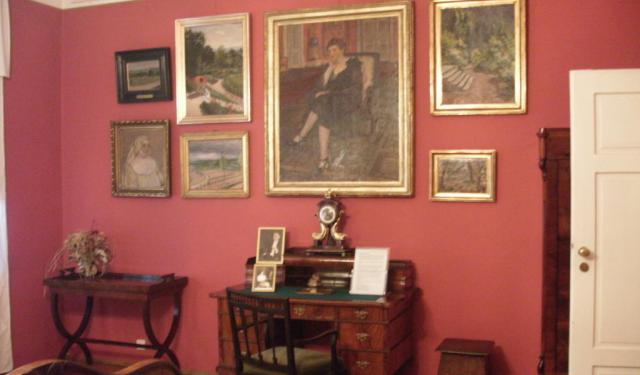
Well-preserved historical buildings can often tell the stories of their city more vividly than any history book. Krakow, the old capital and cultural center of Poland, for many years, has been the home of many important Poles. Today, their former residences have been converted into house museums where visitors can learn about their inhabitants and see what life was like in the past.
One such... view more
Tour Duration: 1 Hour(s)
Travel Distance: 2.0 Km or 1.2 Miles
One such... view more
Tour Duration: 1 Hour(s)
Travel Distance: 2.0 Km or 1.2 Miles
Jewish Heritage Tour in Krakow
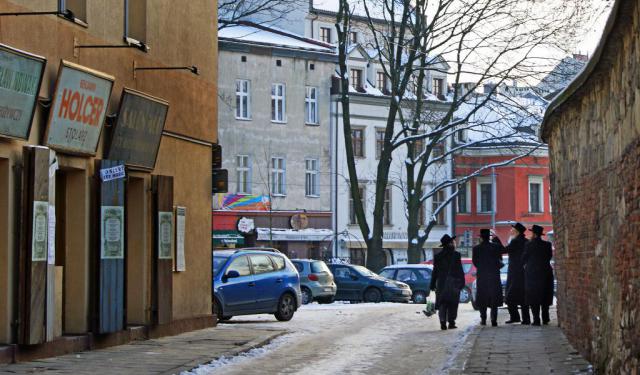
The history of Kraków’s Jewish community stands among the most significant chapters of Jewish life in Central Europe. Jews first settled in Kraków in the 13th century, drawn by the city’s expanding trade networks and by greater tolerance compared to other European regions. Early Jewish residents lived mainly around what is today the Old Town and enjoyed a degree of royal protection. However,... view more
Tour Duration: 2 Hour(s)
Travel Distance: 3.0 Km or 1.9 Miles
Tour Duration: 2 Hour(s)
Travel Distance: 3.0 Km or 1.9 Miles
Historical Churches Walking Tour
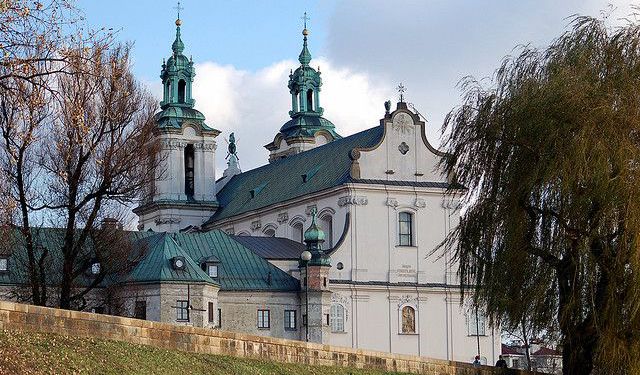
Krakow, the center of religious life in Poland, was once considered “the Northern Rome” for its multitude of churches. Alongside the new temples continuing to appear in the city today, these remarkable sanctuaries, holding deep historical and cultural significance, still remain the most attractive and interesting to look at.
By far the most iconic of these is the Basilica of Saint Mary. A... view more
Tour Duration: 1 Hour(s)
Travel Distance: 2.2 Km or 1.4 Miles
By far the most iconic of these is the Basilica of Saint Mary. A... view more
Tour Duration: 1 Hour(s)
Travel Distance: 2.2 Km or 1.4 Miles
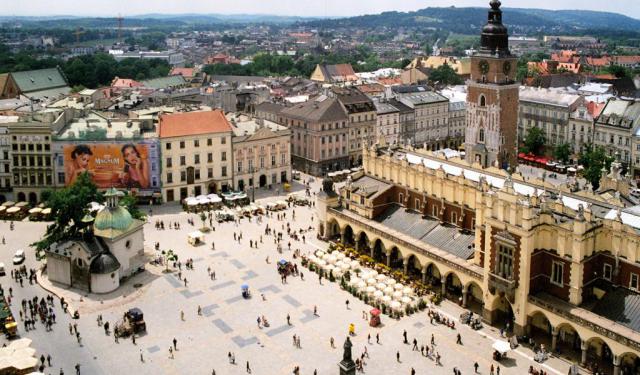
Krakow Introduction Walking Tour
“Kraków has shaped me more than any other place on Earth.” These words from Pope John Paul II brought the city into the global limelight.
The city's name is traditionally linked to Krak, or Krakus, a legendary ruler said to have founded the city after defeating a dragon beneath Wawel Hill. Though the tale is mythological, the name itself derives from this early Slavic personal name,... view more
Tour Duration: 2 Hour(s)
Travel Distance: 3.3 Km or 2.1 Miles
The city's name is traditionally linked to Krak, or Krakus, a legendary ruler said to have founded the city after defeating a dragon beneath Wawel Hill. Though the tale is mythological, the name itself derives from this early Slavic personal name,... view more
Tour Duration: 2 Hour(s)
Travel Distance: 3.3 Km or 2.1 Miles