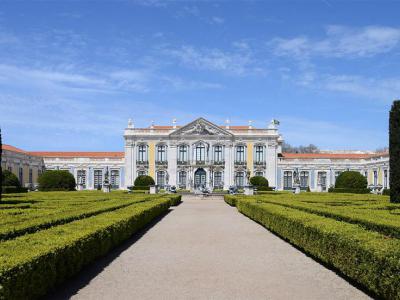


Palace of Queluz, Sintra
The Palace of Queluz, located in Queluz, Sintra Municipality, is a hallmark of 18th-century Portuguese Rococo architecture. Designed as a summer retreat for King Joseph I's brother, Peter of Braganza, the palace became a royal residence and a reflection of Portugal's cultural and architectural renaissance following the discovery of Brazilian gold. Known as the "Portuguese Versailles," it embodies extravagance and whimsy rather than monumental grandeur.
Construction of the palace began in 1747 under architect Mateus Vicente de Oliveira. Initially intended as a country retreat, it gained prominence when Peter married his niece, Queen Maria I. Following Peter III’s death in 1786, the mentally ill Queen Maria I lived in the palace, shielded from public view. After the 1794 fire destroyed the Palace of Ajuda, Queluz served as the official residence of Prince Regent John and his family until the royal court fled to Brazil in 1807 due to the French invasion.
Queluz reflects the lighter, more playful Rococo style, contrasting with the somber Baroque of earlier Portuguese landmarks like the Palace of Mafra. The design evolved post-1755 Lisbon earthquake, incorporating lower and more stable structures. The palace’s Ceremonial Façade, designed by Oliveira, features travertine rendering and delicately carved cartouches. The Robillon Wing, completed in 1779, exemplifies Baroque and Rococo excess with its colonnades, statuary, and ingeniously designed steps that create optical illusions.
By 1826, the palace fell out of favor with Portuguese royalty and became state property in 1908. A fire in 1934 severely damaged the interiors, but extensive restoration preserved its grandeur. Today, the palace serves as a major tourist attraction, with the Queen Maria I Pavilion operating as Portugal's state guest house for foreign dignitaries.
The gardens, designed by Jean-Baptiste Robillon and featuring sculptures by British artist John Cheere, are undergoing ongoing restoration through the World Monuments Fund. These efforts ensure the Palace of Queluz remains a testament to a vibrant period in Portuguese history, blending artistry, political intrigue, and royal luxury.
Construction of the palace began in 1747 under architect Mateus Vicente de Oliveira. Initially intended as a country retreat, it gained prominence when Peter married his niece, Queen Maria I. Following Peter III’s death in 1786, the mentally ill Queen Maria I lived in the palace, shielded from public view. After the 1794 fire destroyed the Palace of Ajuda, Queluz served as the official residence of Prince Regent John and his family until the royal court fled to Brazil in 1807 due to the French invasion.
Queluz reflects the lighter, more playful Rococo style, contrasting with the somber Baroque of earlier Portuguese landmarks like the Palace of Mafra. The design evolved post-1755 Lisbon earthquake, incorporating lower and more stable structures. The palace’s Ceremonial Façade, designed by Oliveira, features travertine rendering and delicately carved cartouches. The Robillon Wing, completed in 1779, exemplifies Baroque and Rococo excess with its colonnades, statuary, and ingeniously designed steps that create optical illusions.
By 1826, the palace fell out of favor with Portuguese royalty and became state property in 1908. A fire in 1934 severely damaged the interiors, but extensive restoration preserved its grandeur. Today, the palace serves as a major tourist attraction, with the Queen Maria I Pavilion operating as Portugal's state guest house for foreign dignitaries.
The gardens, designed by Jean-Baptiste Robillon and featuring sculptures by British artist John Cheere, are undergoing ongoing restoration through the World Monuments Fund. These efforts ensure the Palace of Queluz remains a testament to a vibrant period in Portuguese history, blending artistry, political intrigue, and royal luxury.
Want to visit this sight? Check out these Self-Guided Walking Tours in Sintra. Alternatively, you can download the mobile app "GPSmyCity: Walks in 1K+ Cities" from Apple App Store or Google Play Store. The app turns your mobile device to a personal tour guide and it works offline, so no data plan is needed when traveling abroad.
Download The GPSmyCity App



Palace of Queluz on Map
Sight Name: Palace of Queluz
Sight Location: Sintra, Portugal (See walking tours in Sintra)
Sight Type: Attraction/Landmark
Sight Location: Sintra, Portugal (See walking tours in Sintra)
Sight Type: Attraction/Landmark
Nearby Sights



Walking Tours in Sintra, Portugal

Create Your Own Walk in Sintra
Creating your own self-guided walk in Sintra is easy and fun. Choose the city attractions that you want to see and a walk route map will be created just for you. You can even set your hotel as the start point of the walk.
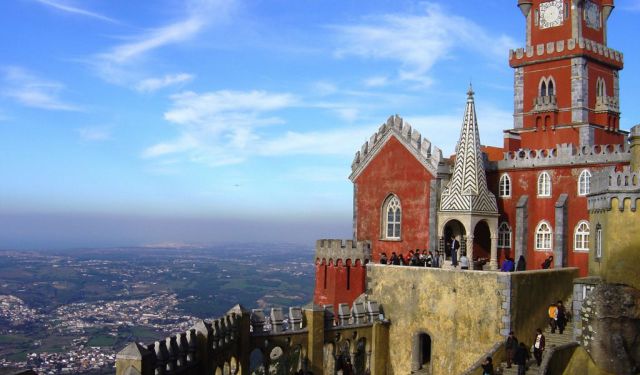
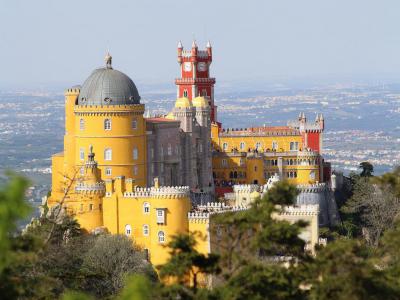
Pena Palace and Moorish Castle Tour
A charming little township on the outskirts of Lisbon, Sintra is a place where there's something for everyone. As if straight out of a fairy tale, this area is a home to several magnificent castles, palaces and gardens, the grandiosity of which fits for a king; and it has been a firm favorite of Portuguese royals since the late 15th century.
The diversity of styles found here is rich –... view more
Tour Duration: 2 Hour(s)
Travel Distance: 3.5 Km or 2.2 Miles
The diversity of styles found here is rich –... view more
Tour Duration: 2 Hour(s)
Travel Distance: 3.5 Km or 2.2 Miles
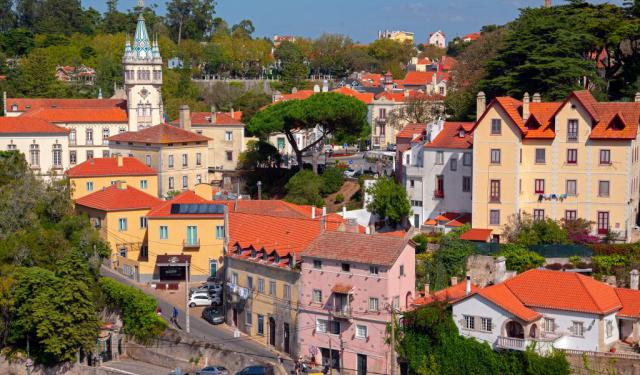
Sintra Introduction Walking Tour
Traces of humanity in Sintra date back to Paleolithic times. At an open air site near the church of Sao Pedro de Canaferrim and the Moorish Castle there were found ceramics from 5,000 BC. The name Sintra is indo-European. It means "bright star" or "sun." Romans called the place "sacred mountain." Ptolemy called it "mountains of the moon."
In 1147 the... view more
Tour Duration: 1 Hour(s)
Travel Distance: 2.0 Km or 1.2 Miles
In 1147 the... view more
Tour Duration: 1 Hour(s)
Travel Distance: 2.0 Km or 1.2 Miles