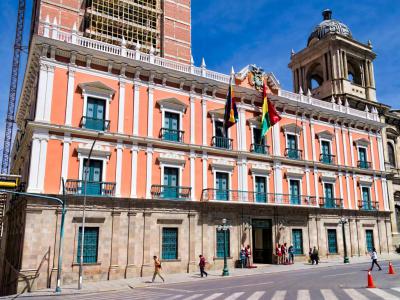


Palacio de Gobierno (Government Palace), La Paz
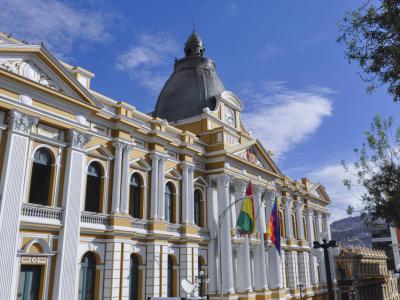
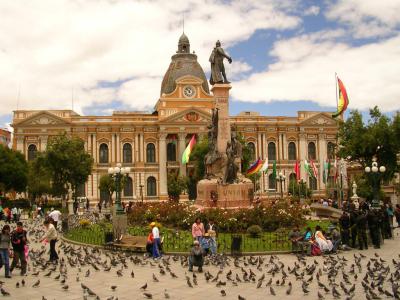
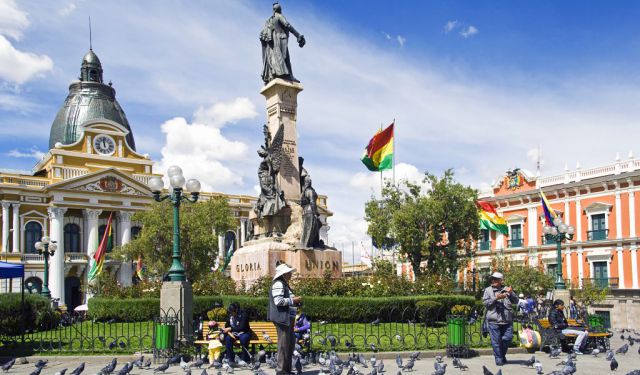
The Government Palace is the official residence and workplace of the Bolivian government. Located in Murillo Square, it holds a central position within the city. Over the course of its history, the building has been known by various names. The nickname “Burned Palace” comes from an event in 1875, when the presidential building was set on fire during an uprising against the government of Tomás Frías. Despite later reconstructions and improvements, the name has remained and is still widely used in La Paz.
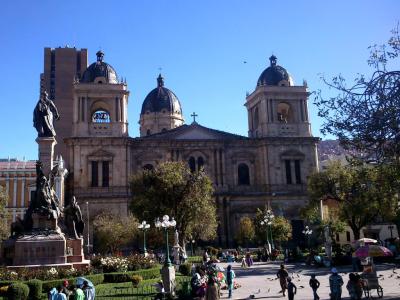
The Government Palace stands next to the Metropolitan Cathedral of La Paz and near the Legislative Palace, which houses Bolivia’s Congress. The close proximity of these three important buildings in Murillo Square highlights the concentration of political and administrative power in this central area of the city.
As the official seat of the Bolivian government, the palace serves as the workplace of the President and other government officials. It plays an important role in the country’s administration and decision-making processes. Its architecture and presence reflect its function as a symbol of authority and national governance.
Today, the Government Palace remains an important part of Bolivia’s political life. It stands as both a historic landmark and a functioning center of government, representing the continuity of Bolivian governance and the role of La Paz as the administrative capital of the country.
The Government Palace stands next to the Metropolitan Cathedral of La Paz and near the Legislative Palace, which houses Bolivia’s Congress. The close proximity of these three important buildings in Murillo Square highlights the concentration of political and administrative power in this central area of the city.
As the official seat of the Bolivian government, the palace serves as the workplace of the President and other government officials. It plays an important role in the country’s administration and decision-making processes. Its architecture and presence reflect its function as a symbol of authority and national governance.
Today, the Government Palace remains an important part of Bolivia’s political life. It stands as both a historic landmark and a functioning center of government, representing the continuity of Bolivian governance and the role of La Paz as the administrative capital of the country.
Want to visit this sight? Check out these Self-Guided Walking Tours in La Paz. Alternatively, you can download the mobile app "GPSmyCity: Walks in 1K+ Cities" from Apple App Store or Google Play Store. The app turns your mobile device to a personal tour guide and it works offline, so no data plan is needed when traveling abroad.
Download The GPSmyCity App



Palacio de Gobierno (Government Palace) on Map
Sight Name: Palacio de Gobierno (Government Palace)
Sight Location: La Paz, Bolivia (See walking tours in La Paz)
Sight Type: Attraction/Landmark
Guide(s) Containing This Sight:
Sight Location: La Paz, Bolivia (See walking tours in La Paz)
Sight Type: Attraction/Landmark
Guide(s) Containing This Sight:
Nearby Sights

Walking Tours in La Paz, Bolivia

Create Your Own Walk in La Paz
Creating your own self-guided walk in La Paz is easy and fun. Choose the city attractions that you want to see and a walk route map will be created just for you. You can even set your hotel as the start point of the walk.
La Paz Monuments Tour
They say monuments are the grappling irons that bind one generation to another, symbolizing the country's aspirations, its past, and its character. The monuments in La Paz do exactly that, holding profound cultural, historical, and symbolic value.
The prominent statue of Pedro Domingo Murillo in Plaza Murillo commemorates the key figure of the La Paz revolution of 1809, one of the chapters... view more
Tour Duration: 1 Hour
Travel Distance: 0.8 Km or 0.5 Miles
The prominent statue of Pedro Domingo Murillo in Plaza Murillo commemorates the key figure of the La Paz revolution of 1809, one of the chapters... view more
Tour Duration: 1 Hour
Travel Distance: 0.8 Km or 0.5 Miles
La Paz Downtown Walking Tour
Nestled within the Andean highlands at over 3,500 meters above sea level, La Paz is the highest capital city in the world. It is also one of Bolivia’s two capitals, alongside Sucre.
La Paz was founded on the site of a small Inca settlement in 1548 by the Spanish conquistador Alonso de Mendoza. It was originally named Nuestra Señora de La Paz, meaning “Our Lady of Peace,” to mark the... view more
Tour Duration: 2 Hours
Travel Distance: 2.8 Km or 1.7 Miles
La Paz was founded on the site of a small Inca settlement in 1548 by the Spanish conquistador Alonso de Mendoza. It was originally named Nuestra Señora de La Paz, meaning “Our Lady of Peace,” to mark the... view more
Tour Duration: 2 Hours
Travel Distance: 2.8 Km or 1.7 Miles