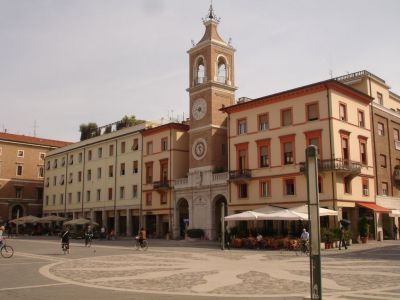


Palazzo Brioli (Brioli Palace), Rimini
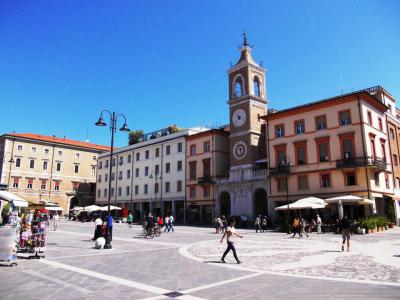
The Brioli Palace, a remarkable landmark in Rimini, graces the eastern side of the historic Three Martyrs Square (Piazza Tre Martiri). Originally constructed in 1547, the palace forms a dramatic backdrop for the iconic Clock Tower (Torre dell’Orologio), an architectural feature that has stood as a symbol of the square since its inception. The tower’s astrological clock, showcasing days, months, and zodiac signs was designed in 1750 by Domenico Carini and remains a captivating highlight.
In 1753, the palace underwent significant renovations by architect Francesco Buonamici, further enhancing its grandeur. During the mid-18th century, the palace also housed a scientific observatory, reflecting its role as a center of intellectual and cultural activity. Over the centuries, it welcomed many notable figures, including Giuseppe Verdi, Prince Umberto of Savoy, Cardinal Bonaparte, and Amedeo, Duke of Aosta, establishing itself as a hub for aristocrats and celebrities.
The building's history is intertwined with prominent families, initially belonging to the Carampi lineage before passing to the Baldini family in the 19th century. Alessandro and Ruggero Baldini, significant promoters of Rimini’s seaside culture, played a key role in reconstructing the palace and maintaining its legacy.
Today, Brioli Palace remains an integral part of Three Martyrs Square, where echoes of Julius Caesar’s legendary speech resonate. Alongside a few remnants of the ancient Roman forum, the palace stands as a testament to Rimini’s vibrant historical and cultural tapestry.
In 1753, the palace underwent significant renovations by architect Francesco Buonamici, further enhancing its grandeur. During the mid-18th century, the palace also housed a scientific observatory, reflecting its role as a center of intellectual and cultural activity. Over the centuries, it welcomed many notable figures, including Giuseppe Verdi, Prince Umberto of Savoy, Cardinal Bonaparte, and Amedeo, Duke of Aosta, establishing itself as a hub for aristocrats and celebrities.
The building's history is intertwined with prominent families, initially belonging to the Carampi lineage before passing to the Baldini family in the 19th century. Alessandro and Ruggero Baldini, significant promoters of Rimini’s seaside culture, played a key role in reconstructing the palace and maintaining its legacy.
Today, Brioli Palace remains an integral part of Three Martyrs Square, where echoes of Julius Caesar’s legendary speech resonate. Alongside a few remnants of the ancient Roman forum, the palace stands as a testament to Rimini’s vibrant historical and cultural tapestry.
Want to visit this sight? Check out these Self-Guided Walking Tours in Rimini. Alternatively, you can download the mobile app "GPSmyCity: Walks in 1K+ Cities" from Apple App Store or Google Play Store. The app turns your mobile device to a personal tour guide and it works offline, so no data plan is needed when traveling abroad.
Download The GPSmyCity App



Palazzo Brioli (Brioli Palace) on Map
Sight Name: Palazzo Brioli (Brioli Palace)
Sight Location: Rimini, Italy (See walking tours in Rimini)
Sight Type: Attraction/Landmark
Sight Location: Rimini, Italy (See walking tours in Rimini)
Sight Type: Attraction/Landmark
Nearby Sights
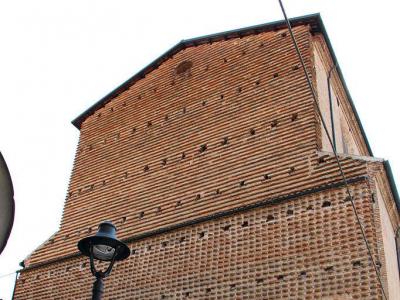
Walking Tours in Rimini, Italy

Create Your Own Walk in Rimini
Creating your own self-guided walk in Rimini is easy and fun. Choose the city attractions that you want to see and a walk route map will be created just for you. You can even set your hotel as the start point of the walk.
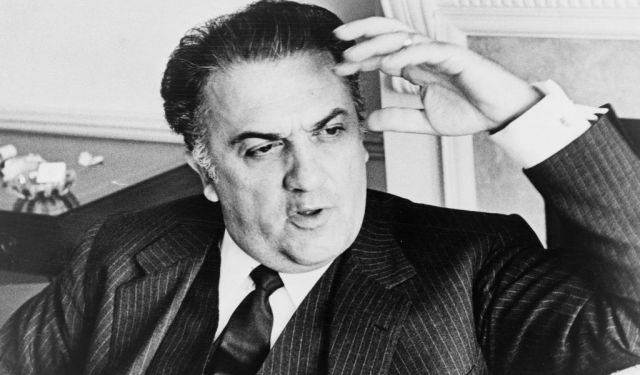
Discover Rimini's Federico Fellini Sites on Foot
Even those vaguely familiar with cinema perhaps have heard of Federico Fellini. In recent history, the picturesque resort town of Rimini, on the Adriatic coast of Italy, "marked" itself primarily as the birthplace and the final resting place of this great film director.
Fellini lived in Rimini from January 1920, when he was born, until January 1939, when he moved out to Rome. While... view more
Tour Duration: 2 Hour(s)
Travel Distance: 3.4 Km or 2.1 Miles
Fellini lived in Rimini from January 1920, when he was born, until January 1939, when he moved out to Rome. While... view more
Tour Duration: 2 Hour(s)
Travel Distance: 3.4 Km or 2.1 Miles
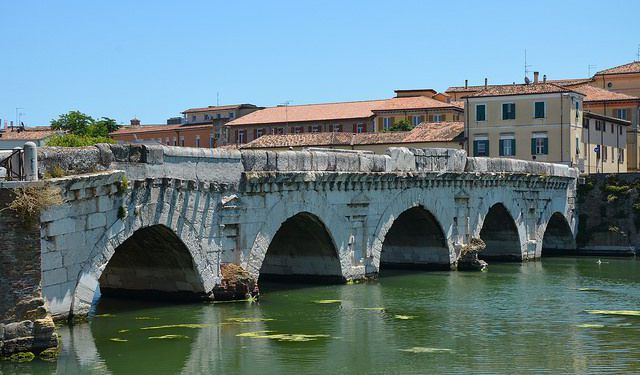
Rimini's Historic Old Town Walking Tour
The Roman Republic founded an outpost called Ariminus at the mouth of the river Marecchia in 268 BC. Rimini was a center of civil wars and invasions. Julius Caesar made his famous "Rubicon" speech to his troops in the city forum.
The city was an all-important junction. The ancient Roman road, via Flaminia, ended in Rimini at the Arch of Augustus, erected in 27 BC. Another old Roman... view more
Tour Duration: 2 Hour(s)
Travel Distance: 2.4 Km or 1.5 Miles
The city was an all-important junction. The ancient Roman road, via Flaminia, ended in Rimini at the Arch of Augustus, erected in 27 BC. Another old Roman... view more
Tour Duration: 2 Hour(s)
Travel Distance: 2.4 Km or 1.5 Miles