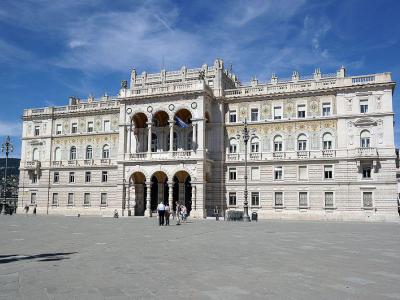


Palazzo della Luogotenenza Austriaca (Palace of the Austrian Lieutenancy), Trieste
The Palace of the Austrian Lieutenancy stands as one of Trieste’s most striking reminders of the city’s long association with the Habsburg Empire. Constructed between 1901 and 1905, the palace was designed by Austrian architect Emil Artmann to serve as the seat of the imperial lieutenancy, the office representing the Emperor’s authority in Trieste and the Littoral region. Its imposing presence on Piazza Unità d’Italia reflects both the city’s strategic importance and its role as a thriving port within the Austro-Hungarian Empire. For visitors, the building offers a direct link to the period when Trieste was the empire’s principal maritime hub, bustling with trade and culture.
Architecturally, the palace blends late historicist grandeur with Renaissance and Baroque-inspired elements, typical of Austro-Hungarian official buildings at the turn of the 20th century. Its symmetrical façade is richly decorated with ornate balconies, sculpted details, and a central clock tower that emphasizes authority and order. The wide windows and harmonious proportions give the building a stately yet approachable appearance, mirroring Trieste’s dual character as both a working port and a cosmopolitan city. The palace forms a centerpiece of the square, facing the sea alongside other monumental buildings from the Habsburg era.
Today, the Palace of the Austrian Lieutenancy serves as the seat of the Prefecture of Trieste, maintaining its role as an important administrative hub. While the interiors are not generally open for casual visits, its exterior alone is worth admiring for its scale and historical resonance. Standing before it, visitors can sense how the city once functioned as a meeting point between Central Europe and the Mediterranean, a crossroads of cultures, commerce, and politics that continues to define Trieste’s unique identity.
Architecturally, the palace blends late historicist grandeur with Renaissance and Baroque-inspired elements, typical of Austro-Hungarian official buildings at the turn of the 20th century. Its symmetrical façade is richly decorated with ornate balconies, sculpted details, and a central clock tower that emphasizes authority and order. The wide windows and harmonious proportions give the building a stately yet approachable appearance, mirroring Trieste’s dual character as both a working port and a cosmopolitan city. The palace forms a centerpiece of the square, facing the sea alongside other monumental buildings from the Habsburg era.
Today, the Palace of the Austrian Lieutenancy serves as the seat of the Prefecture of Trieste, maintaining its role as an important administrative hub. While the interiors are not generally open for casual visits, its exterior alone is worth admiring for its scale and historical resonance. Standing before it, visitors can sense how the city once functioned as a meeting point between Central Europe and the Mediterranean, a crossroads of cultures, commerce, and politics that continues to define Trieste’s unique identity.
Want to visit this sight? Check out these Self-Guided Walking Tours in Trieste. Alternatively, you can download the mobile app "GPSmyCity: Walks in 1K+ Cities" from Apple App Store or Google Play Store. The app turns your mobile device to a personal tour guide and it works offline, so no data plan is needed when traveling abroad.
Download The GPSmyCity App



Palazzo della Luogotenenza Austriaca (Palace of the Austrian Lieutenancy) on Map
Sight Name: Palazzo della Luogotenenza Austriaca (Palace of the Austrian Lieutenancy)
Sight Location: Trieste, Italy (See walking tours in Trieste)
Sight Type: Attraction/Landmark
Sight Location: Trieste, Italy (See walking tours in Trieste)
Sight Type: Attraction/Landmark
Nearby Sights


Walking Tours in Trieste, Italy

Create Your Own Walk in Trieste
Creating your own self-guided walk in Trieste is easy and fun. Choose the city attractions that you want to see and a walk route map will be created just for you. You can even set your hotel as the start point of the walk.
Trieste Introduction Walking Tour
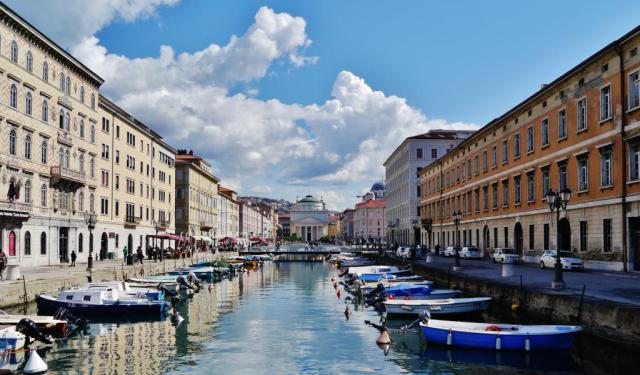
Let’s drop into Trieste, a city that’s always had one foot in Central Europe and the other dipping into the Adriatic. It sits at Italy’s northeastern edge, pressed against Slovenia, where winds tear across the Karst Plateau and caves open like gateways underground. Some call it “Vienna by the Sea,” others swear it’s the “City of Coffee,” but labels never really fit. From the start,... view more
Tour Duration: 2 Hours
Travel Distance: 3.7 Km or 2.3 Miles
Tour Duration: 2 Hours
Travel Distance: 3.7 Km or 2.3 Miles
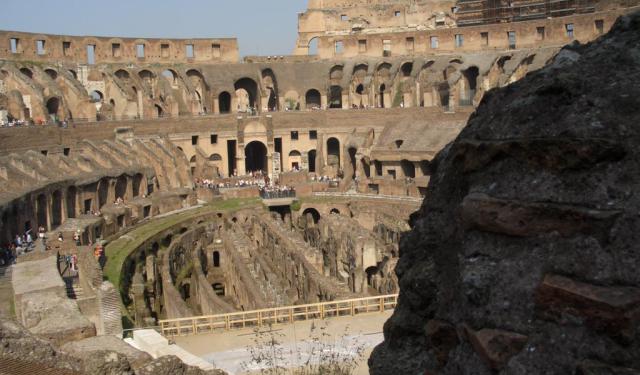
Trieste's Ancient Roman Sites Walking Tour
The Roman remains on Trieste extend along the northwestern slope of San Giusto Hill, overlooking the Gulf of Trieste. Wharves of sandstone slabs dating from the 1st century AD were found by the Roman Theatre. The city walls, ordered by Augustus, were converted to use as terraces.
The Propylaeum of the 1st century AD was the gateway to the sacred area of the Capitoline Temple. There are two... view more
Tour Duration: 1 Hour
Travel Distance: 0.9 Km or 0.6 Miles
The Propylaeum of the 1st century AD was the gateway to the sacred area of the Capitoline Temple. There are two... view more
Tour Duration: 1 Hour
Travel Distance: 0.9 Km or 0.6 Miles
City Walks Overview
