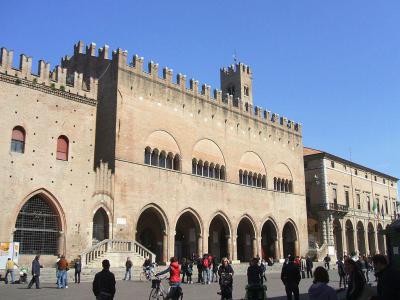


Palazzo dell'Arengo (Arengo Palace), Rimini
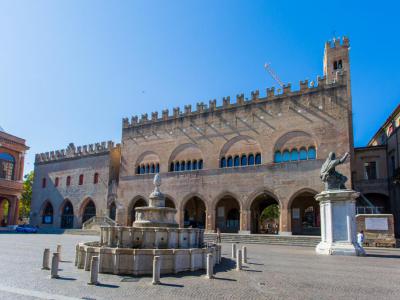
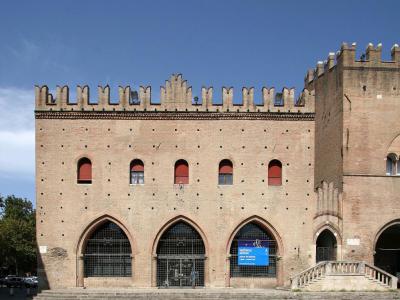
The Arengo Palace (Palazzo dell’Arengo) stands as a majestic example of Romanesque-Gothic architecture in Cavour Square (Piazza Cavour), Rimini. Built in 1204 by the will of the city’s mayor, Modio de’ Carbonesi, the palace served as a hub of political and civic life during the Middle Ages. Its defining features include Ghibelline-style battlements, a grand loggia supported by powerful colonnades and pointed arches, and a large hall on the upper floor adorned with multi-lancet windows.
The Arengo Palace symbolized Rimini's freedom and authority, hosting the General Council in the Middle Ages. Its loggia was a hub for justice, where insolvent debtors faced the lapis magnum ritual. The upper hall preserves 14th-century frescoes, reflecting Rimini’s artistic legacy, while its bell tower once served as a prison, highlighting its civic role.
The palace underwent significant renovations in 1562, 1672, and 1919-1923, with each phase altering its original structure. Despite these changes, key medieval elements, such as the capitals on the loggia’s pillars and the trussed ceiling of the upper hall, have been preserved. Its grand Salone dell’Arengo, accessible via an external staircase, is celebrated for its harmonious proportions and elegant window lines, ranking among the most beautiful halls in Italy.
Today, the Arengo Palace, along with the adjacent Podesta Palace (Palazzo del Podestà), houses the Palazzi dell'Arte Rimini (PART), a contemporary art museum featuring works from the San Patrignano Foundation Collection. This adaptive reuse highlights Rimini’s commitment to blending historical preservation with modern cultural initiatives.
Whether as a medieval seat of power or a contemporary art venue, the Arengo Palace remains a symbol of Rimini's enduring civic and artistic legacy.
The Arengo Palace symbolized Rimini's freedom and authority, hosting the General Council in the Middle Ages. Its loggia was a hub for justice, where insolvent debtors faced the lapis magnum ritual. The upper hall preserves 14th-century frescoes, reflecting Rimini’s artistic legacy, while its bell tower once served as a prison, highlighting its civic role.
The palace underwent significant renovations in 1562, 1672, and 1919-1923, with each phase altering its original structure. Despite these changes, key medieval elements, such as the capitals on the loggia’s pillars and the trussed ceiling of the upper hall, have been preserved. Its grand Salone dell’Arengo, accessible via an external staircase, is celebrated for its harmonious proportions and elegant window lines, ranking among the most beautiful halls in Italy.
Today, the Arengo Palace, along with the adjacent Podesta Palace (Palazzo del Podestà), houses the Palazzi dell'Arte Rimini (PART), a contemporary art museum featuring works from the San Patrignano Foundation Collection. This adaptive reuse highlights Rimini’s commitment to blending historical preservation with modern cultural initiatives.
Whether as a medieval seat of power or a contemporary art venue, the Arengo Palace remains a symbol of Rimini's enduring civic and artistic legacy.
Want to visit this sight? Check out these Self-Guided Walking Tours in Rimini. Alternatively, you can download the mobile app "GPSmyCity: Walks in 1K+ Cities" from Apple App Store or Google Play Store. The app turns your mobile device to a personal tour guide and it works offline, so no data plan is needed when traveling abroad.
Download The GPSmyCity App



Palazzo dell'Arengo (Arengo Palace) on Map
Sight Name: Palazzo dell'Arengo (Arengo Palace)
Sight Location: Rimini, Italy (See walking tours in Rimini)
Sight Type: Attraction/Landmark
Sight Location: Rimini, Italy (See walking tours in Rimini)
Sight Type: Attraction/Landmark
Nearby Sights
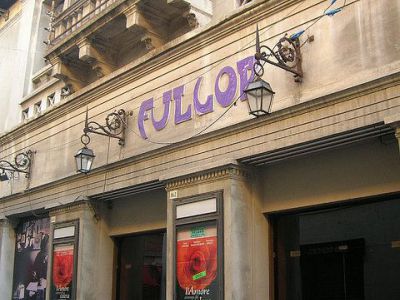
Walking Tours in Rimini, Italy

Create Your Own Walk in Rimini
Creating your own self-guided walk in Rimini is easy and fun. Choose the city attractions that you want to see and a walk route map will be created just for you. You can even set your hotel as the start point of the walk.
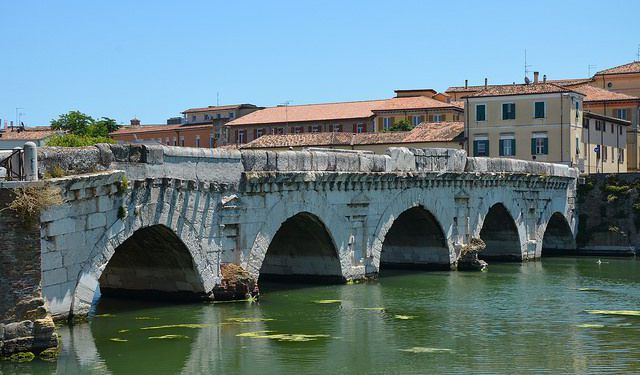
Rimini's Historic Old Town Walking Tour
The Roman Republic founded an outpost called Ariminus at the mouth of the river Marecchia in 268 BC. Rimini was a center of civil wars and invasions. Julius Caesar made his famous "Rubicon" speech to his troops in the city forum.
The city was an all-important junction. The ancient Roman road, via Flaminia, ended in Rimini at the Arch of Augustus, erected in 27 BC. Another old Roman... view more
Tour Duration: 2 Hours
Travel Distance: 2.4 Km or 1.5 Miles
The city was an all-important junction. The ancient Roman road, via Flaminia, ended in Rimini at the Arch of Augustus, erected in 27 BC. Another old Roman... view more
Tour Duration: 2 Hours
Travel Distance: 2.4 Km or 1.5 Miles
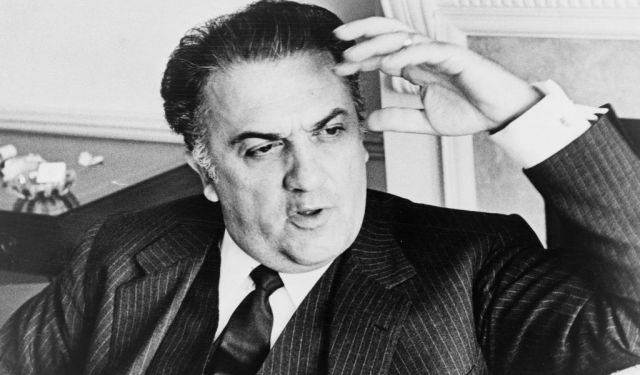
Discover Rimini's Federico Fellini Sites on Foot
Even those vaguely familiar with cinema perhaps have heard of Federico Fellini. In recent history, the picturesque resort town of Rimini, on the Adriatic coast of Italy, "marked" itself primarily as the birthplace and the final resting place of this great film director.
Fellini lived in Rimini from January 1920, when he was born, until January 1939, when he moved out to Rome. While... view more
Tour Duration: 2 Hours
Travel Distance: 3.4 Km or 2.1 Miles
Fellini lived in Rimini from January 1920, when he was born, until January 1939, when he moved out to Rome. While... view more
Tour Duration: 2 Hours
Travel Distance: 3.4 Km or 2.1 Miles