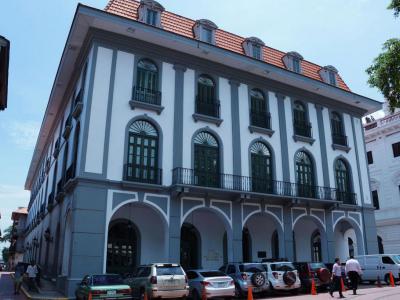


Panama Canal Museum, Panama City (must see)
The Panama Canal Museum documents the long and complex history of the canal, tracing its development from early ambitions to its eventual transfer from U.S. control to the Panamanian government in 1999. Through maps, photographs, engineering plans, and personal accounts, the exhibitions explain how one of the world’s most important waterways came into being. In the lobby, visitors will notice a large original Fresnel lens, once used in a lighthouse along the canal route.
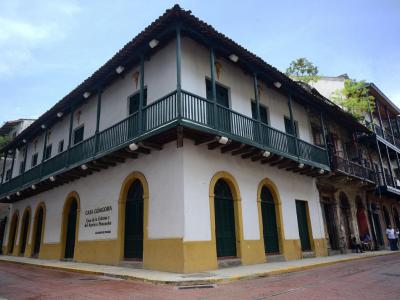
The museum building itself is historically significant. Constructed in 1874, it originally served as the headquarters of the French Universal Interoceanic Canal Company, which led the first canal attempt. In 1912, it was repurposed as Panama City’s main post office, further embedding it in the civic life of the city. Inside, the museum is arranged over several levels, each focusing on a different phase of the canal’s history. Exhibits explore the global interest in creating a shortcut between the Atlantic and Pacific oceans, as well as the immense challenges that delayed its realization.
The museum gives particular attention to the French attempt of the 1880s, which was ultimately abandoned after costs spiraled and tens of thousands of workers died, primarily from disease. The narrative then shifts to the American-led effort, highlighting advances in engineering, disease control, and organization that made completion possible. Another key focus is daily life on the canal. Exhibits examine the experiences of workers who arrived from dozens of countries and whose labor made the project possible.
Tip: Most exhibit text is presented in Spanish. An English-language audio guide is available and can be helpful for visitors who prefer narrated explanations.
The museum building itself is historically significant. Constructed in 1874, it originally served as the headquarters of the French Universal Interoceanic Canal Company, which led the first canal attempt. In 1912, it was repurposed as Panama City’s main post office, further embedding it in the civic life of the city. Inside, the museum is arranged over several levels, each focusing on a different phase of the canal’s history. Exhibits explore the global interest in creating a shortcut between the Atlantic and Pacific oceans, as well as the immense challenges that delayed its realization.
The museum gives particular attention to the French attempt of the 1880s, which was ultimately abandoned after costs spiraled and tens of thousands of workers died, primarily from disease. The narrative then shifts to the American-led effort, highlighting advances in engineering, disease control, and organization that made completion possible. Another key focus is daily life on the canal. Exhibits examine the experiences of workers who arrived from dozens of countries and whose labor made the project possible.
Tip: Most exhibit text is presented in Spanish. An English-language audio guide is available and can be helpful for visitors who prefer narrated explanations.
Want to visit this sight? Check out these Self-Guided Walking Tours in Panama City. Alternatively, you can download the mobile app "GPSmyCity: Walks in 1K+ Cities" from Apple App Store or Google Play Store. The app turns your mobile device to a personal tour guide and it works offline, so no data plan is needed when traveling abroad.
Download The GPSmyCity App



Panama Canal Museum on Map
Sight Name: Panama Canal Museum
Sight Location: Panama City, Panama (See walking tours in Panama City)
Sight Type: Museum/Gallery
Guide(s) Containing This Sight:
Sight Location: Panama City, Panama (See walking tours in Panama City)
Sight Type: Museum/Gallery
Guide(s) Containing This Sight:
Nearby Sights
Walking Tours in Panama City, Panama

Create Your Own Walk in Panama City
Creating your own self-guided walk in Panama City is easy and fun. Choose the city attractions that you want to see and a walk route map will be created just for you. You can even set your hotel as the start point of the walk.
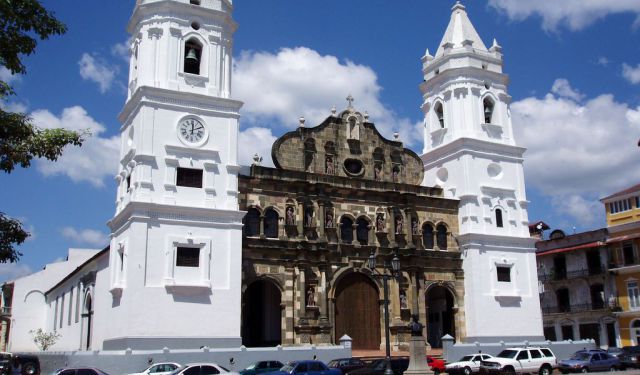
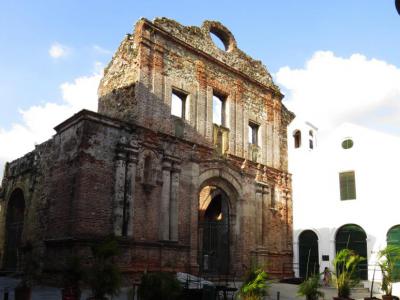
Historical Churches Tour
Caught between the lush green mountains and the ocean, the capital of Panama is a concentration of colors and styles. The evidence of Spanish influence is still vivid in the colonial landmarks, especially religious sites.
For centuries, colonial religious architecture has played an important role in the configuration of the urban layout of Panama City. By the 17th century, convents had an... view more
Tour Duration: 1 Hour
Travel Distance: 1 Km or 0.6 Miles
For centuries, colonial religious architecture has played an important role in the configuration of the urban layout of Panama City. By the 17th century, convents had an... view more
Tour Duration: 1 Hour
Travel Distance: 1 Km or 0.6 Miles
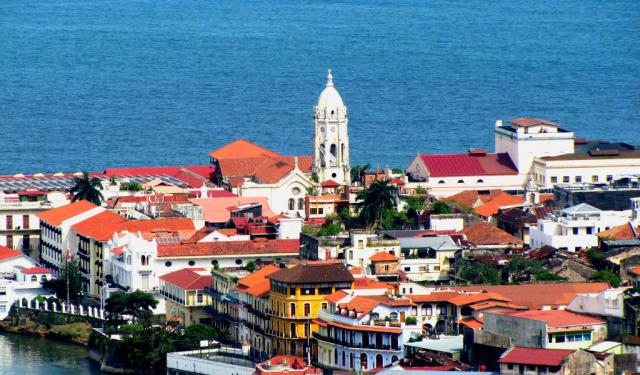
A Walk in Panama's Charming Old Town
German polymath and geographer Alexander von Humboldt, who analyzed the Isthmus of Panama as a natural crossroads in the early 19th century, famously described Panama as a place destined by nature to become the meeting point of nations.
Founded on 15 August 1519 by the Spanish conquistador Pedro Arias Dávila, Panama City was the first permanent European settlement on the Pacific coast of the... view more
Tour Duration: 1 Hour
Travel Distance: 0.9 Km or 0.6 Miles
Founded on 15 August 1519 by the Spanish conquistador Pedro Arias Dávila, Panama City was the first permanent European settlement on the Pacific coast of the... view more
Tour Duration: 1 Hour
Travel Distance: 0.9 Km or 0.6 Miles
City Walks Overview
