

Historical Churches Tour (Self Guided), Panama City
Caught between the lush green mountains and the ocean, the capital of Panama is a concentration of colors and styles. The evidence of Spanish influence is still vivid in the colonial landmarks, especially religious sites.
For centuries, colonial religious architecture has played an important role in the configuration of the urban layout of Panama City. By the 17th century, convents had an enormous presence in the center of the city, occupying the interior of the walled enclosures. The Historic District of Panama City was inscribed on the World Heritage List in 1997 for representing an exceptional example of 17th century colonial urban planning in the Americas.
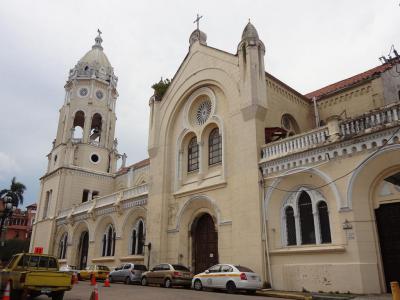
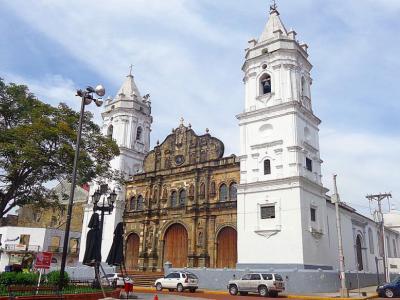
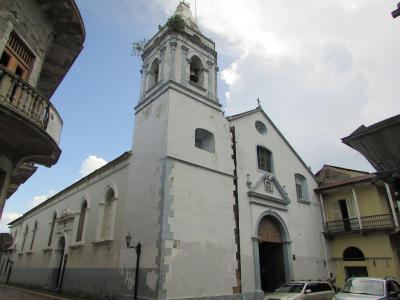
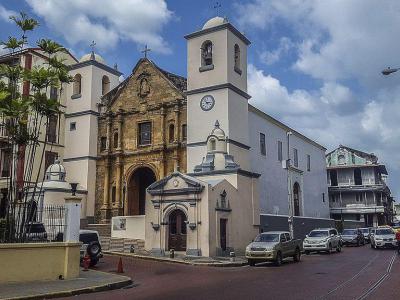
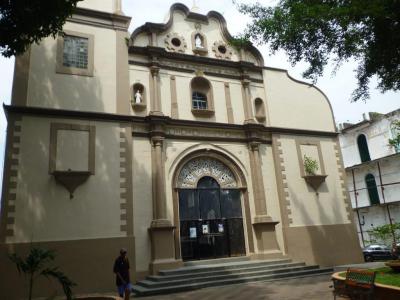
Most of these religious buildings are of Catholic denomination and designated National Historic Monuments. Particularly noteworthy among them are the Church of Saint Francis of Assisi – originally built in the 17th century and almost destroyed during the fires of 1737 and 1756 – its current edifice dates from 1918, when it was almost completely renovated. The Metropolitan Cathedral of Panama – a heir to the Cathedral erected by Pope Adrian VI in the great house of the Cacique Cémaco in 1510. Iglesia San Jose (Church of San Jose) was built between 1671 and 1677, and is famous for its baroque altar surrounded by a legend that it was saved from pirates by the monks. Iglesia la Merced (Church of Merced) – its construction dates back to 1680 and is the only church in the Old Town that preserves the original facade from its first construction.
If you would like to explore these and other beautiful old churches of Panama City in more detail, take this self-guided walking tour.
For centuries, colonial religious architecture has played an important role in the configuration of the urban layout of Panama City. By the 17th century, convents had an enormous presence in the center of the city, occupying the interior of the walled enclosures. The Historic District of Panama City was inscribed on the World Heritage List in 1997 for representing an exceptional example of 17th century colonial urban planning in the Americas.
Most of these religious buildings are of Catholic denomination and designated National Historic Monuments. Particularly noteworthy among them are the Church of Saint Francis of Assisi – originally built in the 17th century and almost destroyed during the fires of 1737 and 1756 – its current edifice dates from 1918, when it was almost completely renovated. The Metropolitan Cathedral of Panama – a heir to the Cathedral erected by Pope Adrian VI in the great house of the Cacique Cémaco in 1510. Iglesia San Jose (Church of San Jose) was built between 1671 and 1677, and is famous for its baroque altar surrounded by a legend that it was saved from pirates by the monks. Iglesia la Merced (Church of Merced) – its construction dates back to 1680 and is the only church in the Old Town that preserves the original facade from its first construction.
If you would like to explore these and other beautiful old churches of Panama City in more detail, take this self-guided walking tour.
How it works: Download the app "GPSmyCity: Walks in 1K+ Cities" from Apple App Store or Google Play Store to your mobile phone or tablet. The app turns your mobile device into a personal tour guide and its built-in GPS navigation functions guide you from one tour stop to next. The app works offline, so no data plan is needed when traveling abroad.
Historical Churches Tour Map
Guide Name: Historical Churches Tour
Guide Location: Panama » Panama City (See other walking tours in Panama City)
Guide Type: Self-guided Walking Tour (Sightseeing)
# of Attractions: 5
Tour Duration: 1 Hour(s)
Travel Distance: 1.0 Km or 0.6 Miles
Author: DanaOffice
Sight(s) Featured in This Guide:
Guide Location: Panama » Panama City (See other walking tours in Panama City)
Guide Type: Self-guided Walking Tour (Sightseeing)
# of Attractions: 5
Tour Duration: 1 Hour(s)
Travel Distance: 1.0 Km or 0.6 Miles
Author: DanaOffice
Sight(s) Featured in This Guide:
- Church of Saint Francis of Assisi
- Metropolitan Cathedral
- Iglesia San Jose (Church of San Jose)
- Iglesia la Merced (Church of Merced)
- Iglesia Santa Ana (Church of Santa Ana)
1) Church of Saint Francis of Assisi
The Church of Saint Francis of Assisi is a Roman Catholic church, holding an important place in the religious and architectural history of the Old Town. The church stands on land that once formed part of the Franciscan convent complex, closely linked to the intellectual and religious life of colonial Panama. The original structures on this site suffered repeated damage, notably during fires in 1737 and 1756, which affected much of the surrounding area. Over time, the church was rebuilt and altered, with major restoration work completed in 1998, giving it the appearance seen today.
Architecturally, the church is characterized by a solid stone structure typical of early colonial religious buildings. Its interior preserves a strong Baroque influence, particularly in the carved wooden altars. These were produced with the involvement of local Indigenous artisans, working under the supervision of Franciscan monks, reflecting the blending of European religious design with regional craftsmanship.
The main altar, composed of finely carved and painted tropical hardwood elements, stands out as one of the church’s most notable features and an important example of colonial religious art in Panama. While restrained on the exterior, the interior reveals a level of decorative detail that rewards closer attention.
Architecturally, the church is characterized by a solid stone structure typical of early colonial religious buildings. Its interior preserves a strong Baroque influence, particularly in the carved wooden altars. These were produced with the involvement of local Indigenous artisans, working under the supervision of Franciscan monks, reflecting the blending of European religious design with regional craftsmanship.
The main altar, composed of finely carved and painted tropical hardwood elements, stands out as one of the church’s most notable features and an important example of colonial religious art in Panama. While restrained on the exterior, the interior reveals a level of decorative detail that rewards closer attention.
2) Metropolitan Cathedral
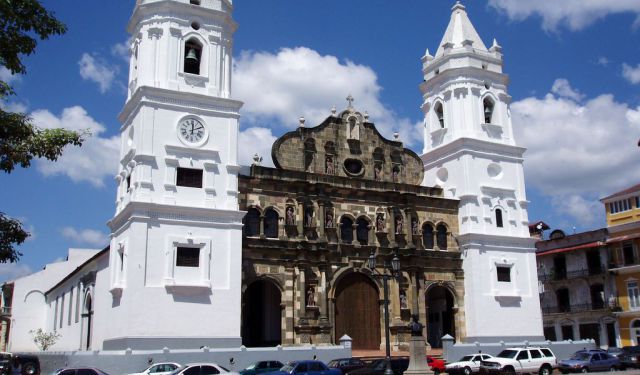
No visit to Panama City’s Old Town feels complete without stopping at the Metropolitan Cathedral of Panama. Construction began in 1688 and stretched over more than a century, with the cathedral finally completed and consecrated in 1796. Over the centuries, the cathedral has endured earthquakes, fires, and periods of decline that affected much of the surrounding city. While neighboring buildings were damaged or replaced during the nineteenth century, the cathedral itself remained standing.
Architecturally, the cathedral is defined by contrast rather than ornament. The central facade, constructed using stone reused from the ruins of Old Panama, appears darker and more subdued. This section is flanked by two lighter-colored bell towers, creating a visual balance. Rather than following a single architectural plan, the cathedral combines elements shaped by different periods of colonial design.
Set into niches on the exterior are wooden statues of saints, including a prominent figure of the Virgin Mary associated with Santa María la Antigua, the patroness of Panama. These figures are later additions and are often mistaken for stone due to their weathered appearance.
Inside, the cathedral reveals a more elaborate interior. The main altarpiece, dating largely to the late nineteenth century, is composed of multiple types of marble combined with gold leaf. It was restored between 2018 and 2019, when the altar was reconsecrated and blessed by Pope Francis during his visit to Panama. Stained-glass windows filter light into the nave, adding color to a space that has witnessed centuries of religious, political, and civic life.
Architecturally, the cathedral is defined by contrast rather than ornament. The central facade, constructed using stone reused from the ruins of Old Panama, appears darker and more subdued. This section is flanked by two lighter-colored bell towers, creating a visual balance. Rather than following a single architectural plan, the cathedral combines elements shaped by different periods of colonial design.
Set into niches on the exterior are wooden statues of saints, including a prominent figure of the Virgin Mary associated with Santa María la Antigua, the patroness of Panama. These figures are later additions and are often mistaken for stone due to their weathered appearance.
Inside, the cathedral reveals a more elaborate interior. The main altarpiece, dating largely to the late nineteenth century, is composed of multiple types of marble combined with gold leaf. It was restored between 2018 and 2019, when the altar was reconsecrated and blessed by Pope Francis during his visit to Panama. Stained-glass windows filter light into the nave, adding color to a space that has witnessed centuries of religious, political, and civic life.
3) Iglesia San Jose (Church of San Jose)
One of the most magnificent places to visit in Panama City is the Church of San Jose, located at Avenida A, near Plaza Herrera, Casco Viejo. The main attraction of this church is the seventeenth century Baroque style Golden Altar, Altar de Oro. The altar was originally located in a temple by the similar name, San Jose. After the pirates had burned down the Old Panama city, the altar was relocated to the new place and entirely renovated in 1915. Carved in mahogany, the altar is covered in golden leaf.
There is an interesting story behind the altar which says that when Henry Morgan, the infamous pirate, attacked Panama Viejo, the priest of the church concealed the golden altar by coloring it black. This was done in order to save this valuable object from being looted by the pirate gang. It also seems that the priest had told Henry Morgan that the altar had been stolen by another pirate and even managed to convince Henry to give a handsome donation to replace the supposedly stolen golden artifact.
When you go to the city of Casco Viejo, you must visit the Church of San Jose, to admire the magnificent golden altar.
There is an interesting story behind the altar which says that when Henry Morgan, the infamous pirate, attacked Panama Viejo, the priest of the church concealed the golden altar by coloring it black. This was done in order to save this valuable object from being looted by the pirate gang. It also seems that the priest had told Henry Morgan that the altar had been stolen by another pirate and even managed to convince Henry to give a handsome donation to replace the supposedly stolen golden artifact.
When you go to the city of Casco Viejo, you must visit the Church of San Jose, to admire the magnificent golden altar.
4) Iglesia la Merced (Church of Merced)
If you are a history lover or want to visit some exquisite historic divine place, Church of Merced is the right place for you. The Church of Merced is a very old church which was constructed way back in 1680 and situated in Casco Antiguo, which is close to Cathedral Park within Panama City. The church is remarkable and its beautiful and intricate Baroque stonework was moved piece by piece from the original site in Panama Viejo which incidentally was the initial city center that the Spaniards had founded.
Although the chapel has undergone renovations recently, its ornate Baroque facade is a classic example of Baroque architecture that is only observed amongst the oldest buildings in Casco Viejo. The church’s Baroque façade squarely faces anyone walking from the North towards it on Avenida Central. Despite the small structure, the stones with which the church is built have an impressive and long history. The church is said to have a better exterior than the interior and that it is best photographed and viewed late in the afternoon. The afternoon sun’s rays provide a sparkling effect on the tiny chapels and the bell towers. This amazing sight makes every tourist’s trip worthwhile and mesmerizing.
A museum that houses documents of historic and religious value lies in close proximity to the church, which incidentally was the site for storing birth and baptism records in Panama City.
Although the chapel has undergone renovations recently, its ornate Baroque facade is a classic example of Baroque architecture that is only observed amongst the oldest buildings in Casco Viejo. The church’s Baroque façade squarely faces anyone walking from the North towards it on Avenida Central. Despite the small structure, the stones with which the church is built have an impressive and long history. The church is said to have a better exterior than the interior and that it is best photographed and viewed late in the afternoon. The afternoon sun’s rays provide a sparkling effect on the tiny chapels and the bell towers. This amazing sight makes every tourist’s trip worthwhile and mesmerizing.
A museum that houses documents of historic and religious value lies in close proximity to the church, which incidentally was the site for storing birth and baptism records in Panama City.
5) Iglesia Santa Ana (Church of Santa Ana)
In the center of the city of Panama is located the township of Santa Ana. The town gets its name from the Church of Santa Ana, a shrine dedicated to Santa Ana, who, according to Christian tradition, is the mother of Mary and the grandmother of Jesus. The Church of Santa Ana was initially a parish church. The Count of Santa Ana donated funds to build the church and it was consecrated in 1764. The church was very popular in its early days and attracted a community of humble people all around it. These were the people who were engaged in various trades and the town of Santa Ana grew in reputation as a transit point for many trade routes.
The church was destroyed by fire in the year 1854 and was completely renovated only in the twentieth century. In 1980, the Church of Santa Ana was declared a historic landmark of national importance. Surrounding the church is a park that also goes by the name of the church. The area surrounding the church is far from the main tourist attractions that are in the old part of the city. You can experience a bit of the traditional Panamanian lifestyle with folk festivals, dance and music in a gazebo that is also a national landmark.
Walking Tours in Panama City, Panama

Create Your Own Walk in Panama City
Creating your own self-guided walk in Panama City is easy and fun. Choose the city attractions that you want to see and a walk route map will be created just for you. You can even set your hotel as the start point of the walk.
Old Town Walking Tour
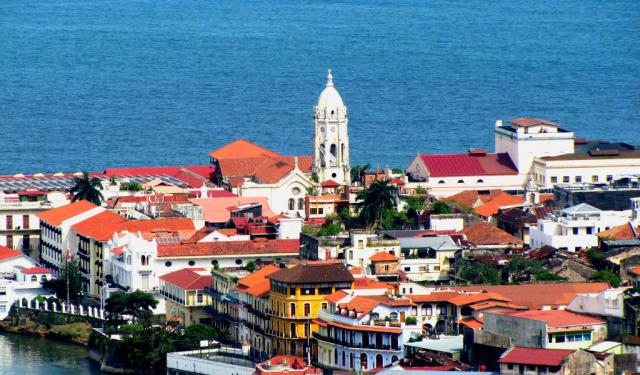
German polymath and geographer Alexander von Humboldt, who analyzed the Isthmus of Panama as a natural crossroads in the early 19th century, famously described Panama as a place destined by nature to become the meeting point of nations.
Founded on 15 August 1519 by the Spanish conquistador Pedro Arias Dávila, Panama City was the first permanent European settlement on the Pacific coast of the... view more
Tour Duration: 1 Hour(s)
Travel Distance: 0.9 Km or 0.6 Miles
Founded on 15 August 1519 by the Spanish conquistador Pedro Arias Dávila, Panama City was the first permanent European settlement on the Pacific coast of the... view more
Tour Duration: 1 Hour(s)
Travel Distance: 0.9 Km or 0.6 Miles
The Most Popular Cities
/ view all