

Parque Bolivar (Bolivar Park), Panama City
In 1826, Simón Bolívar, widely respected as a Latin American hero for his role in the region’s independence movements, convened the Amphictyonic Congress of Panama in the chapter house of the former Convent of San Francisco. There he urged newly independent Latin American republics to consider unity and cooperation in the face of lingering Spanish influence, even proposing a league of nations.
Although the plan for a unified state did not come to fruition, Bolívar’s military leadership helped secure independence for Venezuela, Colombia, Ecuador, Peru, and Bolivia. In 1756, a fire destroyed the houses on this site, leaving an open space that was later named Bolívar Square in 1883 in honor of Bolívar’s legacy. Today, this space functions as a park.
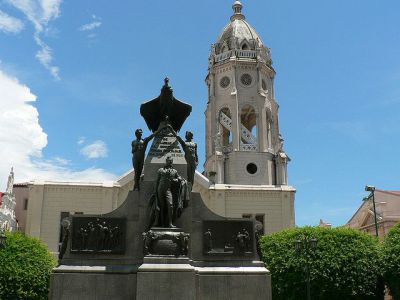
At the center of the park stands a monument to Simón Bolívar, unveiled in 1926 to coincide with the 100th anniversary of the Amphictyonic Congress. The sculpture uses decorative friezes to evoke moments from Bolívar’s life and is topped by an Andean condor, a symbol of independence and liberty.
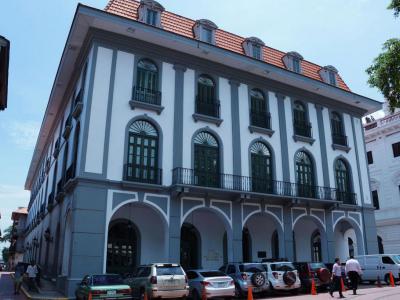
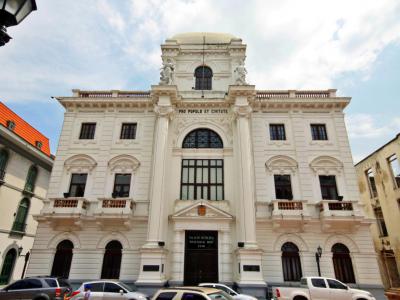
Along the northern side of the park is the Simón Bolívar School, a building traditionally associated with Bolívar’s time in Panama and the park’s educational heritage, though the actual Congress took place in the Bolívar Hall within the former Franciscan complex.
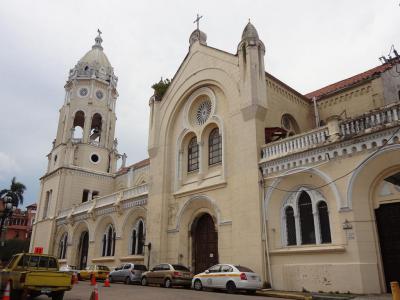
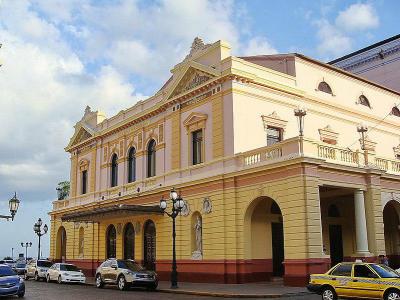
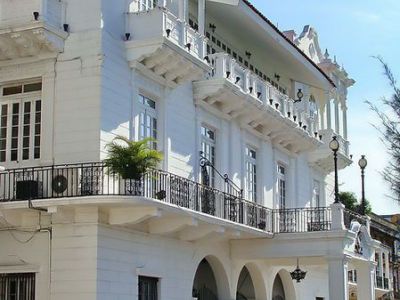
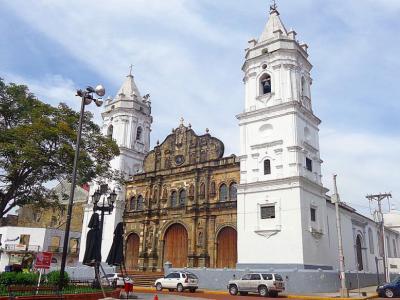
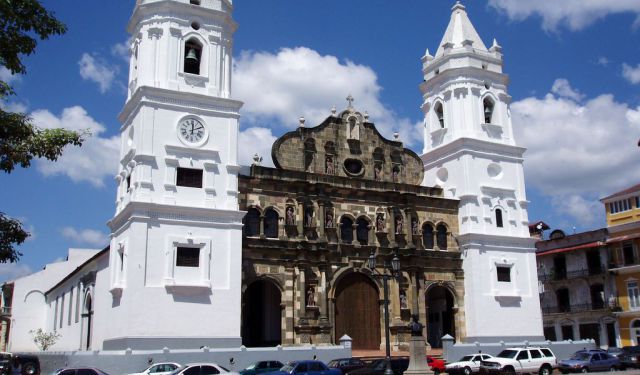
The park’s eastern edge is defined by two prominent historic buildings. On the left, the Bolívar Palace, which today houses Panama’s Ministry of Foreign Relations and contains the preserved Bolívar Hall where the Amphictyonic Congress was held. Immediately beside it, on the right, stands the Church of Saint Francis of Assisi, the surviving element of the former Franciscan convent complex.
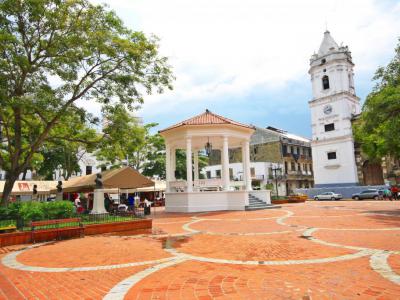
Bolívar Park remains an integral part of daily life in Panama City. Mango and palm trees shade benches where people gather, children play, and residents chat, giving the space a relaxed atmosphere that blends its historic significance with everyday urban life.
Although the plan for a unified state did not come to fruition, Bolívar’s military leadership helped secure independence for Venezuela, Colombia, Ecuador, Peru, and Bolivia. In 1756, a fire destroyed the houses on this site, leaving an open space that was later named Bolívar Square in 1883 in honor of Bolívar’s legacy. Today, this space functions as a park.
At the center of the park stands a monument to Simón Bolívar, unveiled in 1926 to coincide with the 100th anniversary of the Amphictyonic Congress. The sculpture uses decorative friezes to evoke moments from Bolívar’s life and is topped by an Andean condor, a symbol of independence and liberty.
Along the northern side of the park is the Simón Bolívar School, a building traditionally associated with Bolívar’s time in Panama and the park’s educational heritage, though the actual Congress took place in the Bolívar Hall within the former Franciscan complex.
The park’s eastern edge is defined by two prominent historic buildings. On the left, the Bolívar Palace, which today houses Panama’s Ministry of Foreign Relations and contains the preserved Bolívar Hall where the Amphictyonic Congress was held. Immediately beside it, on the right, stands the Church of Saint Francis of Assisi, the surviving element of the former Franciscan convent complex.
Bolívar Park remains an integral part of daily life in Panama City. Mango and palm trees shade benches where people gather, children play, and residents chat, giving the space a relaxed atmosphere that blends its historic significance with everyday urban life.
Want to visit this sight? Check out these Self-Guided Walking Tours in Panama City. Alternatively, you can download the mobile app "GPSmyCity: Walks in 1K+ Cities" from Apple App Store or Google Play Store. The app turns your mobile device to a personal tour guide and it works offline, so no data plan is needed when traveling abroad.
Download The GPSmyCity App



Parque Bolivar (Bolivar Park) on Map
Sight Name: Parque Bolivar (Bolivar Park)
Sight Location: Panama City, Panama (See walking tours in Panama City)
Sight Type: Attraction/Landmark
Guide(s) Containing This Sight:
Sight Location: Panama City, Panama (See walking tours in Panama City)
Sight Type: Attraction/Landmark
Guide(s) Containing This Sight:
Nearby Sights
Walking Tours in Panama City, Panama

Create Your Own Walk in Panama City
Creating your own self-guided walk in Panama City is easy and fun. Choose the city attractions that you want to see and a walk route map will be created just for you. You can even set your hotel as the start point of the walk.
Historical Churches Tour
Caught between the lush green mountains and the ocean, the capital of Panama is a concentration of colors and styles. The evidence of Spanish influence is still vivid in the colonial landmarks, especially religious sites.
For centuries, colonial religious architecture has played an important role in the configuration of the urban layout of Panama City. By the 17th century, convents had an... view more
Tour Duration: 1 Hour
Travel Distance: 1 Km or 0.6 Miles
For centuries, colonial religious architecture has played an important role in the configuration of the urban layout of Panama City. By the 17th century, convents had an... view more
Tour Duration: 1 Hour
Travel Distance: 1 Km or 0.6 Miles
A Walk in Panama's Charming Old Town
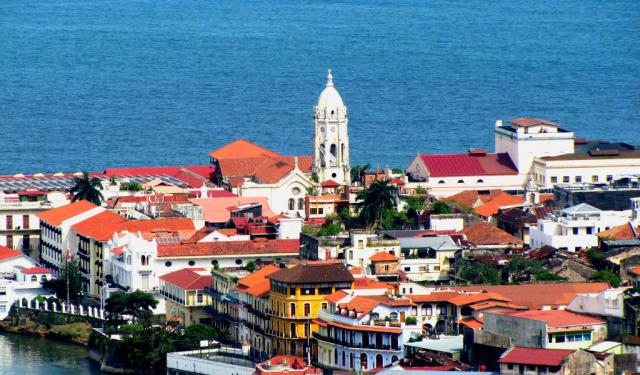
German polymath and geographer Alexander von Humboldt, who analyzed the Isthmus of Panama as a natural crossroads in the early 19th century, famously described Panama as a place destined by nature to become the meeting point of nations.
Founded on 15 August 1519 by the Spanish conquistador Pedro Arias Dávila, Panama City was the first permanent European settlement on the Pacific coast of the... view more
Tour Duration: 1 Hour
Travel Distance: 0.9 Km or 0.6 Miles
Founded on 15 August 1519 by the Spanish conquistador Pedro Arias Dávila, Panama City was the first permanent European settlement on the Pacific coast of the... view more
Tour Duration: 1 Hour
Travel Distance: 0.9 Km or 0.6 Miles
City Walks Overview
