

Pashupatinath Temple, Kathmandu (must see)
Pashupatinath Temple is Nepal’s most sacred Hindu shrine and one of the world’s most important places of worship dedicated to Shiva, one of the principal deities of Hinduism. Standing on the banks of the sacred Bagmati River, just east of central Kathmandu, it has attracted pilgrims for well over a thousand years.
The exact date of its foundation is uncertain, although references to a shrine at this site appear as early as around AD 400. According to tradition, it was established by the Licchavi king Prachanda Deva, while the present structure largely dates from about 1692.
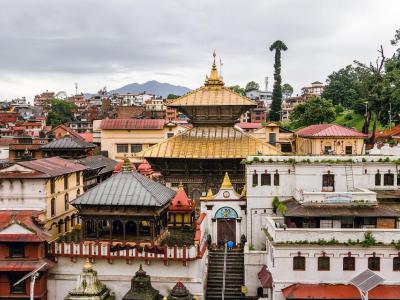
The main temple is an outstanding example of traditional Nepalese pagoda architecture. Its two-storey structure rises above the surrounding shrines and is crowned by a two-tiered copper roof covered with gold. Silver-plated doors lead into the sacred interior, while a golden pinnacle completes the richly decorated exterior. Because only Hindu practitioners can view the temple's structures from up close, non-Hindu visitors can cross the pedestrian bridge over the river and ascend to the elevated stone viewing terraces on the opposite bank to look directly across at the gold-plated pagoda roof. Considering you're facing the temple's entrance, turn right and then walk in an eastern direction toward the river until you meet two pedestrian bridges. Cross the one placed more to the south then climb the staircase at its other end for about 80 meters until you notice a viewing terrace on your left.
Inside stands the principal object of worship, a stone Shiva lingam approximately one meter (or 3.3 feet) high, set on a silver base and carved with faces looking in four directions, representing different aspects of Shiva.
Daily worship is conducted by two distinct hereditary groups of caretakers: the Bhattas and the Rajbhandaris. Crucially, only the South Indian Bhattas serve as the high priests allowed to physically touch the sacred lingam and perform inner pujas, while the Rajbhandaris serve as temple treasurers and assistants who are strictly forbidden from touching the deity. Another important feature of the complex is the riverbank cremation site, which is split between Arya Ghat and Bhasmeshwar Ghat. In the evening, visitors may witness the atmospheric Bagmati Aarati ceremony, accompanied by chanting, bells, incense, conch shells, and glowing oil lamps reflected in the water.
The exact date of its foundation is uncertain, although references to a shrine at this site appear as early as around AD 400. According to tradition, it was established by the Licchavi king Prachanda Deva, while the present structure largely dates from about 1692.
The main temple is an outstanding example of traditional Nepalese pagoda architecture. Its two-storey structure rises above the surrounding shrines and is crowned by a two-tiered copper roof covered with gold. Silver-plated doors lead into the sacred interior, while a golden pinnacle completes the richly decorated exterior. Because only Hindu practitioners can view the temple's structures from up close, non-Hindu visitors can cross the pedestrian bridge over the river and ascend to the elevated stone viewing terraces on the opposite bank to look directly across at the gold-plated pagoda roof. Considering you're facing the temple's entrance, turn right and then walk in an eastern direction toward the river until you meet two pedestrian bridges. Cross the one placed more to the south then climb the staircase at its other end for about 80 meters until you notice a viewing terrace on your left.
Inside stands the principal object of worship, a stone Shiva lingam approximately one meter (or 3.3 feet) high, set on a silver base and carved with faces looking in four directions, representing different aspects of Shiva.
Daily worship is conducted by two distinct hereditary groups of caretakers: the Bhattas and the Rajbhandaris. Crucially, only the South Indian Bhattas serve as the high priests allowed to physically touch the sacred lingam and perform inner pujas, while the Rajbhandaris serve as temple treasurers and assistants who are strictly forbidden from touching the deity. Another important feature of the complex is the riverbank cremation site, which is split between Arya Ghat and Bhasmeshwar Ghat. In the evening, visitors may witness the atmospheric Bagmati Aarati ceremony, accompanied by chanting, bells, incense, conch shells, and glowing oil lamps reflected in the water.
Want to visit this sight? Check out these Self-Guided Walking Tours in Kathmandu. Alternatively, you can download the mobile app "GPSmyCity: Walks in 1K+ Cities" from Apple App Store or Google Play Store. The app turns your mobile device to a personal tour guide and it works offline, so no data plan is needed when traveling abroad.
Download The GPSmyCity App



Pashupatinath Temple on Map
Sight Name: Pashupatinath Temple
Sight Location: Kathmandu, Nepal (See walking tours in Kathmandu)
Sight Type: Religious
Guide(s) Containing This Sight:
Sight Location: Kathmandu, Nepal (See walking tours in Kathmandu)
Sight Type: Religious
Guide(s) Containing This Sight:
Nearby Sights
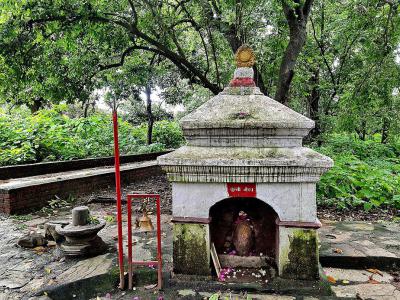
Walking Tours in Kathmandu, Nepal

Create Your Own Walk in Kathmandu
Creating your own self-guided walk in Kathmandu is easy and fun. Choose the city attractions that you want to see and a walk route map will be created just for you. You can even set your hotel as the start point of the walk.
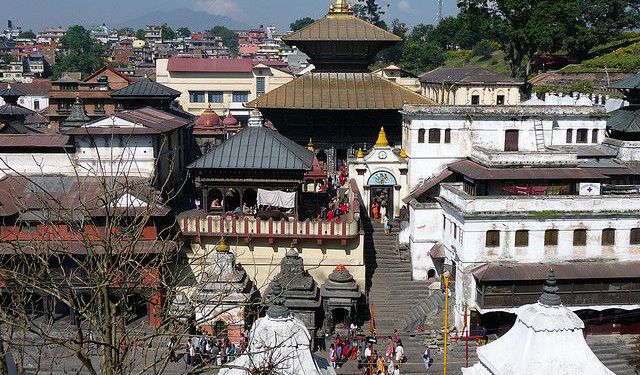
Pashupatinath Temple Complex Tour
Pashupatinath Temple Complex in Kathmandu is a sacred religious site that holds great significance for Hindus worldwide. The area in which it is located, near the Tribhuvan International Airport, is truly picturesque - surrounded by virgin jungle. This complex encompasses several notable locations, each contributing to its spiritual and cultural importance.
At the heart of the complex stands... view more
Tour Duration: 1 Hour(s)
Travel Distance: 1.8 Km or 1.1 Miles
At the heart of the complex stands... view more
Tour Duration: 1 Hour(s)
Travel Distance: 1.8 Km or 1.1 Miles
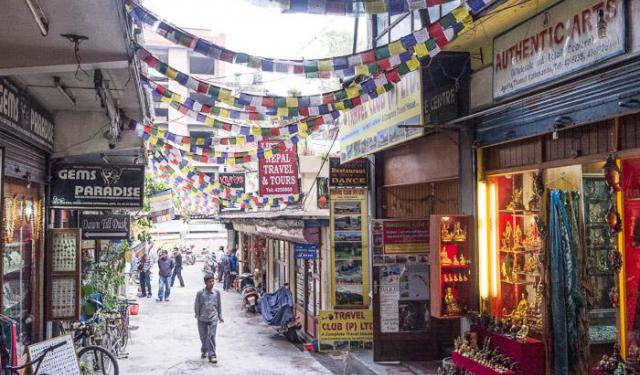
Kathmandu's Street Markets Tour
Ardent shoppers – those keen on street markets in particular – will find Kathmandu a true heaven. In this city, street markets are where you can buy some exotic (and often good-quality) products, such as monk's robes, soft silks, woolen garments, artifacts, and more, at very good prices. The list of bargains is truly endless. Sadly, however, in Kathmandu, you are not allowed to buy... view more
Tour Duration: 1 Hour(s)
Travel Distance: 2.2 Km or 1.4 Miles
Tour Duration: 1 Hour(s)
Travel Distance: 2.2 Km or 1.4 Miles
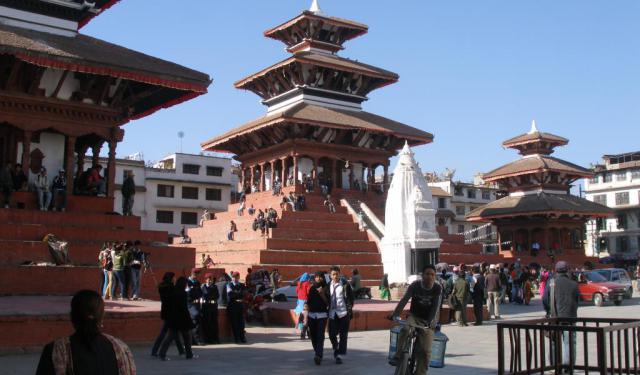
Kathmandu Old Town Walking Tour
Kathmandu, the capital of Nepal, is one of South Asia's oldest continuously inhabited cities. Nestled in the fertile Kathmandu Valley at an elevation of about 1,400 meters (or 4,600 feet), it has served for centuries as the heart of the Himalayan region.
The city's name is derived from Kasthamandap, meaning "Wooden Pavilion" in Sanskrit. This remarkable three-story structure... view more
Tour Duration: 2 Hour(s)
Travel Distance: 2.9 Km or 1.8 Miles
The city's name is derived from Kasthamandap, meaning "Wooden Pavilion" in Sanskrit. This remarkable three-story structure... view more
Tour Duration: 2 Hour(s)
Travel Distance: 2.9 Km or 1.8 Miles