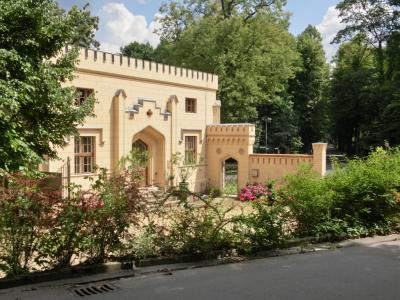


Pförtnerhaus (Gatehouse), Potsdam
The gatehouses of Park Babelsberg in Potsdam were built as part of the entrances to the park designed in the style of English parks. These structures served both as sentry boxes and living quarters for the gatekeepers. Originally, there were four gatehouses, of which three have survived to the present day.
The first gatehouse, constructed between 1842 and 1843, is located at the main entrance to Park Babelsberg on the avenue to Glienicke, at the corner of Karl-Marx-Straße. It was designed by the architect Ludwig Persius, with Eduard Gebhardt as the master builder. This building is characterized by its plastered facade, reminiscent of a Norman castle, designed in the Tudor style. Until the Second World War, it functioned as an office and living space for the park’s gatekeepers and attendants.
A second gatehouse was added in 1866 at the southeastern entrance on Grenzstraße, near the intersection of Alt Nowawes and the avenue to Glienicke. Designed by Reinhold Persius, who continued his father's neo-Gothic architectural approach, this gatehouse was constructed with financial limitations that restricted its design to mere hints of the intended neo-Gothic style. This gatehouse, along with the first, is located farther from Babelsberg Castle.
The third gatehouse, known as the Mill Gate, is located in the southern part of the park on the street Am Babelsberger Park, near Mühlenstraße. Built in 1866 by Reinhold Persius, it also reflected the modest neo-Gothic style constrained by limited financial resources. This gatehouse was severely damaged during the Second World War and was demolished after 1945, leaving only its foundations, gate pillars, and a perimeter wall. In 1990, the entrance was renewed, though the gatehouse itself was not reconstructed.
These gatehouses exemplify the historical and architectural significance of the park, blending functional elements with the stylistic influences of the era, despite the varying degrees of preservation and reconstruction over time.
The first gatehouse, constructed between 1842 and 1843, is located at the main entrance to Park Babelsberg on the avenue to Glienicke, at the corner of Karl-Marx-Straße. It was designed by the architect Ludwig Persius, with Eduard Gebhardt as the master builder. This building is characterized by its plastered facade, reminiscent of a Norman castle, designed in the Tudor style. Until the Second World War, it functioned as an office and living space for the park’s gatekeepers and attendants.
A second gatehouse was added in 1866 at the southeastern entrance on Grenzstraße, near the intersection of Alt Nowawes and the avenue to Glienicke. Designed by Reinhold Persius, who continued his father's neo-Gothic architectural approach, this gatehouse was constructed with financial limitations that restricted its design to mere hints of the intended neo-Gothic style. This gatehouse, along with the first, is located farther from Babelsberg Castle.
The third gatehouse, known as the Mill Gate, is located in the southern part of the park on the street Am Babelsberger Park, near Mühlenstraße. Built in 1866 by Reinhold Persius, it also reflected the modest neo-Gothic style constrained by limited financial resources. This gatehouse was severely damaged during the Second World War and was demolished after 1945, leaving only its foundations, gate pillars, and a perimeter wall. In 1990, the entrance was renewed, though the gatehouse itself was not reconstructed.
These gatehouses exemplify the historical and architectural significance of the park, blending functional elements with the stylistic influences of the era, despite the varying degrees of preservation and reconstruction over time.
Want to visit this sight? Check out these Self-Guided Walking Tours in Potsdam. Alternatively, you can download the mobile app "GPSmyCity: Walks in 1K+ Cities" from Apple App Store or Google Play Store. The app turns your mobile device to a personal tour guide and it works offline, so no data plan is needed when traveling abroad.
Download The GPSmyCity App



Pförtnerhaus (Gatehouse) on Map
Sight Name: Pförtnerhaus (Gatehouse)
Sight Location: Potsdam, Germany (See walking tours in Potsdam)
Sight Type: Attraction/Landmark
Sight Location: Potsdam, Germany (See walking tours in Potsdam)
Sight Type: Attraction/Landmark
Nearby Sights
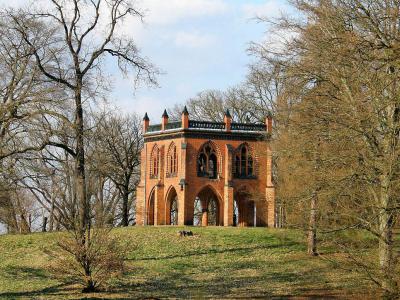
Walking Tours in Potsdam, Germany

Create Your Own Walk in Potsdam
Creating your own self-guided walk in Potsdam is easy and fun. Choose the city attractions that you want to see and a walk route map will be created just for you. You can even set your hotel as the start point of the walk.
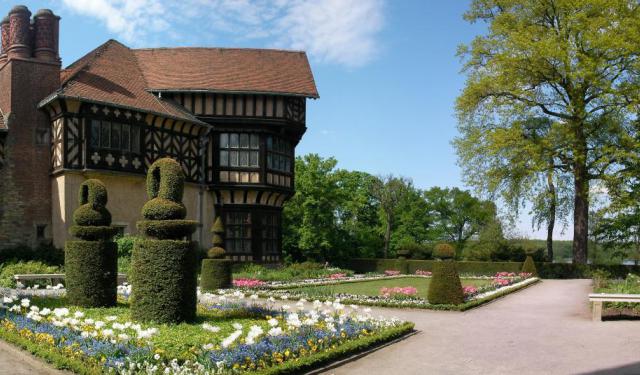
Neuer Garten Walking Tour
Laid out at the behest of Friedrich William II in 1787, Potsdam's Neuer Garten (New Garden) was indeed "new" compared to the already in place Sanssouci Park.
Between 1816 and 1828, the area was modified further as an English-style, open landscape garden, with an aim to reproduce nature – trees and plants were left to grow naturally, unshaped and untrimmed. Rural life was also... view more
Tour Duration: 2 Hour(s)
Travel Distance: 2.8 Km or 1.7 Miles
Between 1816 and 1828, the area was modified further as an English-style, open landscape garden, with an aim to reproduce nature – trees and plants were left to grow naturally, unshaped and untrimmed. Rural life was also... view more
Tour Duration: 2 Hour(s)
Travel Distance: 2.8 Km or 1.7 Miles
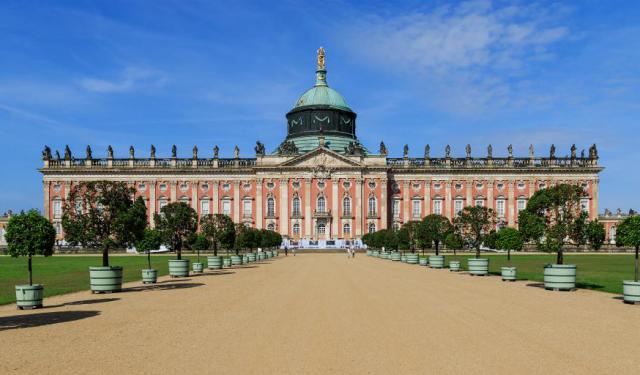
Sanssouci Park Walking Tour
Sanssouci Park is a unique Potsdam landmark that occupies 290 hectares in the heart of the city. The Park is named after the Sanssouci Palace that it surrounds, which in turn takes its name from the French phrase "sans souci", which means carefree, and implies that the palace was designated as a place of fun, rather than a seat of power.
Indeed, the Sanssouci Palace was built in 1747... view more
Tour Duration: 2 Hour(s)
Travel Distance: 3.9 Km or 2.4 Miles
Indeed, the Sanssouci Palace was built in 1747... view more
Tour Duration: 2 Hour(s)
Travel Distance: 3.9 Km or 2.4 Miles
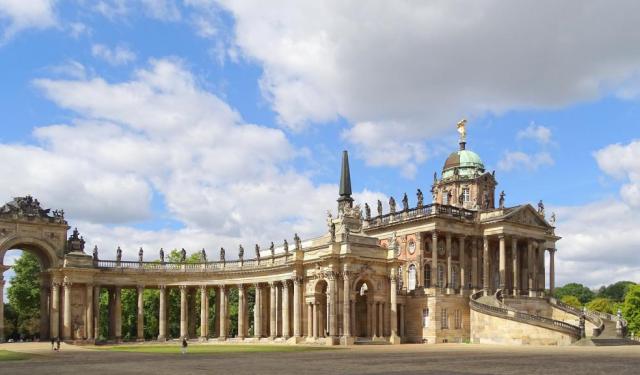
Potsdam City Center and Sanssouci Palace Walking Tour
Potsdam was likely founded during the seventh century by the Hevelli tribe. The town was mentioned by the name of Poztupimi in a document from Emperor Otto III. The name likely came from an old Western Slavonic term roughly meaning "beneath the oaks."
By the early 1300s, a small town had formed with a town charter. By 1573 the town had around 2,000 people living there. Potsdam rose to... view more
Tour Duration: 2 Hour(s)
Travel Distance: 3.8 Km or 2.4 Miles
By the early 1300s, a small town had formed with a town charter. By 1573 the town had around 2,000 people living there. Potsdam rose to... view more
Tour Duration: 2 Hour(s)
Travel Distance: 3.8 Km or 2.4 Miles