

Pineda Palace, Valencia
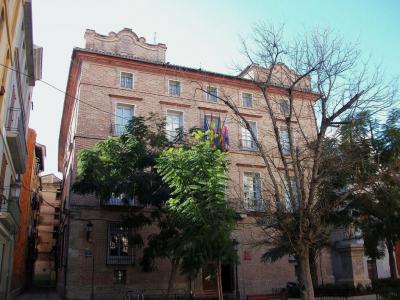
The Pineda Palace, also known as the Palace of Mayor Pineda, is an impressive neoclassical structure located in Valencia. It was originally built as the residence of Mayor Francisco Salvador de Pineda, lending it its current name.
The palace was constructed between 1728 and 1733. In 1902, the "Padres Maristas" occupied the palace, and in 1918, it was purchased by the "Congregation of Sisters of the Sacred Heart of Jesus and of the Holy Angels." It served as a convent, residence, and temporary home for up to 60 women. The palace survived the Spanish Civil War but was damaged in the 1957 flood. In 1980, the Generalitat Valenciana acquired and restored the palace from 1990 to 1992.
The palace has a neoclassical façade with two brick balconies. It's symmetrical, with small towers by the entrance. The Pineda coat of arms is displayed above the entrance, with a damaged but visible date of 1732, believed to be the building's foundation year. The shield also has an inscription in the Filacteria, indicating the charge and the holder's name.
The building is roughly rectangular, measuring about 23 by 34 meters. It has a central hallway, mezzanine level, two main floors, and an attic. A rear garden now serves as the cafeteria terrace. The palace has undergone renovations to adapt interior walls for education and add a turret to the rear facade. The exterior garden features a sculpture by Joan de Joanes.
The Pineda Palace currently houses classrooms and meeting rooms used by the Generalitat Valenciana, organizations, and educational/governmental institutions. It serves as the headquarters for the Menendez Pelayo International University and the Valencian Institute of Public Administration.
The palace was constructed between 1728 and 1733. In 1902, the "Padres Maristas" occupied the palace, and in 1918, it was purchased by the "Congregation of Sisters of the Sacred Heart of Jesus and of the Holy Angels." It served as a convent, residence, and temporary home for up to 60 women. The palace survived the Spanish Civil War but was damaged in the 1957 flood. In 1980, the Generalitat Valenciana acquired and restored the palace from 1990 to 1992.
The palace has a neoclassical façade with two brick balconies. It's symmetrical, with small towers by the entrance. The Pineda coat of arms is displayed above the entrance, with a damaged but visible date of 1732, believed to be the building's foundation year. The shield also has an inscription in the Filacteria, indicating the charge and the holder's name.
The building is roughly rectangular, measuring about 23 by 34 meters. It has a central hallway, mezzanine level, two main floors, and an attic. A rear garden now serves as the cafeteria terrace. The palace has undergone renovations to adapt interior walls for education and add a turret to the rear facade. The exterior garden features a sculpture by Joan de Joanes.
The Pineda Palace currently houses classrooms and meeting rooms used by the Generalitat Valenciana, organizations, and educational/governmental institutions. It serves as the headquarters for the Menendez Pelayo International University and the Valencian Institute of Public Administration.
Want to visit this sight? Check out these Self-Guided Walking Tours in Valencia. Alternatively, you can download the mobile app "GPSmyCity: Walks in 1K+ Cities" from Apple App Store or Google Play Store. The app turns your mobile device to a personal tour guide and it works offline, so no data plan is needed when traveling abroad.
Download The GPSmyCity App



Pineda Palace on Map
Sight Name: Pineda Palace
Sight Location: Valencia, Spain (See walking tours in Valencia)
Sight Type: Attraction/Landmark
Sight Location: Valencia, Spain (See walking tours in Valencia)
Sight Type: Attraction/Landmark
Nearby Sights
Walking Tours in Valencia, Spain

Create Your Own Walk in Valencia
Creating your own self-guided walk in Valencia is easy and fun. Choose the city attractions that you want to see and a walk route map will be created just for you. You can even set your hotel as the start point of the walk.
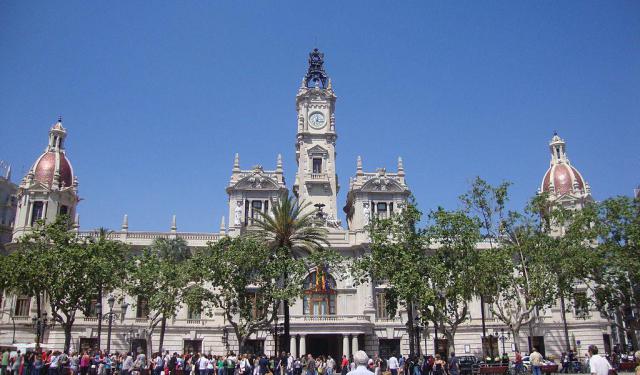
Valencia's Classical Architecture Tour
In Valencia, the architecture tells you right away-this city has layers. Indeed, this is not just a coastal getaway with sunshine, beaches, and a well-earned reputation for paella. Beneath the bright skies, “Spain’s Third Capital” reveals a rich and sometimes surprising blend of styles, bold in contrast yet delicate in detail. Nowhere is this more visible than in the Old Town, where nearly... view more
Tour Duration: 2 Hour(s)
Travel Distance: 3.3 Km or 2.1 Miles
Tour Duration: 2 Hour(s)
Travel Distance: 3.3 Km or 2.1 Miles
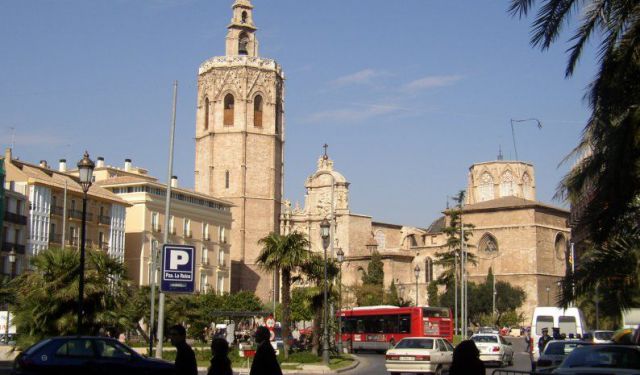
Valencia Old Town Walking Tour
Valencia’s Old Town is the sort of place where the Romans, Moors, medieval merchants, Gothic builders, Baroque decorators, and modern shoppers all seem to have comfortably found their place (albeit at different times). Beneath today’s squares, Roman streets and forum remains sit quietly underground, while above them, the city’s Islamic-era street plan still winds and twists, refusing to... view more
Tour Duration: 2 Hour(s)
Travel Distance: 3.0 Km or 1.9 Miles
Tour Duration: 2 Hour(s)
Travel Distance: 3.0 Km or 1.9 Miles
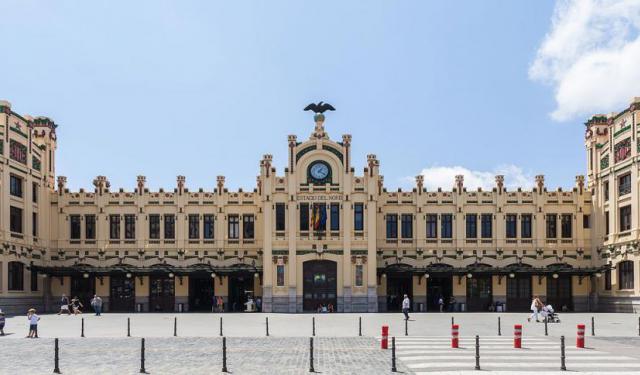
Valencia Top Attractions Walking Tour
Valencia, Spain’s third-largest city, has been around since 138 BC, when it was founded by the Romans as a colony for battle-tested veterans. Known then as Valentia, which means “valor,” it honored the courage of its first inhabitants. The city was destroyed in 75 BC by Pompey the Great, but was rebuilt within a century, later becoming home to Visigoths and then the Moors, who transformed... view more
Tour Duration: 2 Hour(s)
Travel Distance: 3.0 Km or 1.9 Miles
Tour Duration: 2 Hour(s)
Travel Distance: 3.0 Km or 1.9 Miles
Contemporary Architecture Walk
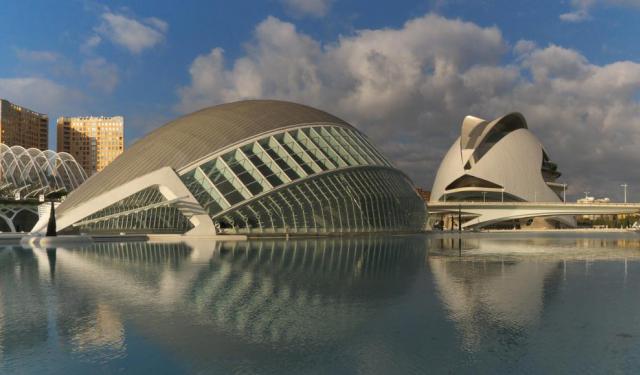
With one foot in the past and the other planted firmly in the future, Valencia manages a balancing act few European cities can pull off. Gothic bell towers, Baroque façades, bustling markets, and centuries-old plazas all share the stage with structures that look as though they were delivered directly from the year 2150. Among the city’s many architectural personalities, contemporary design... view more
Tour Duration: 1 Hour(s)
Travel Distance: 1.4 Km or 0.9 Miles
Tour Duration: 1 Hour(s)
Travel Distance: 1.4 Km or 0.9 Miles