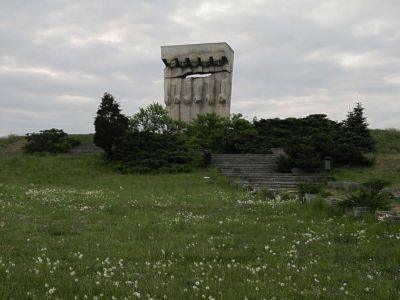


Plaszow Concentration Camp, Krakow
The Płaszów Concentration Camp (Kraków-Płaszów Camp) emerged as a Nazi German labor and concentration facility in 1942. Situated in Płaszów, a southern enclave of Kraków that is now part of the Podgórze district, the camp was erected by the SS shortly after the German incursion into Poland and the subsequent establishment of the semi-colonial General Government district in the occupied region of south-central Poland.
Its primary objective was to exploit Jewish individuals as a captive workforce, subjecting them to enslavement. The camp held a staggering population of 25,000 men, women, and children concurrently, although the total count of individuals who endured its horrors exceeded 150,000 over time. Notoriously infamous for its appalling acts of terror, the camp was under the command of Amon Göth, an SS commandant hailing from Vienna. His treatment of prisoners was marked by sadistic cruelty and frequent killings.
Today, the site once occupied by the camp is characterized by sparsely wooded hills and fields. It houses a substantial memorial dedicated to all the victims, accompanied by two smaller monuments. One of these monuments is a tribute to the Jewish victims, while the other commemorates the Hungarian Jewish victims, both situated along the camp's former perimeter. Amon Göth's villa still stands as a grim reminder of the past. An additional modest monument positioned at the opposite end of the site serves as a memorial for the first execution of Polish (non-Jewish) prisoners in 1939.
The Płaszów camp garnered attention through its portrayal in the film "Schindler's List" (1993), which chronicles the life of Oskar Schindler. This somber chapter of history has earned the camp a place on the UNESCO World Heritage list.
Its primary objective was to exploit Jewish individuals as a captive workforce, subjecting them to enslavement. The camp held a staggering population of 25,000 men, women, and children concurrently, although the total count of individuals who endured its horrors exceeded 150,000 over time. Notoriously infamous for its appalling acts of terror, the camp was under the command of Amon Göth, an SS commandant hailing from Vienna. His treatment of prisoners was marked by sadistic cruelty and frequent killings.
Today, the site once occupied by the camp is characterized by sparsely wooded hills and fields. It houses a substantial memorial dedicated to all the victims, accompanied by two smaller monuments. One of these monuments is a tribute to the Jewish victims, while the other commemorates the Hungarian Jewish victims, both situated along the camp's former perimeter. Amon Göth's villa still stands as a grim reminder of the past. An additional modest monument positioned at the opposite end of the site serves as a memorial for the first execution of Polish (non-Jewish) prisoners in 1939.
The Płaszów camp garnered attention through its portrayal in the film "Schindler's List" (1993), which chronicles the life of Oskar Schindler. This somber chapter of history has earned the camp a place on the UNESCO World Heritage list.
Want to visit this sight? Check out these Self-Guided Walking Tours in Krakow. Alternatively, you can download the mobile app "GPSmyCity: Walks in 1K+ Cities" from Apple App Store or Google Play Store. The app turns your mobile device to a personal tour guide and it works offline, so no data plan is needed when traveling abroad.
Download The GPSmyCity App



Plaszow Concentration Camp on Map
Sight Name: Plaszow Concentration Camp
Sight Location: Krakow, Poland (See walking tours in Krakow)
Sight Type: Attraction/Landmark
Sight Location: Krakow, Poland (See walking tours in Krakow)
Sight Type: Attraction/Landmark
Nearby Sights
Walking Tours in Krakow, Poland

Create Your Own Walk in Krakow
Creating your own self-guided walk in Krakow is easy and fun. Choose the city attractions that you want to see and a walk route map will be created just for you. You can even set your hotel as the start point of the walk.
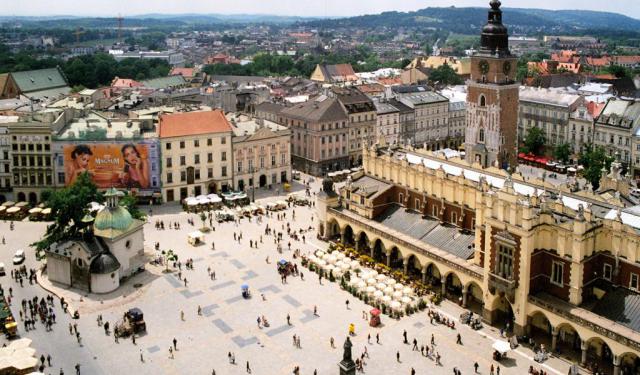
Krakow Old Town Walking Tour
“Kraków has shaped me more than any other place on Earth.” These words from Pope John Paul II brought the city into the global limelight.
The city's name is traditionally linked to Krak, or Krakus, a legendary ruler said to have founded the city after defeating a dragon beneath Wawel Hill. Though the tale is mythological, the name itself derives from this early Slavic personal name,... view more
Tour Duration: 2 Hour(s)
Travel Distance: 3.3 Km or 2.1 Miles
The city's name is traditionally linked to Krak, or Krakus, a legendary ruler said to have founded the city after defeating a dragon beneath Wawel Hill. Though the tale is mythological, the name itself derives from this early Slavic personal name,... view more
Tour Duration: 2 Hour(s)
Travel Distance: 3.3 Km or 2.1 Miles
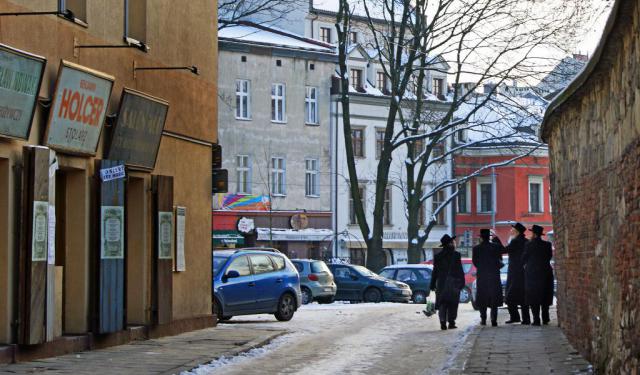
Jewish Heritage Tour in Krakow
The history of Kraków’s Jewish community stands among the most significant chapters of Jewish life in Central Europe. Jews first settled in Kraków in the 13th century, drawn by the city’s expanding trade networks and by greater tolerance compared to other European regions. Early Jewish residents lived mainly around what is today the Old Town and enjoyed a degree of royal protection. However,... view more
Tour Duration: 2 Hour(s)
Travel Distance: 3.0 Km or 1.9 Miles
Tour Duration: 2 Hour(s)
Travel Distance: 3.0 Km or 1.9 Miles
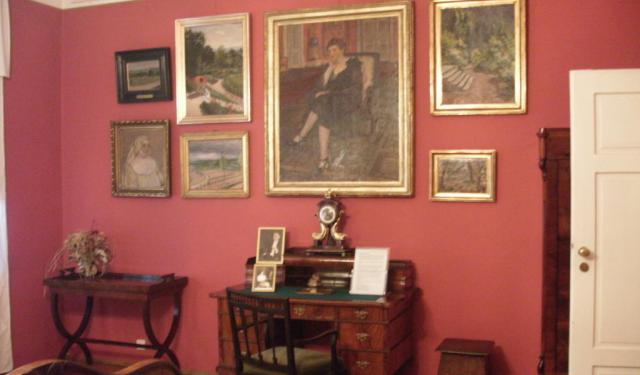
Historical House Museums Tour
Well-preserved historical buildings can often tell the stories of their city more vividly than any history book. Krakow, the old capital and cultural center of Poland, for many years, has been the home of many important Poles. Today, their former residences have been converted into house museums where visitors can learn about their inhabitants and see what life was like in the past.
One such... view more
Tour Duration: 1 Hour(s)
Travel Distance: 2.0 Km or 1.2 Miles
One such... view more
Tour Duration: 1 Hour(s)
Travel Distance: 2.0 Km or 1.2 Miles
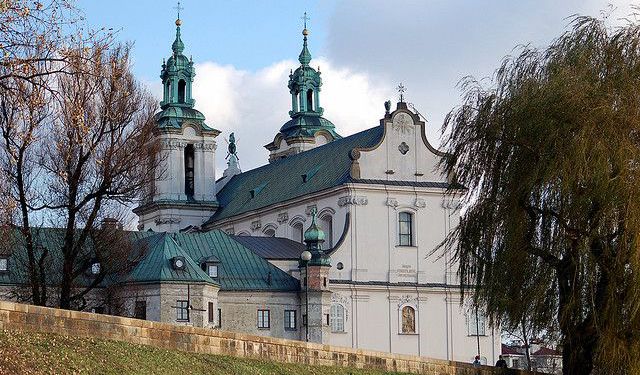
Historical Churches Walking Tour
Krakow, the center of religious life in Poland, was once considered “the Northern Rome” for its multitude of churches. Alongside the new temples continuing to appear in the city today, these remarkable sanctuaries, holding deep historical and cultural significance, still remain the most attractive and interesting to look at.
By far the most iconic of these is the Basilica of Saint Mary. A... view more
Tour Duration: 1 Hour(s)
Travel Distance: 2.2 Km or 1.4 Miles
By far the most iconic of these is the Basilica of Saint Mary. A... view more
Tour Duration: 1 Hour(s)
Travel Distance: 2.2 Km or 1.4 Miles