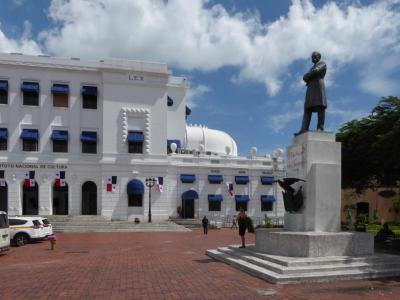


Plaza de Francia (France Square), Panama City
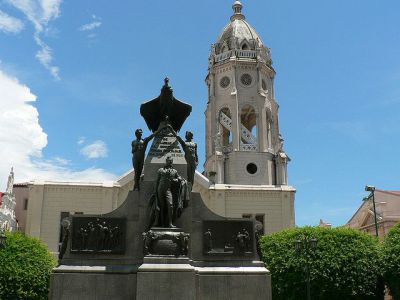
France Square commemorates the French effort to build the Panama Canal in the late 19th century and features statues, plaques, and large stone tablets that recount this ambitious but ultimately unsuccessful undertaking.
At the center of the square, rising from a circular platform, stands a monument honoring the thousands of workers who died during the French canal attempt, including the ones from Martinique and Guadeloupe islands. Most fatalities were caused by yellow fever and malaria, diseases that devastated the workforce and contributed significantly to the project’s collapse. The commonly cited figure of around 20,000 deaths reflects historical estimates rather than an exact count.
Another prominent feature, along the seaward edge of the square, directly facing the Pacific Ocean, is the monument to Dr. Carlos J. Finlay, the Cuban physician who identified mosquitoes as the vector for yellow fever transmission. Although his discovery was not immediately accepted, it later became central to disease-control measures implemented during the American canal effort. These advances dramatically reduced mortality rates in Panama and played a key role in making the canal’s completion possible.
Running along the eastern side of the square, built into the old city walls below the promenade level, is the The Vaults Promenade, a series of 18th-century stone vaults built into the old city walls. Originally constructed by the Spanish for storage and military purposes, some vaults were later used as prison cells. Today, the arched chambers house shops, galleries, and cafes, while much of the original masonry remains visible.
At the center of the square, rising from a circular platform, stands a monument honoring the thousands of workers who died during the French canal attempt, including the ones from Martinique and Guadeloupe islands. Most fatalities were caused by yellow fever and malaria, diseases that devastated the workforce and contributed significantly to the project’s collapse. The commonly cited figure of around 20,000 deaths reflects historical estimates rather than an exact count.
Another prominent feature, along the seaward edge of the square, directly facing the Pacific Ocean, is the monument to Dr. Carlos J. Finlay, the Cuban physician who identified mosquitoes as the vector for yellow fever transmission. Although his discovery was not immediately accepted, it later became central to disease-control measures implemented during the American canal effort. These advances dramatically reduced mortality rates in Panama and played a key role in making the canal’s completion possible.
Running along the eastern side of the square, built into the old city walls below the promenade level, is the The Vaults Promenade, a series of 18th-century stone vaults built into the old city walls. Originally constructed by the Spanish for storage and military purposes, some vaults were later used as prison cells. Today, the arched chambers house shops, galleries, and cafes, while much of the original masonry remains visible.
Want to visit this sight? Check out these Self-Guided Walking Tours in Panama City. Alternatively, you can download the mobile app "GPSmyCity: Walks in 1K+ Cities" from Apple App Store or Google Play Store. The app turns your mobile device to a personal tour guide and it works offline, so no data plan is needed when traveling abroad.
Download The GPSmyCity App



Plaza de Francia (France Square) on Map
Sight Name: Plaza de Francia (France Square)
Sight Location: Panama City, Panama (See walking tours in Panama City)
Sight Type: Attraction/Landmark
Guide(s) Containing This Sight:
Sight Location: Panama City, Panama (See walking tours in Panama City)
Sight Type: Attraction/Landmark
Guide(s) Containing This Sight:
Nearby Sights
Walking Tours in Panama City, Panama

Create Your Own Walk in Panama City
Creating your own self-guided walk in Panama City is easy and fun. Choose the city attractions that you want to see and a walk route map will be created just for you. You can even set your hotel as the start point of the walk.
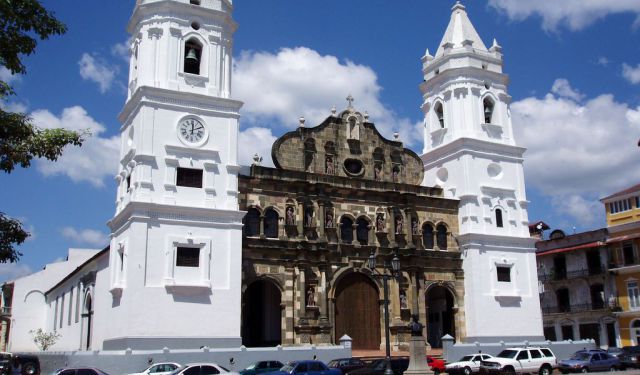
Historical Churches Tour
Caught between the lush green mountains and the ocean, the capital of Panama is a concentration of colors and styles. The evidence of Spanish influence is still vivid in the colonial landmarks, especially religious sites.
For centuries, colonial religious architecture has played an important role in the configuration of the urban layout of Panama City. By the 17th century, convents had an... view more
Tour Duration: 1 Hour
Travel Distance: 1 Km or 0.6 Miles
For centuries, colonial religious architecture has played an important role in the configuration of the urban layout of Panama City. By the 17th century, convents had an... view more
Tour Duration: 1 Hour
Travel Distance: 1 Km or 0.6 Miles
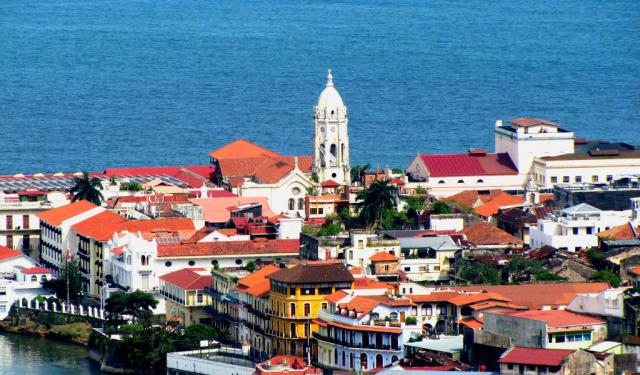
A Walk in Panama's Charming Old Town
German polymath and geographer Alexander von Humboldt, who analyzed the Isthmus of Panama as a natural crossroads in the early 19th century, famously described Panama as a place destined by nature to become the meeting point of nations.
Founded on 15 August 1519 by the Spanish conquistador Pedro Arias Dávila, Panama City was the first permanent European settlement on the Pacific coast of the... view more
Tour Duration: 1 Hour
Travel Distance: 0.9 Km or 0.6 Miles
Founded on 15 August 1519 by the Spanish conquistador Pedro Arias Dávila, Panama City was the first permanent European settlement on the Pacific coast of the... view more
Tour Duration: 1 Hour
Travel Distance: 0.9 Km or 0.6 Miles