

Plaza de Murillo (Murillo Square), La Paz (must see)
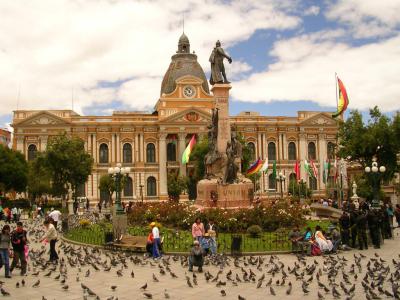
Murillo Square is one of the most important and recognizable public spaces in La Paz, forming the political and historic heart of the city. Named after Pedro Domingo Murillo, a key figure in Bolivia’s independence movement, the square is framed by some of the country’s most significant institutions. Its open layout and central location make it a natural gathering point, while the surrounding architecture reflects both the history and ongoing governance of Bolivia.
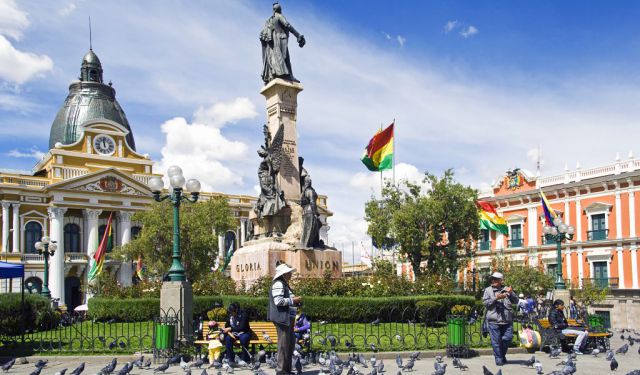
As you arrive, take a moment to look around and orient yourself to the square’s main landmarks. On the south side stands the Presidential Palace, a building that has long symbolized executive power in Bolivia. On the south-east side, you will also see the Plurinational Legislative Assembly, where national laws are debated and created. On the south-west side, the Metropolitan Cathedral of La Paz adds a strong architectural presence, its neoclassical façade facing directly into the square. Together, these buildings create a formal and balanced setting that defines the character of the plaza.
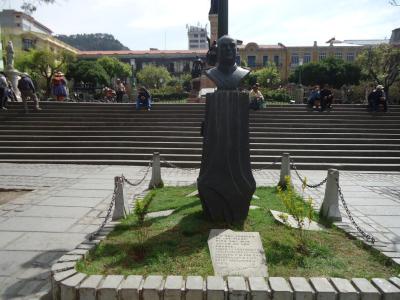
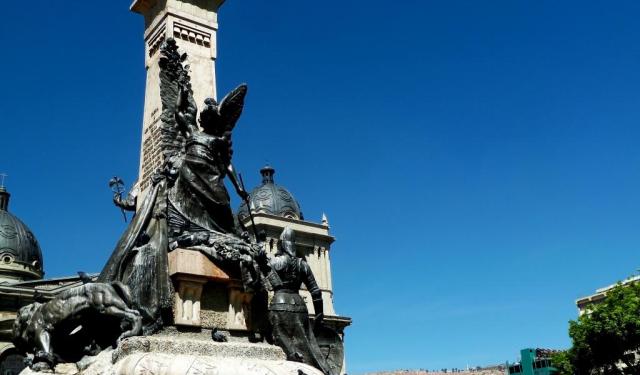
As you walk across the square, look toward the central monument dedicated to Pedro Domingo Murillo. This statue stands as a focal point, surrounded by open space where people gather, rest, and pass through during the day. You will likely notice pigeons moving across the square, adding a sense of everyday activity. The square is also a popular place to sit and observe the surroundings, with benches offering views of both the monument and the surrounding buildings. If you pause here, you can take in how the square functions as both a historical site and a living public space.
You may also notice a striking modern addition to the skyline: the Casa Grande del Pueblo. This tall glass tower rises behind the older colonial and neoclassical buildings, creating a sharp visual contrast that many locals and visitors find noteworthy. The juxtaposition highlights how Murillo Square continues to evolve, blending historic identity with contemporary development. This mix of old and new gives the square a dynamic character, where different eras of La Paz’s history can be seen at the same time.
As you arrive, take a moment to look around and orient yourself to the square’s main landmarks. On the south side stands the Presidential Palace, a building that has long symbolized executive power in Bolivia. On the south-east side, you will also see the Plurinational Legislative Assembly, where national laws are debated and created. On the south-west side, the Metropolitan Cathedral of La Paz adds a strong architectural presence, its neoclassical façade facing directly into the square. Together, these buildings create a formal and balanced setting that defines the character of the plaza.
As you walk across the square, look toward the central monument dedicated to Pedro Domingo Murillo. This statue stands as a focal point, surrounded by open space where people gather, rest, and pass through during the day. You will likely notice pigeons moving across the square, adding a sense of everyday activity. The square is also a popular place to sit and observe the surroundings, with benches offering views of both the monument and the surrounding buildings. If you pause here, you can take in how the square functions as both a historical site and a living public space.
You may also notice a striking modern addition to the skyline: the Casa Grande del Pueblo. This tall glass tower rises behind the older colonial and neoclassical buildings, creating a sharp visual contrast that many locals and visitors find noteworthy. The juxtaposition highlights how Murillo Square continues to evolve, blending historic identity with contemporary development. This mix of old and new gives the square a dynamic character, where different eras of La Paz’s history can be seen at the same time.
Want to visit this sight? Check out these Self-Guided Walking Tours in La Paz. Alternatively, you can download the mobile app "GPSmyCity: Walks in 1K+ Cities" from Apple App Store or Google Play Store. The app turns your mobile device to a personal tour guide and it works offline, so no data plan is needed when traveling abroad.
Download The GPSmyCity App



Plaza de Murillo (Murillo Square) on Map
Sight Name: Plaza de Murillo (Murillo Square)
Sight Location: La Paz, Bolivia (See walking tours in La Paz)
Sight Type: Attraction/Landmark
Guide(s) Containing This Sight:
Sight Location: La Paz, Bolivia (See walking tours in La Paz)
Sight Type: Attraction/Landmark
Guide(s) Containing This Sight:
Nearby Sights

Walking Tours in La Paz, Bolivia

Create Your Own Walk in La Paz
Creating your own self-guided walk in La Paz is easy and fun. Choose the city attractions that you want to see and a walk route map will be created just for you. You can even set your hotel as the start point of the walk.
La Paz Monuments Tour
They say monuments are the grappling irons that bind one generation to another, symbolizing the country's aspirations, its past, and its character. The monuments in La Paz do exactly that, holding profound cultural, historical, and symbolic value.
The prominent statue of Pedro Domingo Murillo in Plaza Murillo commemorates the key figure of the La Paz revolution of 1809, one of the chapters... view more
Tour Duration: 1 Hour
Travel Distance: 0.8 Km or 0.5 Miles
The prominent statue of Pedro Domingo Murillo in Plaza Murillo commemorates the key figure of the La Paz revolution of 1809, one of the chapters... view more
Tour Duration: 1 Hour
Travel Distance: 0.8 Km or 0.5 Miles
La Paz Downtown Walking Tour
Nestled within the Andean highlands at over 3,500 meters above sea level, La Paz is the highest capital city in the world. It is also one of Bolivia’s two capitals, alongside Sucre.
La Paz was founded on the site of a small Inca settlement in 1548 by the Spanish conquistador Alonso de Mendoza. It was originally named Nuestra Señora de La Paz, meaning “Our Lady of Peace,” to mark the... view more
Tour Duration: 2 Hours
Travel Distance: 2.8 Km or 1.7 Miles
La Paz was founded on the site of a small Inca settlement in 1548 by the Spanish conquistador Alonso de Mendoza. It was originally named Nuestra Señora de La Paz, meaning “Our Lady of Peace,” to mark the... view more
Tour Duration: 2 Hours
Travel Distance: 2.8 Km or 1.7 Miles