

Pontifical Shrine of the Blessed Virgin of the Rosary of Pompei, Pompei (must see)
The Pontifical Shrine of the Blessed Virgin of the Rosary of Pompei, also known in Italian as the Pontificio Santuario della Beata Vergine del Santo Rosario di Pompei, is a significant Roman Catholic cathedral, Marian pontifical shrine, and minor basilica established by Bartolo Longo.
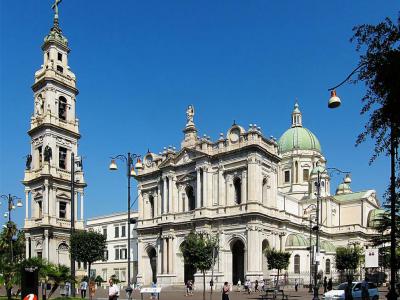
Initially constructed between 1876 and 1891 according to a Latin cross layout by Antonio Cua, the original building covered an area of only 420 square meters (about 4,500 square feet). The construction of the front facade, designed by Giovanni Rispoli, commenced on May 15, 1893. The facade is adorned with a statue of the Virgin of the Rosary, sculpted by Gaetano Chiaromonte from a single block of Carrara marble, weighing 18,000 kilograms (around 40,000 pounds), and standing at 3.25 meters (approximately 10.7 feet). Below the statue are inscribed the words "PAX" and the year "MCMI" (1901).
In response to the growing number of pilgrims, the sanctuary underwent expansion from one to three aisles between 1934 and 1939, while retaining its original Latin cross design. This expansion, overseen by Prelate Antonio Anastasio Rossi and designed by architect-priest Monsignor Spirito Maria Chiapetta, resulted in a new structure covering 2,000 square meters (about 22,000 square feet), capable of accommodating up to 6,000 individuals. Each new aisle is furnished with three altars on each side.
The focal point of the sanctuary is the painting of "Our Lady of the Rosary," presented to pilgrims on the main altar within a bronze gilt frame. This venerated painting portrays the Virgin Mary and Child Jesus offering rosaries to Saint Dominic and Saint Catherine of Siena. Originally acquired by Dominican priest Alberto Radente in Naples for eight carlini, it was later gifted to Bartolo Longo on November 13, 1875, for inclusion in the church he was constructing in Pompei.
The painting underwent several restoration attempts, notably by an amateur in February 1876 and by the renowned Italian painter Federico Madlarelli in 1880, before receiving final restoration by Vatican artists in 1965.
Bartolo Longo authored the "Novena of Petition" in July 1879, personally testing it while battling typhoid fever. Inspired by a daily vision of the miraculous portrait of Our Lady of the Rosary, the Novena was initially dedicated in Pompei.
The complete Prayer involves daily recitation of at least three decades (three sets of mysteries) of the Rosary followed by the Novena, lasting a total of 54 days without interruption.
The 80-meter (about 260-foot) bell tower, constructed between 1912 and 1925, was designed by Aristide Leonori, with assistance from his brother Pio Leonori.
Initially constructed between 1876 and 1891 according to a Latin cross layout by Antonio Cua, the original building covered an area of only 420 square meters (about 4,500 square feet). The construction of the front facade, designed by Giovanni Rispoli, commenced on May 15, 1893. The facade is adorned with a statue of the Virgin of the Rosary, sculpted by Gaetano Chiaromonte from a single block of Carrara marble, weighing 18,000 kilograms (around 40,000 pounds), and standing at 3.25 meters (approximately 10.7 feet). Below the statue are inscribed the words "PAX" and the year "MCMI" (1901).
In response to the growing number of pilgrims, the sanctuary underwent expansion from one to three aisles between 1934 and 1939, while retaining its original Latin cross design. This expansion, overseen by Prelate Antonio Anastasio Rossi and designed by architect-priest Monsignor Spirito Maria Chiapetta, resulted in a new structure covering 2,000 square meters (about 22,000 square feet), capable of accommodating up to 6,000 individuals. Each new aisle is furnished with three altars on each side.
The focal point of the sanctuary is the painting of "Our Lady of the Rosary," presented to pilgrims on the main altar within a bronze gilt frame. This venerated painting portrays the Virgin Mary and Child Jesus offering rosaries to Saint Dominic and Saint Catherine of Siena. Originally acquired by Dominican priest Alberto Radente in Naples for eight carlini, it was later gifted to Bartolo Longo on November 13, 1875, for inclusion in the church he was constructing in Pompei.
The painting underwent several restoration attempts, notably by an amateur in February 1876 and by the renowned Italian painter Federico Madlarelli in 1880, before receiving final restoration by Vatican artists in 1965.
Bartolo Longo authored the "Novena of Petition" in July 1879, personally testing it while battling typhoid fever. Inspired by a daily vision of the miraculous portrait of Our Lady of the Rosary, the Novena was initially dedicated in Pompei.
The complete Prayer involves daily recitation of at least three decades (three sets of mysteries) of the Rosary followed by the Novena, lasting a total of 54 days without interruption.
The 80-meter (about 260-foot) bell tower, constructed between 1912 and 1925, was designed by Aristide Leonori, with assistance from his brother Pio Leonori.
Want to visit this sight? Check out these Self-Guided Walking Tours in Pompei. Alternatively, you can download the mobile app "GPSmyCity: Walks in 1K+ Cities" from Apple App Store or Google Play Store. The app turns your mobile device to a personal tour guide and it works offline, so no data plan is needed when traveling abroad.
Download The GPSmyCity App



Pontifical Shrine of the Blessed Virgin of the Rosary of Pompei on Map
Sight Name: Pontifical Shrine of the Blessed Virgin of the Rosary of Pompei
Sight Location: Pompei, Italy (See walking tours in Pompei)
Sight Type: Religious
Sight Location: Pompei, Italy (See walking tours in Pompei)
Sight Type: Religious
Nearby Sights
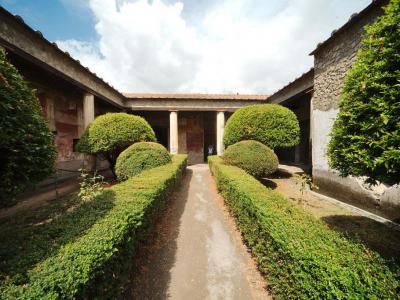
Walking Tours in Pompei, Italy

Create Your Own Walk in Pompei
Creating your own self-guided walk in Pompei is easy and fun. Choose the city attractions that you want to see and a walk route map will be created just for you. You can even set your hotel as the start point of the walk.
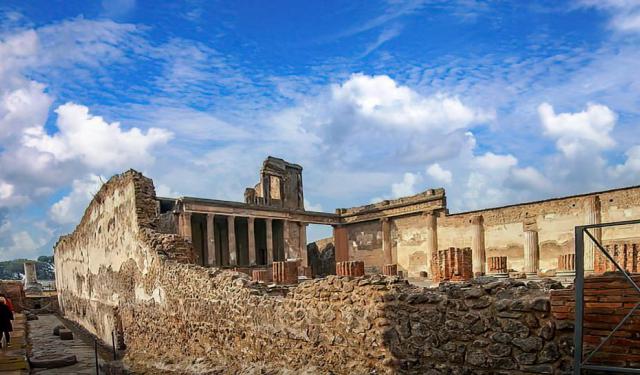
Pompeii Introduction Walk II
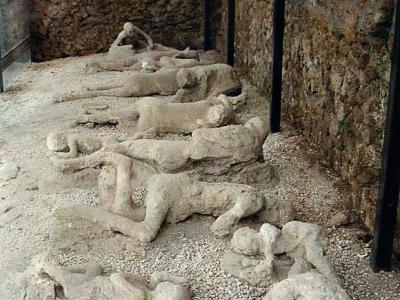
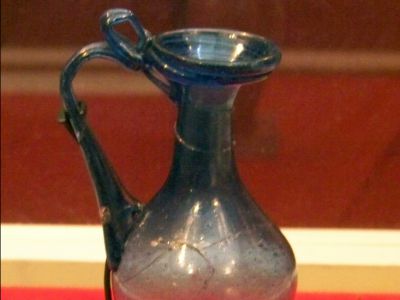
Frozen at the moment it was buried under the thick blanket of ash and pumice, the city of Pompeii (now excavated) remains a unique window into the past, offering a snapshot of everyday life back in the 1st century AD Roman Empire. Aside from causing quick and unexpected death to the city, the huge eruption of Vesuvius in 79 AD did have one positive outcome - it preserved everything (properties,... view more
Tour Duration: 3 Hours
Travel Distance: 2.3 Km or 1.4 Miles
Tour Duration: 3 Hours
Travel Distance: 2.3 Km or 1.4 Miles
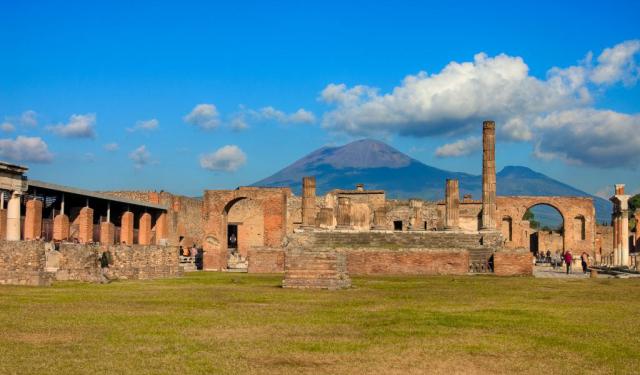
Pompeii Introduction Walk I
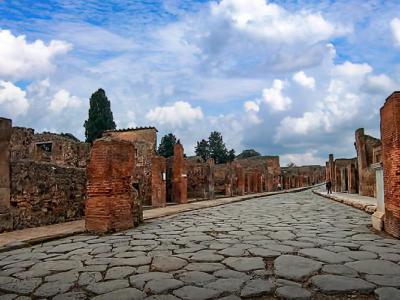
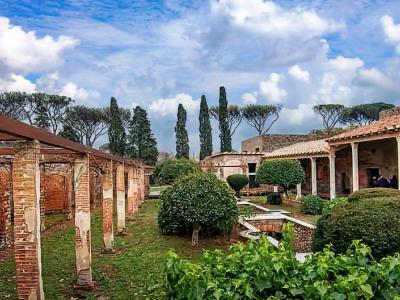
Modern-day Pompei is best known for its ancient predecessor, the Roman city of Pompeii, that fell victim to the massive eruption of Mount Vesuvius in 79 AD. The ruins of Pompeii, first uncovered in the late 18th century, were declared a World Heritage Site by UNESCO in 1997. Presently, this is one of the most popular tourist attractions in Italy, drawing annually up to 2.5 million visitors.
The... view more
Tour Duration: 2 Hours
Travel Distance: 2 Km or 1.2 Miles
The... view more
Tour Duration: 2 Hours
Travel Distance: 2 Km or 1.2 Miles