


Porta Sant'Anna (St. Anna's Gate), Lucca
Officially named Victor Emmanuel's Gate, Saint Anna’s Gate is one of the entrances through the Walls of Lucca, colloquially dubbed by locals as the "hole of Saint Anna” due to its proximity to the church of the same name. Unlike Lucca’s historic gates, which were built primarily for defensive purposes, this one was a modern intervention designed in 1910 to accommodate the increasing motorized traffic in the western part of the city. The construction was deemed necessary as the nearby San Donato Bulwark, a 17th-century fortification, was no longer suited for the city's evolving urban needs.
Designed by architect Francesco Bandettini, the gate’s construction sparked controversy - first regarding the necessity of a new opening so close to Porta San Donato, and later due to its aesthetic simplicity. The final design, however, struck a balance between function and discretion: it features two large arches for vehicles and two smaller pedestrian passages, ensuring minimal disruption to the historic continuity of the walls. The city’s marble coat of arms is positioned at the center, while the interior arches, carved through the thickness of the walls, are built in exposed brick. The exterior facades, in contrast, are clad in sandstone ashlar, lending a clean yet solid architectural presence.
The gate played a key role in early 20th-century urban planning, directly linking Lucca’s center to the Sant’Anna district, a growing area once served by the now-defunct Lucca-Maggiano tramway. While it may lack the grandeur of Lucca’s medieval and Renaissance-era gates, Saint Anna’s Gate remains a vital and practical access point, blending into the cityscape with its restrained yet effective design.
Want to visit this sight? Check out these Self-Guided Walking Tours in Lucca. Alternatively, you can download the mobile app "GPSmyCity: Walks in 1K+ Cities" from Apple App Store or Google Play Store. The app turns your mobile device to a personal tour guide and it works offline, so no data plan is needed when traveling abroad.
Download The GPSmyCity App



Porta Sant'Anna (St. Anna's Gate) on Map
Sight Name: Porta Sant'Anna (St. Anna's Gate)
Sight Location: Lucca, Italy (See walking tours in Lucca)
Sight Type: Attraction/Landmark
Guide(s) Containing This Sight:
Sight Location: Lucca, Italy (See walking tours in Lucca)
Sight Type: Attraction/Landmark
Guide(s) Containing This Sight:
Nearby Sights




Walking Tours in Lucca, Italy
Create Your Own Walk in Lucca
Creating your own self-guided walk in Lucca is easy and fun. Choose the city attractions that you want to see and a walk route map will be created just for you. You can even set your hotel as the start point of the walk.
Discover Puccini's Lucca on Foot
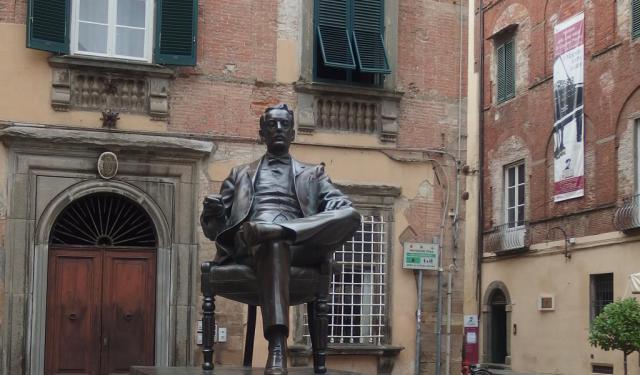
One of the greatest musical talents of mankind, Italian composer Giacomo Puccini, was born and spent a substantial part of his life in the Tuscan city of Lucca. Today the legacy of Puccini resonates all over the world and even more so here.
Puccini's ancestors, also musicians, moved to Lucca in 1719. The future maestro was born in a house that had belonged to his family since 1815 - Casa... view more
Tour Duration: 1 Hour
Travel Distance: 1.5 Km or 0.9 Miles
Puccini's ancestors, also musicians, moved to Lucca in 1719. The future maestro was born in a house that had belonged to his family since 1815 - Casa... view more
Tour Duration: 1 Hour
Travel Distance: 1.5 Km or 0.9 Miles
Lucca's City Wall and Gates Walking Tour
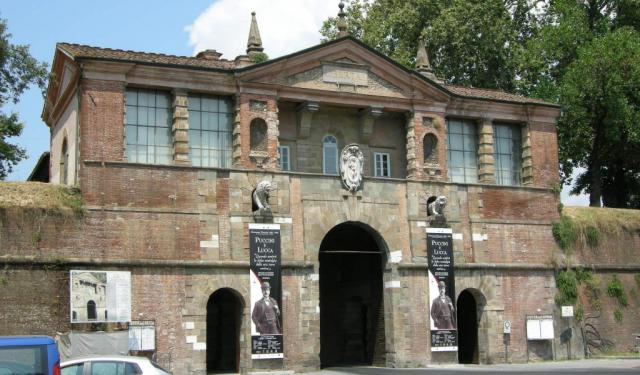
Lucca is one of Italy's most celebrated cities of art, renowned for its historic churches, medieval towers, and, above all, its remarkably well-preserved city walls. Encircling the historic center, these impressive fortifications have protected Lucca for centuries and remain one of its most distinctive features.
During the Middle Ages, Lucca's walls stood around 11 to 12 meters high,... view more
Tour Duration: 2 Hours
Travel Distance: 3.7 Km or 2.3 Miles
During the Middle Ages, Lucca's walls stood around 11 to 12 meters high,... view more
Tour Duration: 2 Hours
Travel Distance: 3.7 Km or 2.3 Miles
Lucca Old Town Walking Tour
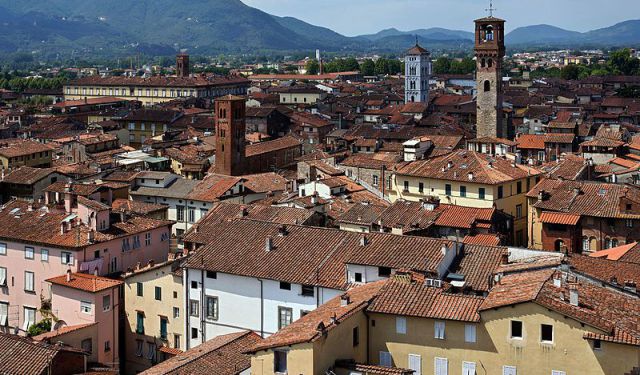
Lucca is known by many names: a city of art, churches, gardens, and towers. But perhaps its most distinctive feature is its remarkable city walls. Fortifications have surrounded Lucca since Roman times, and today, its Renaissance walls remain almost perfectly intact.
Inside the walls, Lucca still follows much of its ancient Roman street plan. Square San Michele occupies the site of the old... view more
Tour Duration: 2 Hours
Travel Distance: 2.9 Km or 1.8 Miles
Inside the walls, Lucca still follows much of its ancient Roman street plan. Square San Michele occupies the site of the old... view more
Tour Duration: 2 Hours
Travel Distance: 2.9 Km or 1.8 Miles
City Walks Overview
