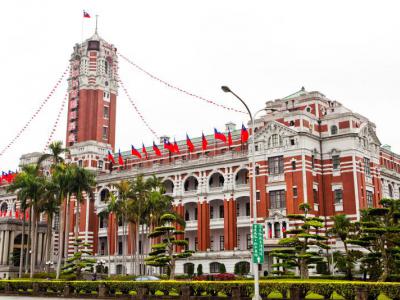


Presidential Office Building, Taipei
The Presidential Office Building is one of Taipei’s most recognisable landmarks and a powerful symbol of Taiwan’s modern political history. Constructed between 1912 and 1919 during the Japanese colonial period, it was originally built as the Office of the Governor-General of Taiwan. Designed by Japanese architect Uheiji Nagano, the building was intended to project authority and modernity, and at the time of its completion it ranked among the tallest structures in East Asia, its central tower dominating the city skyline.
Architecturally, the building reflects early 20th-century monumental design, with a red-brick façade, symmetrical layout, arched windows, and a prominent clock tower inspired by European Renaissance and Baroque styles. The entrance area is comparatively restrained but still impressive, featuring a marble grand staircase and a porch supported by Corinthian and Ionic pillars, creating a dignified reception space for visitors and official guests. Inside, the Ching-Kuo Hall serves as the main venue for state receptions, including visits by foreign heads of state and presidential inauguration ceremonies. Among the historically significant items on display is the Japanese Instrument of Surrender, drafted after World War II.
Following damage during World War II, the building was restored after Taiwan’s transfer to the Republic of China in 1945 and has since functioned as the office of the president. An internal courtyard adds a quieter dimension to the complex, with landscaped gardens and a covered walkway that contrasts with the building’s formal exterior.
For tourists, the Presidential Office Building can be visited on designated days through a free guided tour lasting around 60 to 90 minutes. Visitors should enter via the side entrance, pass through a security check, and carry identification such as a passport. Photography is permitted in designated areas, while video recording is prohibited throughout. At the end of the visit, a small gift shop offers souvenirs and specialty commemorative stamps, providing a modest but memorable conclusion to the experience.
Architecturally, the building reflects early 20th-century monumental design, with a red-brick façade, symmetrical layout, arched windows, and a prominent clock tower inspired by European Renaissance and Baroque styles. The entrance area is comparatively restrained but still impressive, featuring a marble grand staircase and a porch supported by Corinthian and Ionic pillars, creating a dignified reception space for visitors and official guests. Inside, the Ching-Kuo Hall serves as the main venue for state receptions, including visits by foreign heads of state and presidential inauguration ceremonies. Among the historically significant items on display is the Japanese Instrument of Surrender, drafted after World War II.
Following damage during World War II, the building was restored after Taiwan’s transfer to the Republic of China in 1945 and has since functioned as the office of the president. An internal courtyard adds a quieter dimension to the complex, with landscaped gardens and a covered walkway that contrasts with the building’s formal exterior.
For tourists, the Presidential Office Building can be visited on designated days through a free guided tour lasting around 60 to 90 minutes. Visitors should enter via the side entrance, pass through a security check, and carry identification such as a passport. Photography is permitted in designated areas, while video recording is prohibited throughout. At the end of the visit, a small gift shop offers souvenirs and specialty commemorative stamps, providing a modest but memorable conclusion to the experience.
Want to visit this sight? Check out these Self-Guided Walking Tours in Taipei. Alternatively, you can download the mobile app "GPSmyCity: Walks in 1K+ Cities" from Apple App Store or Google Play Store. The app turns your mobile device to a personal tour guide and it works offline, so no data plan is needed when traveling abroad.
Download The GPSmyCity App



Presidential Office Building on Map
Sight Name: Presidential Office Building
Sight Location: Taipei, Taiwan (See walking tours in Taipei)
Sight Type: Attraction/Landmark
Guide(s) Containing This Sight:
Sight Location: Taipei, Taiwan (See walking tours in Taipei)
Sight Type: Attraction/Landmark
Guide(s) Containing This Sight:
Nearby Sights

Walking Tours in Taipei, Taiwan

Create Your Own Walk in Taipei
Creating your own self-guided walk in Taipei is easy and fun. Choose the city attractions that you want to see and a walk route map will be created just for you. You can even set your hotel as the start point of the walk.
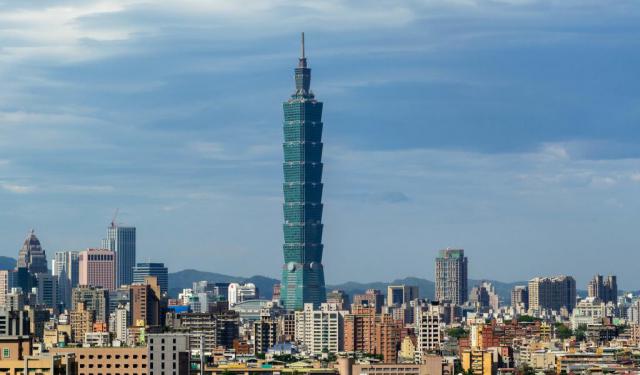
Taipei 101 and Xiangshan Walking Tour
The newest area of urban Taipei, the Xinyi district has technically existed only since 1990. Young as it is though, the neighborhood has earned a reputation of being one of the city's premier travel destinations.
Indeed, in Xinyi you’re never too far from experiencing something truly cool or iconic, be it the impressive Taipei 101 with its landmark observation deck or the breathtaking... view more
Tour Duration: 1 Hour
Travel Distance: 2.3 Km or 1.4 Miles
Indeed, in Xinyi you’re never too far from experiencing something truly cool or iconic, be it the impressive Taipei 101 with its landmark observation deck or the breathtaking... view more
Tour Duration: 1 Hour
Travel Distance: 2.3 Km or 1.4 Miles
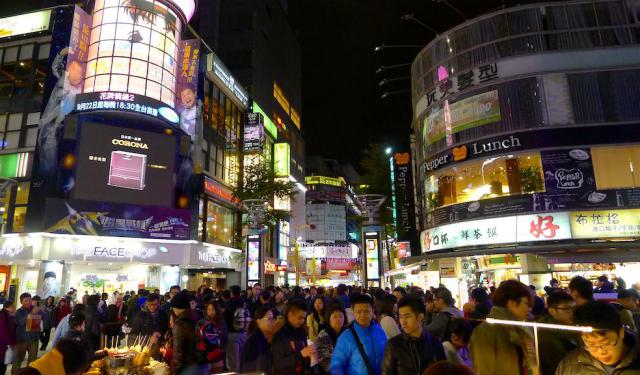
Taipei Shopping Tour
Among the many things Taipei is famous for, shopping is undoubtedly one of the main. The fashion-conscious and business-oriented Taiwanese capital is rightfully regarded to be a shopper’s paradise in East Asia, comparable to the likes of Hong Kong, Seoul, Tokyo, Singapore or Kuala Lumpur. The variety of markets, boutique stores, shopping districts and, of course, first-class malls here is truly... view more
Tour Duration: 1 Hour
Travel Distance: 1.9 Km or 1.2 Miles
Tour Duration: 1 Hour
Travel Distance: 1.9 Km or 1.2 Miles
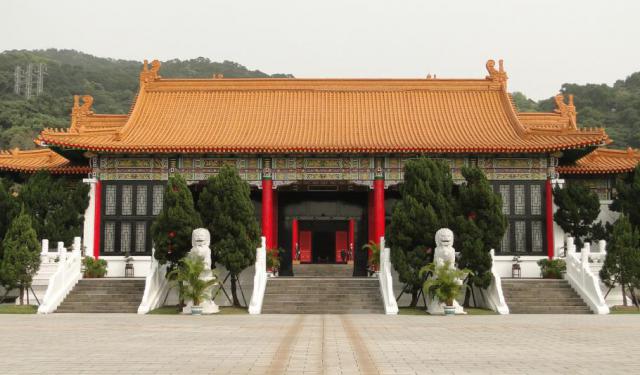
Zhongshan District Walking Tour
Covering a swathe of central Taipei, Zhongshan is the city's most fascinating district. It takes the name from Sun Yat-sen, aka Sun Zhongshan, who was a Chinese statesman and went down in history as the provisional first president of the Republic of China in 1912. Caught in the crosshatch of the area's main streets and secret alleyways is a wonderful mish-mash of attractions: museums and... view more
Tour Duration: 2 Hours
Travel Distance: 5 Km or 3.1 Miles
Tour Duration: 2 Hours
Travel Distance: 5 Km or 3.1 Miles
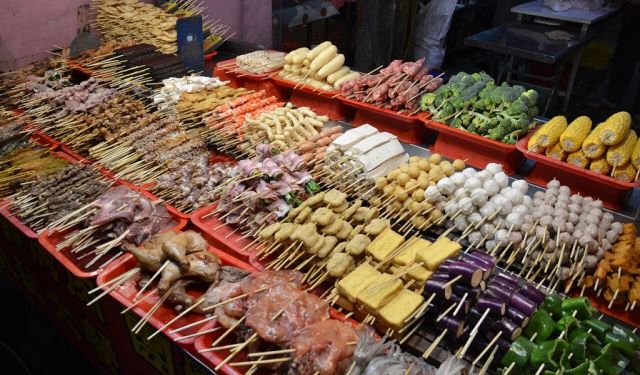
Taipei Night Market Food Tour
British actor Henry Golding described Taipei's night markets as a perfect encapsulation of Taiwan's energy.
The night markets' roots go back to ancient China, particularly the Tang Dynasty, spanning the 7th to 10th centuries, when vendors began selling food and goods after sunset near temples and busy urban areas. Over time, these evening markets became central to social life,... view more
Tour Duration: 1 Hour
Travel Distance: 3.1 Km or 1.9 Miles
The night markets' roots go back to ancient China, particularly the Tang Dynasty, spanning the 7th to 10th centuries, when vendors began selling food and goods after sunset near temples and busy urban areas. Over time, these evening markets became central to social life,... view more
Tour Duration: 1 Hour
Travel Distance: 3.1 Km or 1.9 Miles
Taipei City Center Walking Tour
Taipei, the capital of Taiwan, developed relatively late compared to many other major Asian cities, yet its history reflects centuries of migration, trade, and political change. The name Taipei derives from “Tai-pak,” meaning “North of Taiwan” or “Northern Taiwan,” a designation that distinguishes it from Tainan, the island’s earlier administrative centre in the south.
Long before... view more
Tour Duration: 2 Hours
Travel Distance: 3.6 Km or 2.2 Miles
Long before... view more
Tour Duration: 2 Hours
Travel Distance: 3.6 Km or 2.2 Miles
Useful Travel Guides for Planning Your Trip

Taipei Souvenirs: 8 Uniquely Taiwanese Products to Bring Home
Other than being an affluent Chinese state off the shore of mainland China, a non-Chinese foreigner might not know much about Taiwan, unless one has already been there. The island is a home to some truly unique things hardly found anywhere else. In Taipei - the country's capital with a great...
City Walks Overview
