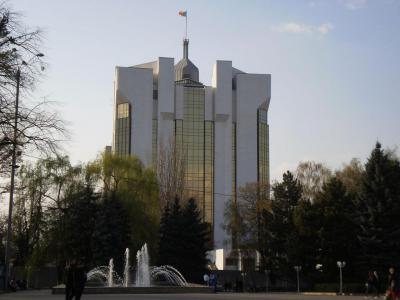


Presidential Palace, Chisinau
The Presidential Palace is a relatively modern landmark in central Chișinău, and its history reflects Moldova’s transition from a Soviet republic to an independent state. For those of us who live here, this is one of those buildings whose meaning has changed quite dramatically over time.
The palace was constructed between 1984 and 1987, during the final years of the Soviet period, and was originally meant to house the Supreme Council, or parliament, of the then Moldavian Soviet Socialist Republic.
The structure is made of reinforced concrete, faced with pale stone and large areas of tinted glass. Around the entrance, you can also see red and black marble, while above the main portal are the bronze coat of arms of the Republic of Moldova and the name of the presidential institution. Architecturally, the building is considered an early example of postmodernism, with some decorative details inspired by local architectural traditions.
There’s another layer of history to it that many visitors would probably miss. The palace stands on the site of a 19th-century German Lutheran church, which once served Chișinău’s German community. This is just a reminder of how many different communities have left their mark on this city.
The building also witnessed one of the defining moments in Moldova’s modern history. The Declaration of Independence was adopted here on August 27, 1991. Following that, the building was adapted for the Presidency and eventually became the main seat of the country’s presidential administration.
A much more turbulent episode came on April 7, 2009, during large post-election demonstrations in Chișinău. I remember how striking it was to see this part of the city at the time. The Presidential Palace was heavily vandalized, and it remained largely unused while repairs continued intermittently over the following years.
Major restoration took place in 2018 with financial support from the Turkish government. The renovated palace was presented on October 17 that year, during the official visit of Turkish President Recep Tayyip Erdoğan, welcomed by the then Moldovan President Igor Dodon.
So, although the Presidential Palace may look relatively new compared with many of Chișinău’s older landmarks, it has already witnessed several important chapters in the country’s recent history. And in a way, this is what makes it a very fitting symbol of modern Moldova itself.
Want to visit this sight? Check out these Self-Guided Walking Tours in Chisinau. Alternatively, you can download the mobile app "GPSmyCity: Walks in 1K+ Cities" from Apple App Store or Google Play Store. The app turns your mobile device to a personal tour guide and it works offline, so no data plan is needed when traveling abroad.
Download The GPSmyCity App



Presidential Palace on Map
Sight Name: Presidential Palace
Sight Location: Chisinau, Moldova (See walking tours in Chisinau)
Sight Type: Attraction/Landmark
Guide(s) Containing This Sight:
Sight Location: Chisinau, Moldova (See walking tours in Chisinau)
Sight Type: Attraction/Landmark
Guide(s) Containing This Sight:
Nearby Sights
Walking Tours in Chisinau, Moldova
Create Your Own Walk in Chisinau
Creating your own self-guided walk in Chisinau is easy and fun. Choose the city attractions that you want to see and a walk route map will be created just for you. You can even set your hotel as the start point of the walk.
Bernardazzi Architecture Walking Tour
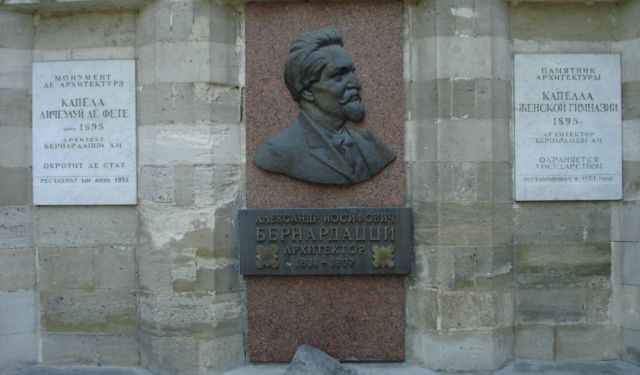
Talented people are often able to leave their mark in the hearts of the posterity long after they are gone. Centuries fly but the power of the beauty persists, especially if set in the stones of the buildings designed by distinguished architects. Moldova's capital is blessed in this respect as the place associated with Alexander Bernardazzi, a Russian architect of Swiss-Italian descent who... view more
Tour Duration: 1 Hour
Travel Distance: 2.4 Km or 1.5 Miles
Tour Duration: 1 Hour
Travel Distance: 2.4 Km or 1.5 Miles
Best Wine and Brandy Shops
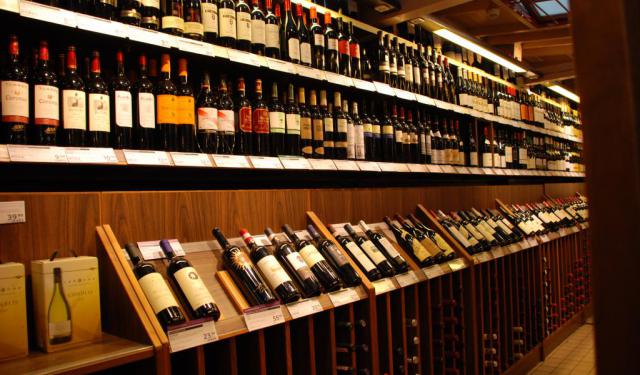
Given the lack of stunning scenery - no turquoise waters or snow-clad mountains - Moldova is a country not overrun by tourists. Still, those who come here, usually do so to taste the local wines and brandies - Moldova is a seasoned grape and spirit producer. The locals are very lovable and hospitable people, genuinely ready to delight strangers with their internationally-renowned booze. Here are... view more
Tour Duration: 1 Hour
Travel Distance: 3 Km or 1.9 Miles
Tour Duration: 1 Hour
Travel Distance: 3 Km or 1.9 Miles
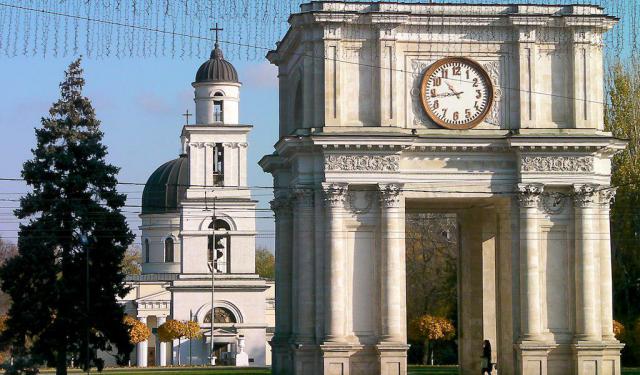
Chisinau City Center Walking Tour
Hi, and welcome to Chișinău, the capital of Moldova, a small Eastern European country tucked between Romania and Ukraine. My name is Saul, and I’m a proud 5th-generation local. I’ve lived here, on and off, for more than 50 years, and I have been a travel writer for the last 15 years.
Before we begin our journey, let me give you a little background. For a long time, this land was part of... view more
Tour Duration: 2 Hours
Travel Distance: 2.4 Km or 1.5 Miles
Before we begin our journey, let me give you a little background. For a long time, this land was part of... view more
Tour Duration: 2 Hours
Travel Distance: 2.4 Km or 1.5 Miles
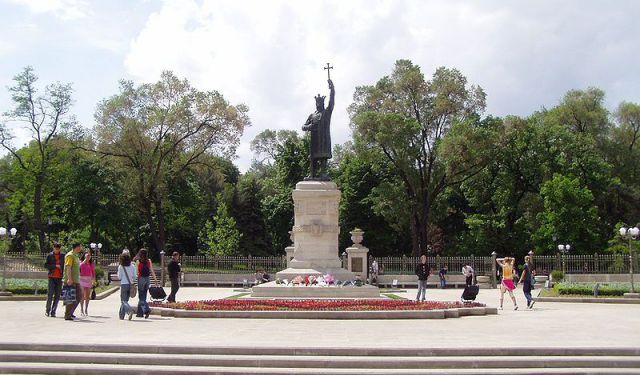
Stefan cel Mare Blvd Walk
Stefan cel Mare Boulevard is arguably the most prominent streets of the Moldovan capital. The 3.8-km thoroughfare is lined with numerous buildings of social and political importance, cultural institutions, shops, and restaurants.
Historically, it is believed to have stemmed from the road that led into the city from the Russian military camp stationed to the west of Chisinau in 1789. Long before... view more
Tour Duration: 2 Hours
Travel Distance: 3.6 Km or 2.2 Miles
Historically, it is believed to have stemmed from the road that led into the city from the Russian military camp stationed to the west of Chisinau in 1789. Long before... view more
Tour Duration: 2 Hours
Travel Distance: 3.6 Km or 2.2 Miles
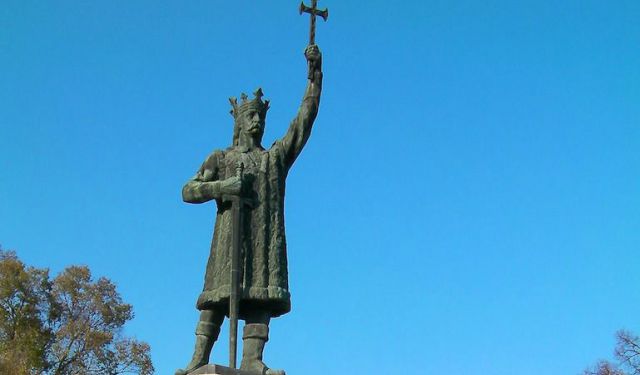
Chisinau Historical Sites
Although the history of Chisinau accounts for just over 500 years, whilst that of Moldova, as a nation, even less than that - since 1991, Moldovan culture and language are deeply rooted in the ancient Roman tradition. Just as the Eternal City, Chisinau rests on seven hills - in the valley of the River Bic, and has a replica statue of the Capitoline Wolf in the downtown area. Whereas most of... view more
Tour Duration: 3 Hours
Travel Distance: 5.5 Km or 3.4 Miles
Tour Duration: 3 Hours
Travel Distance: 5.5 Km or 3.4 Miles
Useful Travel Guides for Planning Your Trip
Chisinau Shopping Guide: 20 Moldovan Products to Take Home
Once part of the Soviet Union, now independent Moldova is a small country sandwiched between Romania and Ukraine, of which still very little is known. To mend this, the country has recently opened borders to the outside world. Be sure to take advantage of this opportunity and acquaint yourself with...
City Walks Overview
