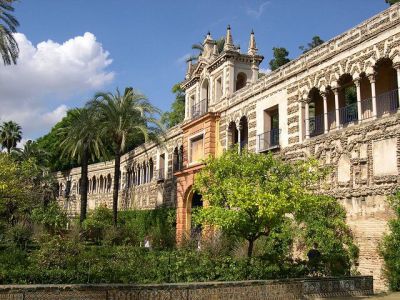


Real Alcazar de Sevilla (Royal Palace of Seville), Seville (must see)
The Royal Palace of Seville is one of the city’s most important historical monuments and a rare example of a palace that has remained in continuous use for more than a thousand years. Its story begins in 712, when Seville was conquered by the Umayyad Caliphate, ushering in nearly seven centuries of Arab rule in Andalusia. In 913, Abd al-Rahman III ordered the construction of a fort on this site, built over a former Visigothic church. This early complex was expanded in the 11th century with an addition known as Al Mubarak, meaning “The Blessed,” as Seville grew into a major political centre of Muslim Spain .
Over time, the palace underwent repeated cycles of demolition and rebuilding. By the later medieval period, as many as twelve palaces had been constructed one atop another, each reflecting the tastes and priorities of its rulers. Its most decisive transformation came in the 14th century, when King Pedro I commissioned the Mudéjar Palace, blending Islamic craftsmanship with Christian symbolism. Muslim artisans created interiors rich in carved stucco, wooden ceilings, Arabic inscriptions, and an extraordinary abundance of ceramic tiles—majolica and arista—so characteristic of Seville.
The main entrance, the Lion Gate, takes its name from the tiled panel above the doorway showing a lion holding a cross beneath a Latin motto meaning “ready for anything.” Once you pass through security, you enter the Lion Courtyard. To your left is the Justice Hall, known for its remarkable Mudéjar plasterwork and square floor plan. While in the Lion Courtyard, continue straight ahead to reach the Hunting Courtyard. From there, head toward the richly decorated main façade of the palace and enter through the central doorway. After passing through several corridors, you arrive at one of the most famous spaces in the complex—the Courtyard of the Maidens. Here you will see a long reflecting pool surrounded by sunken gardens and a gallery of intricate multifoil arches. The delicate, lace-like stucco decoration is a masterpiece of the Mudéjar style.
Another highlight is the Hall of Ambassadors, once the throne room. Looking up, visitors see the spectacular gilded wooden dome from 1427, often described as a half-orange dome because of its segmented shape. The walls are covered in vibrant ceramic tiles and portraits of Spanish monarchs, making it one of the most lavish rooms in the entire palace. To reach it, stand in the Courtyard of the Maidens and look for the most richly decorated triple-arched entrance along the side of the courtyard.
The gardens are equally essential to the experience. Like many Andalusian palaces, the complex was designed with gardens combining fruit trees, vegetables, flowers, and abundant water in fountains and ponds. Expanded and reshaped over the centuries, they now include more than a dozen gardens, creating a peaceful landscape that contrasts with the ornate palace interiors.
Over time, the palace underwent repeated cycles of demolition and rebuilding. By the later medieval period, as many as twelve palaces had been constructed one atop another, each reflecting the tastes and priorities of its rulers. Its most decisive transformation came in the 14th century, when King Pedro I commissioned the Mudéjar Palace, blending Islamic craftsmanship with Christian symbolism. Muslim artisans created interiors rich in carved stucco, wooden ceilings, Arabic inscriptions, and an extraordinary abundance of ceramic tiles—majolica and arista—so characteristic of Seville.
The main entrance, the Lion Gate, takes its name from the tiled panel above the doorway showing a lion holding a cross beneath a Latin motto meaning “ready for anything.” Once you pass through security, you enter the Lion Courtyard. To your left is the Justice Hall, known for its remarkable Mudéjar plasterwork and square floor plan. While in the Lion Courtyard, continue straight ahead to reach the Hunting Courtyard. From there, head toward the richly decorated main façade of the palace and enter through the central doorway. After passing through several corridors, you arrive at one of the most famous spaces in the complex—the Courtyard of the Maidens. Here you will see a long reflecting pool surrounded by sunken gardens and a gallery of intricate multifoil arches. The delicate, lace-like stucco decoration is a masterpiece of the Mudéjar style.
Another highlight is the Hall of Ambassadors, once the throne room. Looking up, visitors see the spectacular gilded wooden dome from 1427, often described as a half-orange dome because of its segmented shape. The walls are covered in vibrant ceramic tiles and portraits of Spanish monarchs, making it one of the most lavish rooms in the entire palace. To reach it, stand in the Courtyard of the Maidens and look for the most richly decorated triple-arched entrance along the side of the courtyard.
The gardens are equally essential to the experience. Like many Andalusian palaces, the complex was designed with gardens combining fruit trees, vegetables, flowers, and abundant water in fountains and ponds. Expanded and reshaped over the centuries, they now include more than a dozen gardens, creating a peaceful landscape that contrasts with the ornate palace interiors.
Want to visit this sight? Check out these Self-Guided Walking Tours in Seville. Alternatively, you can download the mobile app "GPSmyCity: Walks in 1K+ Cities" from Apple App Store or Google Play Store. The app turns your mobile device to a personal tour guide and it works offline, so no data plan is needed when traveling abroad.
Download The GPSmyCity App



Real Alcazar de Sevilla (Royal Palace of Seville) on Map
Sight Name: Real Alcazar de Sevilla (Royal Palace of Seville)
Sight Location: Seville, Spain (See walking tours in Seville)
Sight Type: Attraction/Landmark
Guide(s) Containing This Sight:
Sight Location: Seville, Spain (See walking tours in Seville)
Sight Type: Attraction/Landmark
Guide(s) Containing This Sight:
Nearby Sights

Walking Tours in Seville, Spain

Create Your Own Walk in Seville
Creating your own self-guided walk in Seville is easy and fun. Choose the city attractions that you want to see and a walk route map will be created just for you. You can even set your hotel as the start point of the walk.
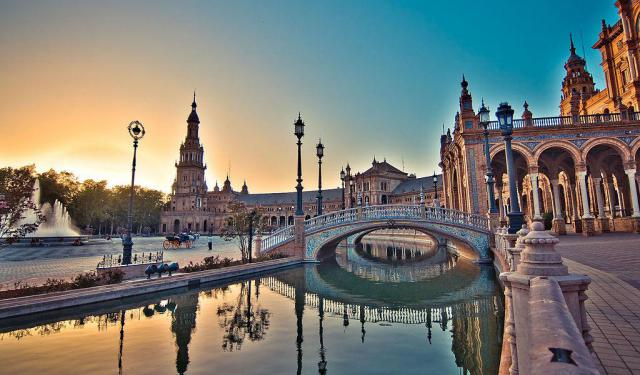
Seville Introduction Walking Tour
19th-century American writer Washington Irving noted that in Seville “the past lingers like perfume.”
Seville is the largest city and provincial capital of Andalusia, located on the banks of the Guadalquivir River. Ancient tradition credits the city’s foundation to Hercules. Historically, early Phoenician settlers called the site Hisbaal, invoking the god Baal, a name later Latinised by... view more
Tour Duration: 2 Hour(s)
Travel Distance: 4.9 Km or 3 Miles
Seville is the largest city and provincial capital of Andalusia, located on the banks of the Guadalquivir River. Ancient tradition credits the city’s foundation to Hercules. Historically, early Phoenician settlers called the site Hisbaal, invoking the god Baal, a name later Latinised by... view more
Tour Duration: 2 Hour(s)
Travel Distance: 4.9 Km or 3 Miles
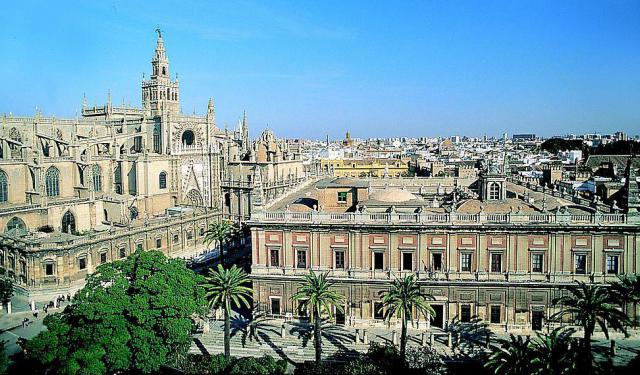
Old Seville Walking Tour
In his famous book Don Quixote, Spanish writer Miguel de Cervantes referred to Seville as a city where the bustle of life never seemed to stop.
Old Seville, the historic heart of the Andalusian capital, reflects more than two thousand years of cultural layers. The area developed along the banks of the Guadalquivir River, which for centuries connected the city to the wider Mediterranean world.... view more
Tour Duration: 1 Hour(s)
Travel Distance: 2.4 Km or 1.5 Miles
Old Seville, the historic heart of the Andalusian capital, reflects more than two thousand years of cultural layers. The area developed along the banks of the Guadalquivir River, which for centuries connected the city to the wider Mediterranean world.... view more
Tour Duration: 1 Hour(s)
Travel Distance: 2.4 Km or 1.5 Miles
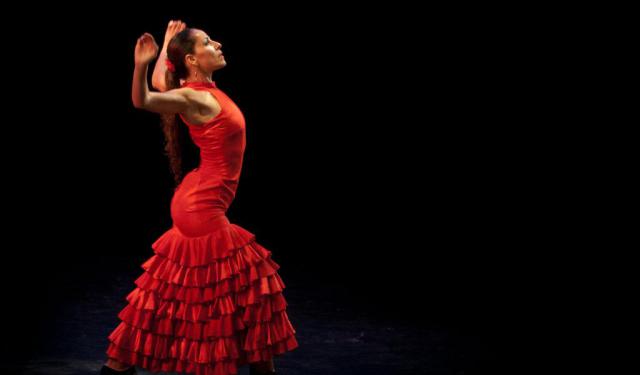
Flamenco Walking Tour
They say if it's Flamenco – it's Andalusia, and if it's Andalusia – it's all about Seville. Indeed, with its roots deeply embedded in the Andalusian culture, Seville is a prime destination for experiencing the essence of Flamenco and is largely considered to be the home of this fiery dance.
Flamenco sites are found all over the city – in bars, theaters, or specialized... view more
Tour Duration: 1 Hour(s)
Travel Distance: 2.7 Km or 1.7 Miles
Flamenco sites are found all over the city – in bars, theaters, or specialized... view more
Tour Duration: 1 Hour(s)
Travel Distance: 2.7 Km or 1.7 Miles
Useful Travel Guides for Planning Your Trip

16 Uniquely Spanish Things to Buy in Seville
Immortalized by Gioachino Rossini in his famous The Barber of Seville opera, the city of Seville is a major historic and cultural sight adorning the face of modern Spain. Much of the city's character is reflected in the locally-made products that can make for a great gift or trip memento...