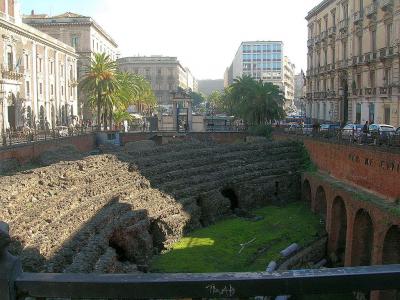


Roman Amphitheater, Catania
The Roman Amphitheater reveals the immense scale of ancient Catania below today’s streets. Built around 200 AD during the Roman Imperial period, it ranked among the largest amphitheaters in Italy. Positioned on the northern side of the ancient city, at the base of Montevergine Hill, it once hosted public spectacles for an audience of around 15,000, with additional standing room likely added for major events.
The amphitheater was constructed using lava stone and brick. Elliptical in plan, it featured radial walls and vaulted structures to support tiered seating, with an external gallery encircling the arena. Its dimensions were considerable, with an arena measuring roughly 268 by 164 feet, and an outer circumference of more than 1,000 feet. Evidence suggests the structure was sophisticated enough to stage naumachiae, or mock sea battles, using water supplied by the city’s aqueduct.
Over time, natural disasters and urban growth gradually erased the amphitheater from view. Although legend claims it was spared by lava during Mount Etna’s eruption in 251, the catastrophic earthquake of 1693 buried most of the structure. Stone from the ruins was reused in nearby buildings, including parts of the Church of San Biagio, and the site was covered and turned into garden ground.
The amphitheater re-emerged only during excavations in the 18th century, when its true scale became clear once again. Today, only about one-tenth of the amphitheater is visible, accessed through an iron gate flanked by Ionic columns. Now part of the Greek–Roman Archaeological Park of Catania, the exposed corridors and walls create a wonderful contrast with the surrounding streets, cafés, and shops.
The amphitheater was constructed using lava stone and brick. Elliptical in plan, it featured radial walls and vaulted structures to support tiered seating, with an external gallery encircling the arena. Its dimensions were considerable, with an arena measuring roughly 268 by 164 feet, and an outer circumference of more than 1,000 feet. Evidence suggests the structure was sophisticated enough to stage naumachiae, or mock sea battles, using water supplied by the city’s aqueduct.
Over time, natural disasters and urban growth gradually erased the amphitheater from view. Although legend claims it was spared by lava during Mount Etna’s eruption in 251, the catastrophic earthquake of 1693 buried most of the structure. Stone from the ruins was reused in nearby buildings, including parts of the Church of San Biagio, and the site was covered and turned into garden ground.
The amphitheater re-emerged only during excavations in the 18th century, when its true scale became clear once again. Today, only about one-tenth of the amphitheater is visible, accessed through an iron gate flanked by Ionic columns. Now part of the Greek–Roman Archaeological Park of Catania, the exposed corridors and walls create a wonderful contrast with the surrounding streets, cafés, and shops.
Want to visit this sight? Check out these Self-Guided Walking Tours in Catania. Alternatively, you can download the mobile app "GPSmyCity: Walks in 1K+ Cities" from Apple App Store or Google Play Store. The app turns your mobile device to a personal tour guide and it works offline, so no data plan is needed when traveling abroad.
Download The GPSmyCity App



Roman Amphitheater on Map
Sight Name: Roman Amphitheater
Sight Location: Catania, Italy (See walking tours in Catania)
Sight Type: Attraction/Landmark
Guide(s) Containing This Sight:
Sight Location: Catania, Italy (See walking tours in Catania)
Sight Type: Attraction/Landmark
Guide(s) Containing This Sight:
Nearby Sights
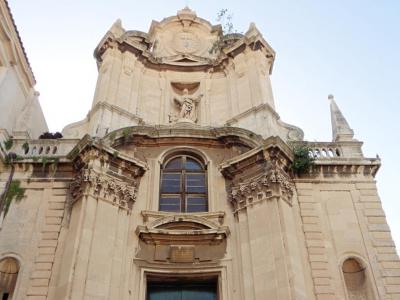
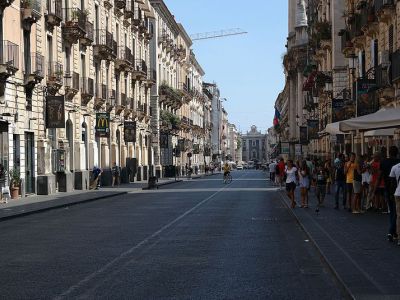
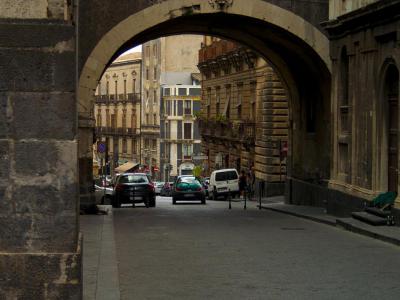

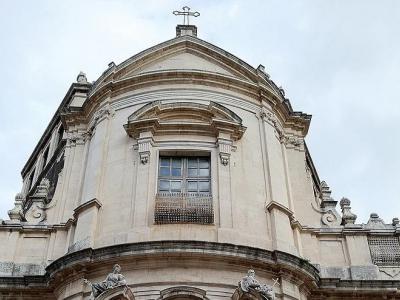
Walking Tours in Catania, Italy

Create Your Own Walk in Catania
Creating your own self-guided walk in Catania is easy and fun. Choose the city attractions that you want to see and a walk route map will be created just for you. You can even set your hotel as the start point of the walk.
Discover Catania's Historical Churches on Foot
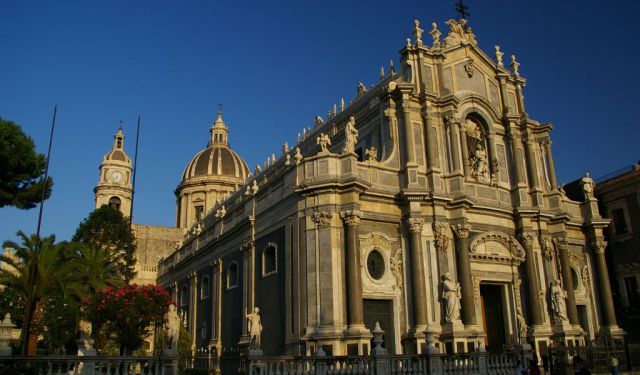
Just as many other Italian destinations, the Sicilian city of Catania is full of churches, especially in the historic center, where the presence of religious sites is particularly high! A good number of local churches date back centuries, and as such represent marvelous pieces of architecture, adding much character to the area. It is also commonplace to find inside most of them, be it a duomo,... view more
Tour Duration: 1 Hour(s)
Travel Distance: 1.6 Km or 1 Miles
Tour Duration: 1 Hour(s)
Travel Distance: 1.6 Km or 1 Miles
A Walk Through Catania’s Baroque Old Town
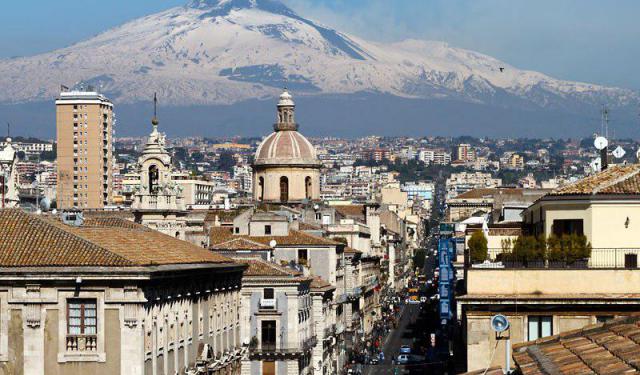
Most cities avoid danger. But here, the danger is part of the experience. Catania settled beside a volcano and stayed. Lava flows, earthquakes, and ash are a living memory here, shaping everything from building materials to local legends.
Catania is one of Sicily’s oldest cities, with a history shaped by colonization, conquest, natural disaster, and repeated renewal. It was founded in 729 BC... view more
Tour Duration: 2 Hour(s)
Travel Distance: 3.8 Km or 2.4 Miles
Catania is one of Sicily’s oldest cities, with a history shaped by colonization, conquest, natural disaster, and repeated renewal. It was founded in 729 BC... view more
Tour Duration: 2 Hour(s)
Travel Distance: 3.8 Km or 2.4 Miles