

Royal Palace of La Almudaina, Palma de Mallorca (must see)
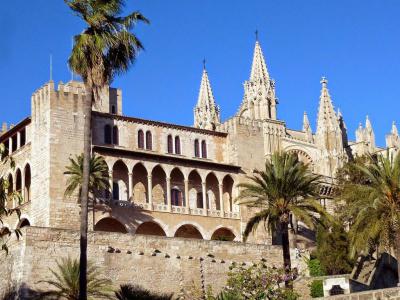
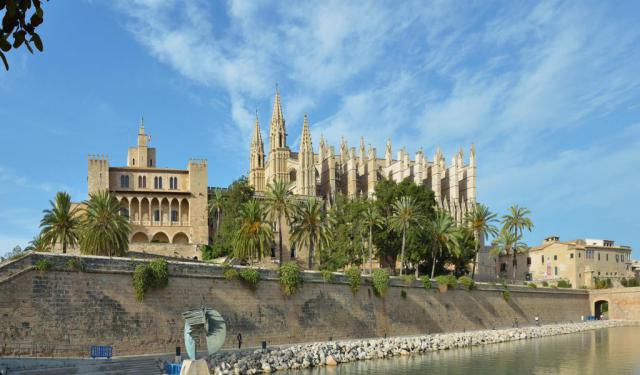
The Royal Palace of La Almudaina is one of Palma de Mallorca’s most important historic monuments, standing directly opposite the cathedral and overlooking the bay. Its origins lie in the Islamic period, when it functioned as the fortified palace of Mallorca. Built on earlier Roman and possibly Byzantine foundations, the complex served as the seat of Muslim governors until the Christian conquest of Mallorca in 1229.
Following the conquest by King James I of Aragon, the palace was adapted for Christian rule. Its most significant transformation came in 1309, when King James II of Mallorca ordered a major reconstruction based on the Royal Palace of Perpignan. This rebuilding established much of the structure and layout that define La Almudaina today. By the 14th century, the palace had assumed its enduring form as a Gothic royal residence, while still preserving traces of its Islamic past, particularly in its courtyards and baths.
To enter the palace premises, look for the arched gateway with a balcony above it. As soon as you clear security, you will walk straight into the King’s Courtyard, easily recognized by the white marble lion fountain at its center. One of the palace’s highlights is the Chapel of Saint Anne, located along the western wall of the courtyard. Its exterior portal immediately stands out, crafted from rose and white marble from the Pyrenees. In contrast to this Romanesque entrance—one of the few surviving examples of the style on the island—the chapel’s interior reflects classic Mallorcan Gothic. Inside, look for the 14th-century alabaster altarpiece and the central rose window, which floods the small space with colorful light.
The most impressive and largest room in the palace is the Great Hall. It is the first major hall you enter after climbing the staircase flanked by two lion statues in the courtyard. Once inside, look up at the massive pointed Gothic arches and the high vaulted ceilings. Along the walls hang Flemish tapestries from the 16th and 17th centuries, depicting intricate mythological and historical scenes. The hall remains the setting for official state receptions when the Spanish royal family is in residence.
Overall, the palace’s interior spaces are clearly differentiated by level. The ground floor maintains a distinctly medieval atmosphere, with art, furnishings, and tapestries dating largely from the 15th century. The upper floor, reserved for official royal acts, is more formal in tone and decorated with artworks and objects from the 17th, 18th, and 20th centuries.
The palace can get quite crowded in the mid-morning when cruise ship tours arrive. For the best experience and to see the Great Hall without the crowds, try to visit during the first hour of opening or in the late afternoon.
Following the conquest by King James I of Aragon, the palace was adapted for Christian rule. Its most significant transformation came in 1309, when King James II of Mallorca ordered a major reconstruction based on the Royal Palace of Perpignan. This rebuilding established much of the structure and layout that define La Almudaina today. By the 14th century, the palace had assumed its enduring form as a Gothic royal residence, while still preserving traces of its Islamic past, particularly in its courtyards and baths.
To enter the palace premises, look for the arched gateway with a balcony above it. As soon as you clear security, you will walk straight into the King’s Courtyard, easily recognized by the white marble lion fountain at its center. One of the palace’s highlights is the Chapel of Saint Anne, located along the western wall of the courtyard. Its exterior portal immediately stands out, crafted from rose and white marble from the Pyrenees. In contrast to this Romanesque entrance—one of the few surviving examples of the style on the island—the chapel’s interior reflects classic Mallorcan Gothic. Inside, look for the 14th-century alabaster altarpiece and the central rose window, which floods the small space with colorful light.
The most impressive and largest room in the palace is the Great Hall. It is the first major hall you enter after climbing the staircase flanked by two lion statues in the courtyard. Once inside, look up at the massive pointed Gothic arches and the high vaulted ceilings. Along the walls hang Flemish tapestries from the 16th and 17th centuries, depicting intricate mythological and historical scenes. The hall remains the setting for official state receptions when the Spanish royal family is in residence.
Overall, the palace’s interior spaces are clearly differentiated by level. The ground floor maintains a distinctly medieval atmosphere, with art, furnishings, and tapestries dating largely from the 15th century. The upper floor, reserved for official royal acts, is more formal in tone and decorated with artworks and objects from the 17th, 18th, and 20th centuries.
The palace can get quite crowded in the mid-morning when cruise ship tours arrive. For the best experience and to see the Great Hall without the crowds, try to visit during the first hour of opening or in the late afternoon.
Want to visit this sight? Check out these Self-Guided Walking Tours in Palma de Mallorca. Alternatively, you can download the mobile app "GPSmyCity: Walks in 1K+ Cities" from Apple App Store or Google Play Store. The app turns your mobile device to a personal tour guide and it works offline, so no data plan is needed when traveling abroad.
Download The GPSmyCity App



Royal Palace of La Almudaina on Map
Sight Name: Royal Palace of La Almudaina
Sight Location: Palma de Mallorca, Spain (See walking tours in Palma de Mallorca)
Sight Type: Attraction/Landmark
Guide(s) Containing This Sight:
Sight Location: Palma de Mallorca, Spain (See walking tours in Palma de Mallorca)
Sight Type: Attraction/Landmark
Guide(s) Containing This Sight:
Nearby Sights
Walking Tours in Palma de Mallorca, Spain

Create Your Own Walk in Palma de Mallorca
Creating your own self-guided walk in Palma de Mallorca is easy and fun. Choose the city attractions that you want to see and a walk route map will be created just for you. You can even set your hotel as the start point of the walk.
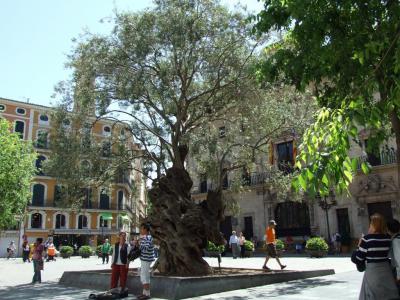
Palma de Mallorca Introduction Walking Tour
French author Aurore Dupin, better known by her pen name George Sand, spent the winter of 1838–1839 in Mallorca together with the famous Polish composer Frédéric Chopin. Despite the cold weather, she wrote that Mallorca was “all that a poet or a painter might dream of.”
The first part of city’s name, Palma, is traditionally linked to the Latin word that means “palm tree,” a symbol... view more
Tour Duration: 2 Hour(s)
Travel Distance: 2.4 Km or 1.5 Miles
The first part of city’s name, Palma, is traditionally linked to the Latin word that means “palm tree,” a symbol... view more
Tour Duration: 2 Hour(s)
Travel Distance: 2.4 Km or 1.5 Miles
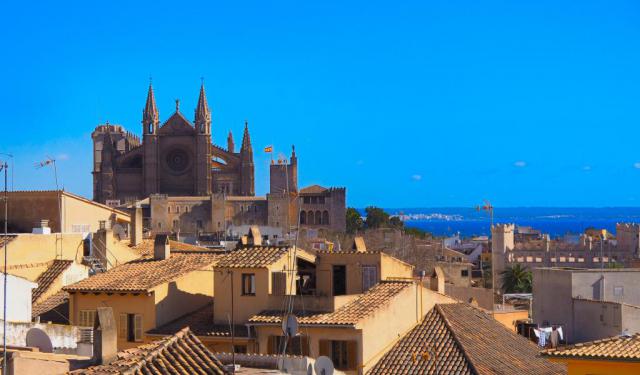
Historical Buildings Walking Tour
Fervent devotees of the past will undoubtedly find Palma de Mallorca's old town quite alluring for a chance to get closer to the island's culture and discover firsthand the unspoiled Mallorca as it once was. Indeed, the historic center of the city is ideal for an acquaintance with the local heritage richly presented in the form of multiple historic buildings.
Some of them, like the... view more
Tour Duration: 2 Hour(s)
Travel Distance: 3.0 Km or 1.9 Miles
Some of them, like the... view more
Tour Duration: 2 Hour(s)
Travel Distance: 3.0 Km or 1.9 Miles