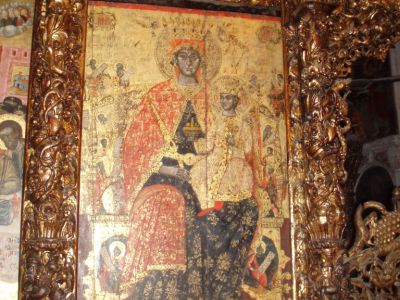


Saint Demetrius Church, Beirut
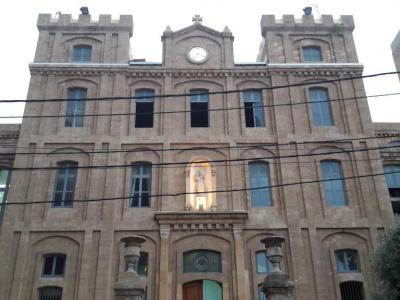
Saint Demetrius Church, also known as Mar Mitr, stands as a notable Antiochian Greek Orthodox Church within the Archdiocese of Beirut, located in the Ashrafiyeh district directly opposite ABC Mall. The church showcases a striking blend of architectural styles, incorporating elements from Anatolian, Ottoman, Islamic, and Greek traditions, reflecting the diverse cultural history of the region.
The building's exterior is particularly eye-catching with its whitewashed façade, punctuated by yellow lines that give the structure a fresh and magnificent appearance, reminiscent of traditional Greek churches. This aesthetic choice not only highlights the church's Orthodox roots but also adds a vibrant touch to the urban landscape of Beirut.
Adjacent to the church is a meticulously maintained cemetery, renowned for its sophisticated tombs and mausoleums. These structures exhibit a rich confluence of Arab-Islamic and 19th-century European influences, alongside notable Greek and Russian architectural details. The marble graves and statues within the cemetery are of particular note, offering a poignant glimpse into the artistry and cultural syncretism of the region's past elites.
Despite its serene and majestic presence, Saint Demetrius Church has not been immune to the trials facing Beirut. It was severely damaged by a significant explosion in the city. Remarkably, the church's altar survived almost intact, a testament to what many faithful consider divine intervention. This resilience has only added to the church's historical and spiritual significance, marking it as a beacon of hope and faith in the heart of Beirut.
The building's exterior is particularly eye-catching with its whitewashed façade, punctuated by yellow lines that give the structure a fresh and magnificent appearance, reminiscent of traditional Greek churches. This aesthetic choice not only highlights the church's Orthodox roots but also adds a vibrant touch to the urban landscape of Beirut.
Adjacent to the church is a meticulously maintained cemetery, renowned for its sophisticated tombs and mausoleums. These structures exhibit a rich confluence of Arab-Islamic and 19th-century European influences, alongside notable Greek and Russian architectural details. The marble graves and statues within the cemetery are of particular note, offering a poignant glimpse into the artistry and cultural syncretism of the region's past elites.
Despite its serene and majestic presence, Saint Demetrius Church has not been immune to the trials facing Beirut. It was severely damaged by a significant explosion in the city. Remarkably, the church's altar survived almost intact, a testament to what many faithful consider divine intervention. This resilience has only added to the church's historical and spiritual significance, marking it as a beacon of hope and faith in the heart of Beirut.
Want to visit this sight? Check out these Self-Guided Walking Tours in Beirut. Alternatively, you can download the mobile app "GPSmyCity: Walks in 1K+ Cities" from Apple App Store or Google Play Store. The app turns your mobile device to a personal tour guide and it works offline, so no data plan is needed when traveling abroad.
Download The GPSmyCity App



Saint Demetrius Church on Map
Sight Name: Saint Demetrius Church
Sight Location: Beirut, Lebanon (See walking tours in Beirut)
Sight Type: Religious
Sight Location: Beirut, Lebanon (See walking tours in Beirut)
Sight Type: Religious
Nearby Sights


Walking Tours in Beirut, Lebanon

Create Your Own Walk in Beirut
Creating your own self-guided walk in Beirut is easy and fun. Choose the city attractions that you want to see and a walk route map will be created just for you. You can even set your hotel as the start point of the walk.
Seaside Walking Tour
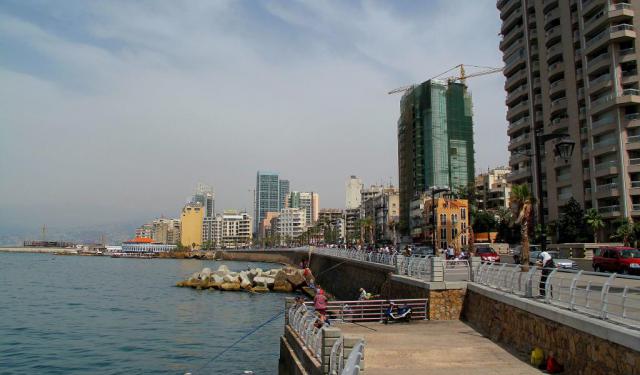
If you wish to unwind or, perhaps, seek some quality time with your family and friends in a completely safe environment, while in Beirut, the local seaside area offers ample opportunities for both. Lined with palm trees, the city's waterfront guarantees a truly joyful experience and is as much fun for watching the Mediterranean, beautiful people and breathing the air as it is for exploring... view more
Tour Duration: 2 Hours
Travel Distance: 3.2 Km or 2 Miles
Tour Duration: 2 Hours
Travel Distance: 3.2 Km or 2 Miles
Beirut Downtown Walking Tour
How many times can a city die? Beirut, in 5,000 years, has died and come back many times. Archeological digs downtown have revealed Phoenician, Greek, Roman, Byzantine, Arab, Crusader and Ottoman remains and signs of influence.
In 140 BC the city was destroyed by Diodotus Tryphon, a king of the Seleucid Empire. His Hellenistic city lies over the Phoenician one. Pompey the Great arrived in 64 BC... view more
Tour Duration: 2 Hours
Travel Distance: 3.3 Km or 2.1 Miles
In 140 BC the city was destroyed by Diodotus Tryphon, a king of the Seleucid Empire. His Hellenistic city lies over the Phoenician one. Pompey the Great arrived in 64 BC... view more
Tour Duration: 2 Hours
Travel Distance: 3.3 Km or 2.1 Miles
City Walks Overview
