

Santuario di Nostra Signora di Bonaria (Sanctuary of Our Lady of Bonaria), Cagliari
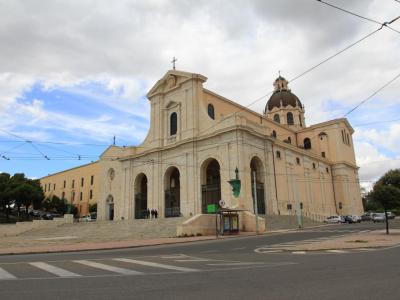
The sanctuary of Nostra Signora di Bonaria is a religious complex in the city of Cagliari located at the top of the hill of the same name. The fourteenth- century sanctuary was extensively remodeled in the 1950s, with the aim of bringing it back to its original form. The facade, aligned with that of the basilica, is very simple, gabled. To access the church you enter through the portal, in Gothic style, which was recovered from the medieval church of San Francesco in Stampace, which was demolished in the 19th century. The interior, also in Catalan Gothic style, has a single nave with an ogival vault. On the left side there are three chapels, also in Gothic style, with cross vaults, while on the right side there is the arch that joins the sanctuary to the basilica (the four chapels that opened on this side were demolished following the works of construction of the basilica). At the end of the hall, raised above the floor, is the presbytery which ends with the polygonal apse where the main altar is located; this is the heart of the sanctuary, because on the altar is enthroned the imposing fourteenth-century wooden statue of the Madonna and Child, known as Our Lady of Bonaria, the destination of the devotion of the faithful who, to venerate it, climb the steps on both sides of the altar, thus finding itself at the height of the statue's feet. At the base of the balustrade, on the sides of the access staircase to the presbytery, there are the tombs of Domenico Alberto Azuni (left) and that of the servant of God Fra' Antonino Pisano (right), mercedary friar of Cagliari, who died in 1927. In the grandstand there is an organ ( 1886 ), built by Carlo Aletti from Monza.
Crowning a hilltop southeast of the city, and a prominent landmark seen from Bastione San Remy, is the Sanctuary of Our Lady of Bonaria. The church houses a venerated statue believed to have stopped a storm in time to save the crew of a Spanish vessel shipwrecked in the Gulf of Sardinia, off Cagliari, in the winter of 1307. The small Spanish Gothic church dates to the 14th century, and the larger Neoclassical basilica was built in the 18th century. The Sanctuary Museum holds votives and archaeological finds.
“Our Lady of Bonaria”, the basilica, the sanctuary, and the convent are built on a hill southeast of the city center about 10-15 minutes on foot from Via Roma. One of the must-see attractions in Cagliari, the sanctuary was built in Gothic style in the 14th century when the Aragon rulers decided to besiege the city, while the basilica dates back to 1700 and is an example of neoclassical architecture. The basilica suffered major damages in 1943 due to the Anglo-American bombings on Cagliari: the frescoes were completely destroyed, as were a large number of other treasures. After World War II the basilica was renovated and the work was completed in 1998. This is mainly why as soon as you enter you will notice it’s very new. To find out how it looked before and after renovation, close to the entrance door there are texts and photos that document the history of the church. From the large staircase of the basilica, you have a beautiful view of the sea and the port.
In the island's capital, on top of a famous hill, is Sardinia's most famous Catholic sanctuary, with a famous past and a present of great devotion. The white facade overlooks a bright square, while infinite stairs descend from the hilltop nearly all the way to the sea at suSiccu, one of Cagliari's marinas. After centuries of rebuilding and renovations, Nostra Signora di Bonaria, along with the 14th century sanctuary to the left of the church, is today the island's Christian temple par excellence. Legend has it that in 1370, in the middle of a storm, a ship jettisoned her load. The storm calmed as soon as a large case was thrown overboard, before floating to the shore in front of Bonaria hill. Inside was a wooden statue of the Madonna with a child in her arms and a candle in her hand, which remained miraculously alight. The whole of Sardinia was soon worshipping the statue, which is now kept in the altar of the small sanctuary, an early Sardinian example of Gothic-Catalan architecture built by Alfonso d'Aragona (1324) during the Pisan siege and donated to the Mercedarians. The monks built their convent, still inhabited today, next to the church. ***PH***
Crowning a hilltop southeast of the city, and a prominent landmark seen from Bastione San Remy, is the Sanctuary of Our Lady of Bonaria. The church houses a venerated statue believed to have stopped a storm in time to save the crew of a Spanish vessel shipwrecked in the Gulf of Sardinia, off Cagliari, in the winter of 1307. The small Spanish Gothic church dates to the 14th century, and the larger Neoclassical basilica was built in the 18th century. The Sanctuary Museum holds votives and archaeological finds.
“Our Lady of Bonaria”, the basilica, the sanctuary, and the convent are built on a hill southeast of the city center about 10-15 minutes on foot from Via Roma. One of the must-see attractions in Cagliari, the sanctuary was built in Gothic style in the 14th century when the Aragon rulers decided to besiege the city, while the basilica dates back to 1700 and is an example of neoclassical architecture. The basilica suffered major damages in 1943 due to the Anglo-American bombings on Cagliari: the frescoes were completely destroyed, as were a large number of other treasures. After World War II the basilica was renovated and the work was completed in 1998. This is mainly why as soon as you enter you will notice it’s very new. To find out how it looked before and after renovation, close to the entrance door there are texts and photos that document the history of the church. From the large staircase of the basilica, you have a beautiful view of the sea and the port.
In the island's capital, on top of a famous hill, is Sardinia's most famous Catholic sanctuary, with a famous past and a present of great devotion. The white facade overlooks a bright square, while infinite stairs descend from the hilltop nearly all the way to the sea at suSiccu, one of Cagliari's marinas. After centuries of rebuilding and renovations, Nostra Signora di Bonaria, along with the 14th century sanctuary to the left of the church, is today the island's Christian temple par excellence. Legend has it that in 1370, in the middle of a storm, a ship jettisoned her load. The storm calmed as soon as a large case was thrown overboard, before floating to the shore in front of Bonaria hill. Inside was a wooden statue of the Madonna with a child in her arms and a candle in her hand, which remained miraculously alight. The whole of Sardinia was soon worshipping the statue, which is now kept in the altar of the small sanctuary, an early Sardinian example of Gothic-Catalan architecture built by Alfonso d'Aragona (1324) during the Pisan siege and donated to the Mercedarians. The monks built their convent, still inhabited today, next to the church. ***PH***
Want to visit this sight? Check out these Self-Guided Walking Tours in Cagliari. Alternatively, you can download the mobile app "GPSmyCity: Walks in 1K+ Cities" from Apple App Store or Google Play Store. The app turns your mobile device to a personal tour guide and it works offline, so no data plan is needed when traveling abroad.
Download The GPSmyCity App



Santuario di Nostra Signora di Bonaria (Sanctuary of Our Lady of Bonaria) on Map
Sight Name: Santuario di Nostra Signora di Bonaria (Sanctuary of Our Lady of Bonaria)
Sight Location: Cagliari, Italy (See walking tours in Cagliari)
Sight Type: Religious
Sight Location: Cagliari, Italy (See walking tours in Cagliari)
Sight Type: Religious
Nearby Sights


Walking Tours in Cagliari, Italy

Create Your Own Walk in Cagliari
Creating your own self-guided walk in Cagliari is easy and fun. Choose the city attractions that you want to see and a walk route map will be created just for you. You can even set your hotel as the start point of the walk.
Cagliari Introduction Walking Tour
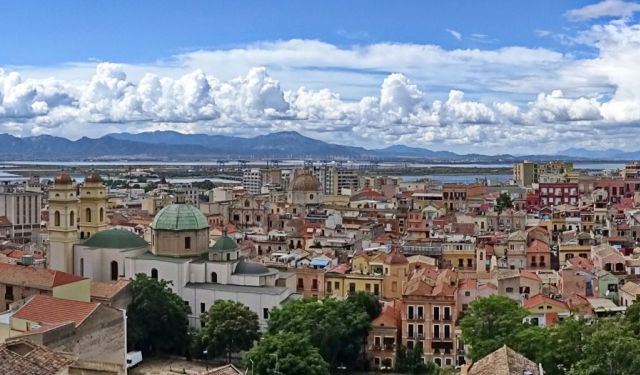
Welcome to Cagliari, Sardinia’s beating heart! Perched along the shimmering Mediterranean, this sun-soeaked city blends centuries-old history with modern charm. With stunning beaches, colorful lagoons, and lush greenery, it’s also a place where natural beauty meets cultural riches.
Cagliari’s story began long before our time. Around the 8th century BC, the Phoenicians founded Karaly as a... view more
Tour Duration: 2 Hours
Travel Distance: 2.9 Km or 1.8 Miles
Cagliari’s story began long before our time. Around the 8th century BC, the Phoenicians founded Karaly as a... view more
Tour Duration: 2 Hours
Travel Distance: 2.9 Km or 1.8 Miles