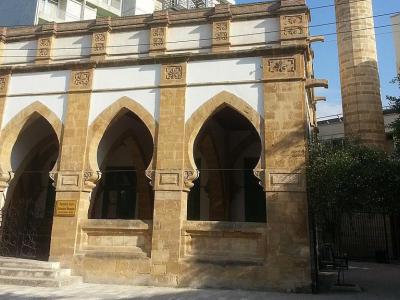


Sarayonu Mosque, Nicosia
The Sarayonu Mosque, also known as the Mosque of the Serai, stands in the heart of North Nicosia’s walled city, just off Sarayonu Square, a site historically pulsing with civic and religious life. Its story is one of transformation-mirroring Cyprus’s complex past-blending Gothic, Ottoman, and Moorish aesthetics with changing social roles.
In the 14th and 15th centuries, under Lusignan and Venetian rule, the site was occupied by a Carmelite church, complete with a dome and a surrounding graveyard that allegedly held the remains of high nobility, including a King of Jerusalem and a Duke of Normandy. When the Ottomans conquered Cyprus in 1571, they repurposed the church into a mosque for the stationed soldiers, naming it Orduonu Mescidi ("masjid in front of the army camp"). This first iteration retained its Gothic exterior while adopting a more modest Ottoman interior.
Eventually, the old church structure was replaced by a new mosque-though accounts differ on when exactly. Some date its construction to 1690–91, credited to Kinci Ali Pasha, others to 1820–24 under another Ali Pasha. This mosque featured typical Ottoman architectural elements, with two sharp arches supporting its roof and a simple stone minaret.
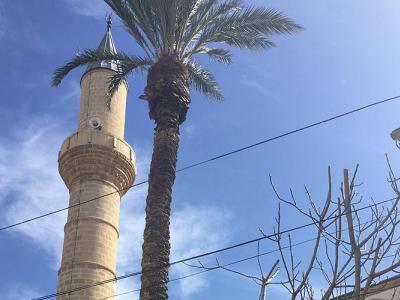
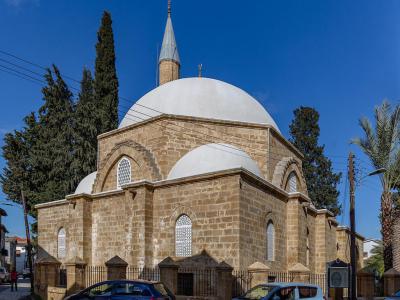
In 1900, an earthquake demolished the mosque, prompting a redesign by British architect Fenton Atkinson. Allegedly drawing inspiration from Andalusia, Atkinson's version of the mosque was built between 1901 and 1903. The current building showcases a Moorish façade with horseshoe arches, Indian motifs, and a rectangular layout in line with Cypriot tradition. The minaret, however, remains from the Ottoman-era structure, standing apart from the mosque itself.
Amid Cyprus’s modern upheavals, the Sarayonu Mosque served as a marriage office during the 1963–64 conflict, before being restored as a mosque in 2004 under pressure from Turkish Islamist circles. Today, it stands as a symbol of the island’s layered Western, Ottoman, British, and Cypriot heritage.
In the 14th and 15th centuries, under Lusignan and Venetian rule, the site was occupied by a Carmelite church, complete with a dome and a surrounding graveyard that allegedly held the remains of high nobility, including a King of Jerusalem and a Duke of Normandy. When the Ottomans conquered Cyprus in 1571, they repurposed the church into a mosque for the stationed soldiers, naming it Orduonu Mescidi ("masjid in front of the army camp"). This first iteration retained its Gothic exterior while adopting a more modest Ottoman interior.
Eventually, the old church structure was replaced by a new mosque-though accounts differ on when exactly. Some date its construction to 1690–91, credited to Kinci Ali Pasha, others to 1820–24 under another Ali Pasha. This mosque featured typical Ottoman architectural elements, with two sharp arches supporting its roof and a simple stone minaret.
In 1900, an earthquake demolished the mosque, prompting a redesign by British architect Fenton Atkinson. Allegedly drawing inspiration from Andalusia, Atkinson's version of the mosque was built between 1901 and 1903. The current building showcases a Moorish façade with horseshoe arches, Indian motifs, and a rectangular layout in line with Cypriot tradition. The minaret, however, remains from the Ottoman-era structure, standing apart from the mosque itself.
Amid Cyprus’s modern upheavals, the Sarayonu Mosque served as a marriage office during the 1963–64 conflict, before being restored as a mosque in 2004 under pressure from Turkish Islamist circles. Today, it stands as a symbol of the island’s layered Western, Ottoman, British, and Cypriot heritage.
Want to visit this sight? Check out these Self-Guided Walking Tours in Nicosia. Alternatively, you can download the mobile app "GPSmyCity: Walks in 1K+ Cities" from Apple App Store or Google Play Store. The app turns your mobile device to a personal tour guide and it works offline, so no data plan is needed when traveling abroad.
Download The GPSmyCity App



Sarayonu Mosque on Map
Sight Name: Sarayonu Mosque
Sight Location: Nicosia, Cyprus (See walking tours in Nicosia)
Sight Type: Religious
Sight Location: Nicosia, Cyprus (See walking tours in Nicosia)
Sight Type: Religious
Nearby Sights

Walking Tours in Nicosia, Cyprus

Create Your Own Walk in Nicosia
Creating your own self-guided walk in Nicosia is easy and fun. Choose the city attractions that you want to see and a walk route map will be created just for you. You can even set your hotel as the start point of the walk.
Nicosia Shopping Tour
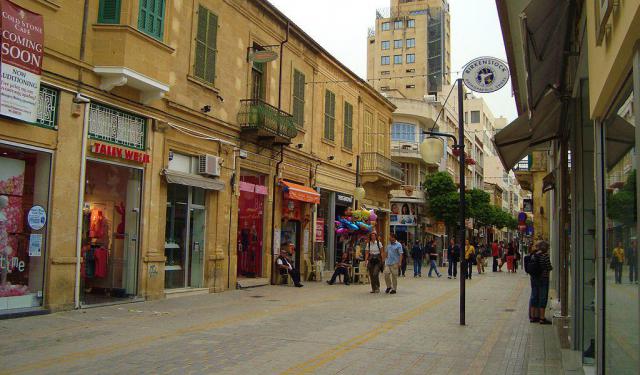
There's probably no better shopping destination for tourists in Cyprus than Nicosia. Indeed, the country's exotic capital offers a vibrant mix of traditional markets and modern fashionable shops, catering to diverse tastes and preferences.
One of the must-visit spots is Bandabuliya Municipal Market, also known as Belediye Pazarı. Here, you can immerse yourself in the bustling... view more
Tour Duration: 1 Hour(s)
Travel Distance: 2.2 Km or 1.4 Miles
One of the must-visit spots is Bandabuliya Municipal Market, also known as Belediye Pazarı. Here, you can immerse yourself in the bustling... view more
Tour Duration: 1 Hour(s)
Travel Distance: 2.2 Km or 1.4 Miles
Greek Old Town Walking Tour
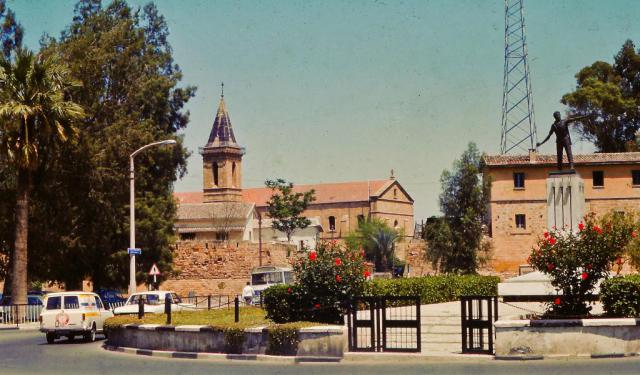
Nicosia is Cyprus’s capital and its largest city. It is Europe’s last divided capital, with Turkish Cypriots living on the north side and Greek Cypriots living on the south side.
Nicosia has been continuously occupied for over 4,500 years and has been Cyprus's capital for over 1,000 years. It has a turbulent political history, and the Franks, Venetians, Ottomans, and British have... view more
Tour Duration: 2 Hour(s)
Travel Distance: 3.0 Km or 1.9 Miles
Nicosia has been continuously occupied for over 4,500 years and has been Cyprus's capital for over 1,000 years. It has a turbulent political history, and the Franks, Venetians, Ottomans, and British have... view more
Tour Duration: 2 Hour(s)
Travel Distance: 3.0 Km or 1.9 Miles
Turkish Old Town Walking Tour
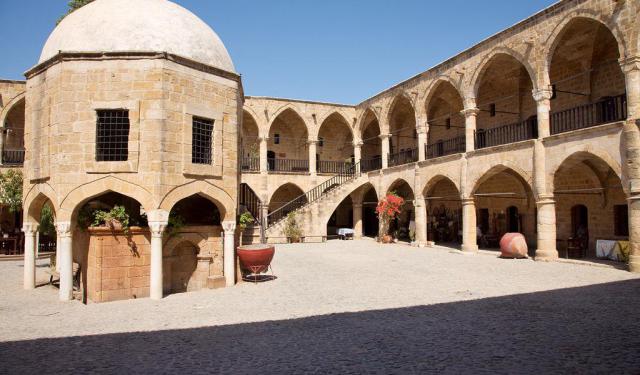
Nicosia wasn't always Nicosia. It was originally called Leukosia. In Greek mythology Leukosia was a siren, a daughter of Achelous, a river god, and Melpomene, Muse of Tragedy. They had several daughters, Leukosia was one.
Others say the first settlers were Achaean veterans of the Trojan War. They appeared on the plain of Mesaoria by the river Pedieos in 2,500 BC. They formed the city... view more
Tour Duration: 2 Hour(s)
Travel Distance: 2.2 Km or 1.4 Miles
Others say the first settlers were Achaean veterans of the Trojan War. They appeared on the plain of Mesaoria by the river Pedieos in 2,500 BC. They formed the city... view more
Tour Duration: 2 Hour(s)
Travel Distance: 2.2 Km or 1.4 Miles