

Shakespeare's Schoolroom and Guildhall, Stratford-upon-Avon (must see)
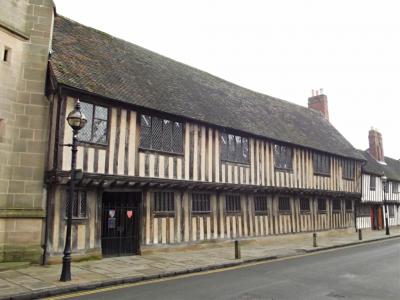
This black-and-white timber-framed building on Church Street is known as Shakespeare’s Schoolroom & Guildhall. The Guild of the Holy Cross built the Guildhall in the early 15th century, with further buildings around it added later. From 1553 until 1848, it also served as the headquarters of Stratford’s Borough Council.
The school, originally called The King’s New School and later King Edward VI School, moved into the Guildhall in 1568. William Shakespeare is believed to have begun studying here around 1571, at about seven years of age.
Inside, your first stop on the ground floor is the Court of Record. This was where Stratford’s civic and legal business was conducted. Shakespeare’s father, John Shakespeare, served as the town’s bailiff and would have presided over proceedings here.
Adjoining the Court of Record is the Priests’ Chapel. Look carefully at the walls for surviving medieval paintings. Do not confuse this small interior chapel with the much larger Guild Chapel, which stands outside beside the Guildhall.
Moving forward into the Counting House, keep an eye out for the old wooden muniments chest, once used to store money, deeds, and official records. During the Elizabethan period, this room also served as an armoury, storing pikes, swords, muskets, and other weapons.
Now take the stairs to the upper floor. The first room upstairs is the Master’s Chamber. Walk toward the large wooden table in the center and examine its surface, where generations of school prefects carved their names and initials. Also look toward the walls and gable for traces of historic painted decoration.
From the Master’s Chamber, head straight into the Tudor Schoolroom, the main highlight of the visit. You can identify it by its exposed timber beams and rows of wooden desks and benches. This is the room where Shakespeare is believed to have studied Latin, rhetoric, poetry, and classical literature.
Carry on into the Georgian Classroom, recognizable by its later 18th-century desks. Look closely at their surfaces, which are covered with initials and marks carved by generations of pupils. Lessons are still held here today.
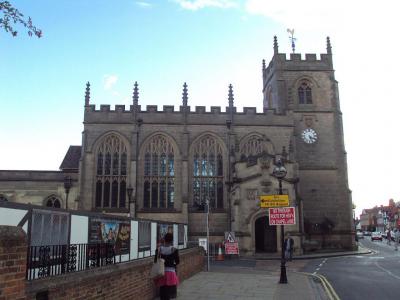
When you leave the building, look immediately beside the Guildhall for the Guild Chapel and nearby almshouses, surviving parts of the wider medieval complex.
Tip:
To fully experience a Tudor-style lesson in the type of classroom where Shakespeare received his early education, sit at one of the desks and try writing with the feather quill, but watch out for ink blots...
The school, originally called The King’s New School and later King Edward VI School, moved into the Guildhall in 1568. William Shakespeare is believed to have begun studying here around 1571, at about seven years of age.
Inside, your first stop on the ground floor is the Court of Record. This was where Stratford’s civic and legal business was conducted. Shakespeare’s father, John Shakespeare, served as the town’s bailiff and would have presided over proceedings here.
Adjoining the Court of Record is the Priests’ Chapel. Look carefully at the walls for surviving medieval paintings. Do not confuse this small interior chapel with the much larger Guild Chapel, which stands outside beside the Guildhall.
Moving forward into the Counting House, keep an eye out for the old wooden muniments chest, once used to store money, deeds, and official records. During the Elizabethan period, this room also served as an armoury, storing pikes, swords, muskets, and other weapons.
Now take the stairs to the upper floor. The first room upstairs is the Master’s Chamber. Walk toward the large wooden table in the center and examine its surface, where generations of school prefects carved their names and initials. Also look toward the walls and gable for traces of historic painted decoration.
From the Master’s Chamber, head straight into the Tudor Schoolroom, the main highlight of the visit. You can identify it by its exposed timber beams and rows of wooden desks and benches. This is the room where Shakespeare is believed to have studied Latin, rhetoric, poetry, and classical literature.
Carry on into the Georgian Classroom, recognizable by its later 18th-century desks. Look closely at their surfaces, which are covered with initials and marks carved by generations of pupils. Lessons are still held here today.
When you leave the building, look immediately beside the Guildhall for the Guild Chapel and nearby almshouses, surviving parts of the wider medieval complex.
Tip:
To fully experience a Tudor-style lesson in the type of classroom where Shakespeare received his early education, sit at one of the desks and try writing with the feather quill, but watch out for ink blots...
Want to visit this sight? Check out these Self-Guided Walking Tours in Stratford-upon-Avon. Alternatively, you can download the mobile app "GPSmyCity: Walks in 1K+ Cities" from Apple App Store or Google Play Store. The app turns your mobile device to a personal tour guide and it works offline, so no data plan is needed when traveling abroad.
Download The GPSmyCity App



Shakespeare's Schoolroom and Guildhall on Map
Sight Name: Shakespeare's Schoolroom and Guildhall
Sight Location: Stratford-upon-Avon, England (See walking tours in Stratford-upon-Avon)
Sight Type: Attraction/Landmark
Guide(s) Containing This Sight:
Sight Location: Stratford-upon-Avon, England (See walking tours in Stratford-upon-Avon)
Sight Type: Attraction/Landmark
Guide(s) Containing This Sight:
Nearby Sights
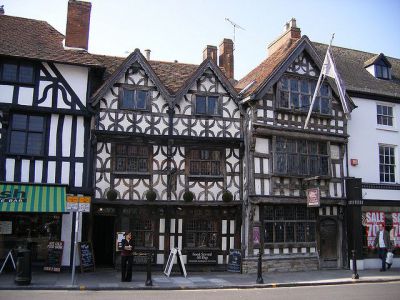
Walking Tours in Stratford-upon-Avon, England

Create Your Own Walk in Stratford-upon-Avon
Creating your own self-guided walk in Stratford-upon-Avon is easy and fun. Choose the city attractions that you want to see and a walk route map will be created just for you. You can even set your hotel as the start point of the walk.
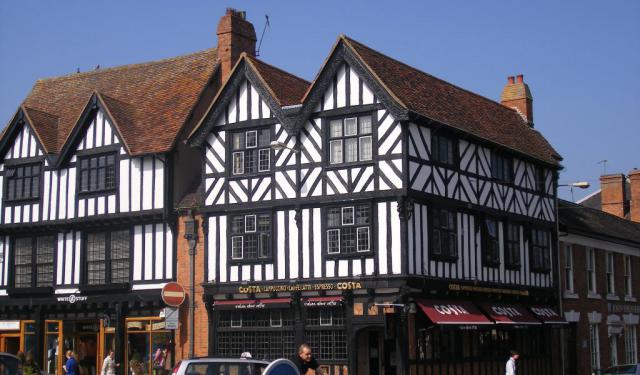
Historical Tudor Houses Walking Tour
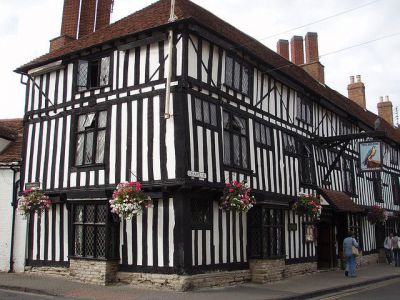
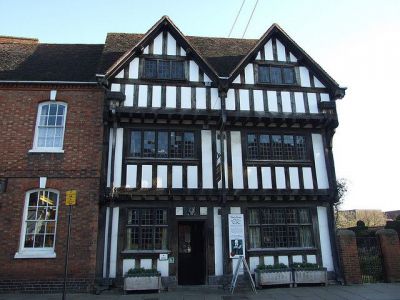
One of the first things you notice while walking through the historic centre of Stratford-upon-Avon is the abundance of timber-framed Tudor buildings. Their most recognizable feature is the exposed wooden framework, often combined with an upper story that projects slightly over the street. The spaces between the timbers were traditionally filled with materials such as brick, plaster, or wattle and... view more
Tour Duration: 1 Hour(s)
Travel Distance: 1.1 Km or 0.7 Miles
Tour Duration: 1 Hour(s)
Travel Distance: 1.1 Km or 0.7 Miles
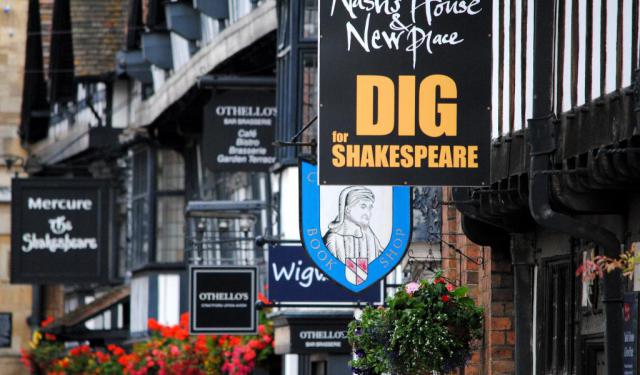
William Shakespeare Walking Tour
The picturesque town of Stratford-upon-Avon is steeped in the history of William Shakespeare. This is where the Bard was born in 1564, on April 23rd, and where he died exactly 52 years later, on April 23rd, 1616.
Many historic places connected with Shakespeare and his family have been preserved and are visited by millions of people who come to Stratford each year to celebrate his life and work.... view more
Tour Duration: 1 Hour(s)
Travel Distance: 1.4 Km or 0.9 Miles
Many historic places connected with Shakespeare and his family have been preserved and are visited by millions of people who come to Stratford each year to celebrate his life and work.... view more
Tour Duration: 1 Hour(s)
Travel Distance: 1.4 Km or 0.9 Miles
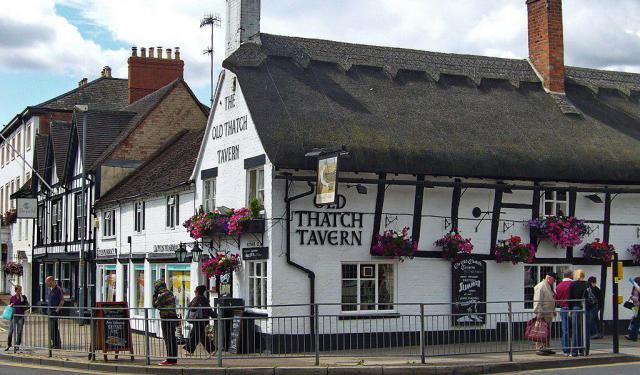
Stratford-upon-Avon Historic City Center Walking Tour
The name Stratford-upon-Avon tells you quite a lot about the town. “Strat” comes from an Old English word for a street or road, itself derived from the Latin “strata.” A “ford” is a shallow place where a river can be crossed, while “Avon” comes from an ancient Celtic word meaning simply “river.” String them all together, rather like sausages, and you get Stratford-upon-Avon.... view more
Tour Duration: 1 Hour(s)
Travel Distance: 1.9 Km or 1.2 Miles
Tour Duration: 1 Hour(s)
Travel Distance: 1.9 Km or 1.2 Miles