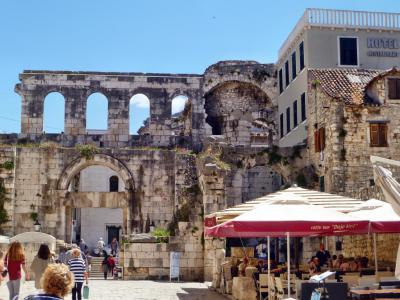


Silver Gate, Split
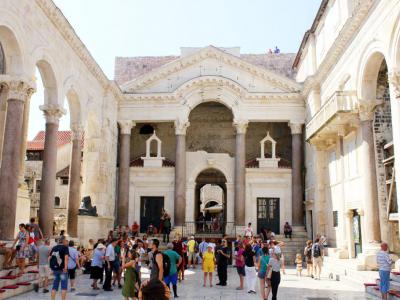
Four gates guard the Old Town of Split, and the Romans, never ones to miss a directional detail, named them appropriately. The Silver Gate faces east, toward the ancient Roman town of Epetia, so they called it Porta Orientalis-literally, the “eastern gate.” Straightforward, efficient, and very Roman. The other entrances' names are all about metals and practicality: Golden Gate, Iron Gate, and Bronze Gate. Diocletian may have retired from power, but he certainly didn’t retire from branding...
After Salona, the nearby Roman capital, was destroyed by Avars and Slavs around the 7th century AD, refugees took shelter within the sturdy walls of Diocletian’s Palace. The space inside was tight, so what they did was build upward. Above the Silver Gate, in a narrow corridor, they tucked in a mini-church dedicated to Saint Apolinar. Yes, a chapel above a gateway. And since good ideas travel fast, similar little churches eventually appeared above other gates, too. Medieval multitasking at its finest...
By the 18th century, the Venetians decided the Silver Gate needed a sidekick. So, they added a “small gate” next to it-because, apparently, even ancient Roman entrances benefit from a practical shortcut.
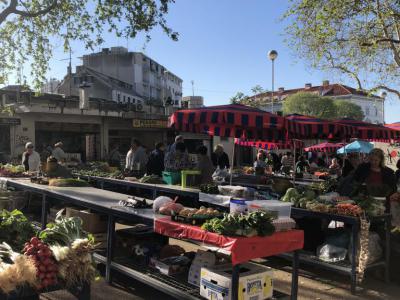
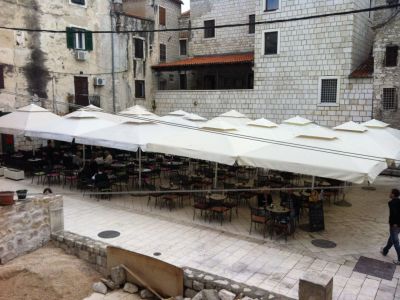
Stepping outside the Silver Gate, you can’t help noticing a lively market scene. Just opposite stands the 17th-century monastery and church of Saint Catherine of Alexandria, built by the Dominicans. From imperial fortifications to monastic calm, all within a few steps.
And history doesn’t stop there. In the year 2000, Pope John Paul II passed through the Silver Gate in his Popemobile en route to visit the Cathedral of Saint Domnius. Indeed, not every Roman gate can say it has welcomed both an emperor and a pope.
So, as you walk through, don’t just pass under the arch-listen closely. These gates have seen empires rise, refugees arrive, Venetians renovate, and popes roll through. Not bad for an old doorway...
After Salona, the nearby Roman capital, was destroyed by Avars and Slavs around the 7th century AD, refugees took shelter within the sturdy walls of Diocletian’s Palace. The space inside was tight, so what they did was build upward. Above the Silver Gate, in a narrow corridor, they tucked in a mini-church dedicated to Saint Apolinar. Yes, a chapel above a gateway. And since good ideas travel fast, similar little churches eventually appeared above other gates, too. Medieval multitasking at its finest...
By the 18th century, the Venetians decided the Silver Gate needed a sidekick. So, they added a “small gate” next to it-because, apparently, even ancient Roman entrances benefit from a practical shortcut.
Stepping outside the Silver Gate, you can’t help noticing a lively market scene. Just opposite stands the 17th-century monastery and church of Saint Catherine of Alexandria, built by the Dominicans. From imperial fortifications to monastic calm, all within a few steps.
And history doesn’t stop there. In the year 2000, Pope John Paul II passed through the Silver Gate in his Popemobile en route to visit the Cathedral of Saint Domnius. Indeed, not every Roman gate can say it has welcomed both an emperor and a pope.
So, as you walk through, don’t just pass under the arch-listen closely. These gates have seen empires rise, refugees arrive, Venetians renovate, and popes roll through. Not bad for an old doorway...
Want to visit this sight? Check out these Self-Guided Walking Tours in Split. Alternatively, you can download the mobile app "GPSmyCity: Walks in 1K+ Cities" from Apple App Store or Google Play Store. The app turns your mobile device to a personal tour guide and it works offline, so no data plan is needed when traveling abroad.
Download The GPSmyCity App



Silver Gate on Map
Sight Name: Silver Gate
Sight Location: Split, Croatia (See walking tours in Split)
Sight Type: Attraction/Landmark
Guide(s) Containing This Sight:
Sight Location: Split, Croatia (See walking tours in Split)
Sight Type: Attraction/Landmark
Guide(s) Containing This Sight:
Nearby Sights
Walking Tours in Split, Croatia

Create Your Own Walk in Split
Creating your own self-guided walk in Split is easy and fun. Choose the city attractions that you want to see and a walk route map will be created just for you. You can even set your hotel as the start point of the walk.
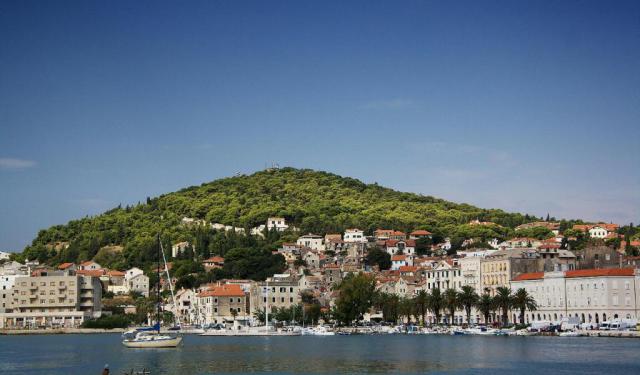
Marjan Hill Walking Tour
Marjan Hill is a picturesque natural wonder – a unique landform – located on the Split peninsula in Croatia. The majestic hill (or the low mountain, if you like) is surrounded by the sea and the city, and represents the green oasis ideal for walks, excursions, and rock climbing. Visitors to the area are greeted with a plethora of sights catering to various interests and equally enjoyed by... view more
Tour Duration: 1 Hour(s)
Travel Distance: 1.4 Km or 0.9 Miles
Tour Duration: 1 Hour(s)
Travel Distance: 1.4 Km or 0.9 Miles
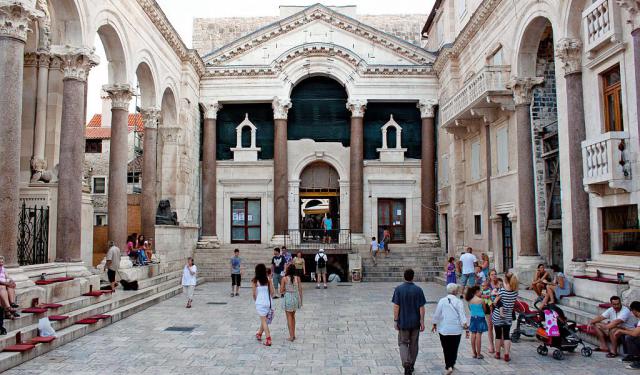
Diocletian Palace Tour
One of the best-preserved monuments of Roman architecture in the world, Diocletian’s Palace is also probably the most impressive “retirement home” in history. Imagine quitting a job at the age of sixty and deciding your quiet seaside cottage should also function as a fortress. That was exactly the plan of Roman emperor Diocletian... In 305 AD, after abdicating-which is something Roman... view more
Tour Duration: 1 Hour(s)
Travel Distance: 0.6 Km or 0.4 Miles
Tour Duration: 1 Hour(s)
Travel Distance: 0.6 Km or 0.4 Miles
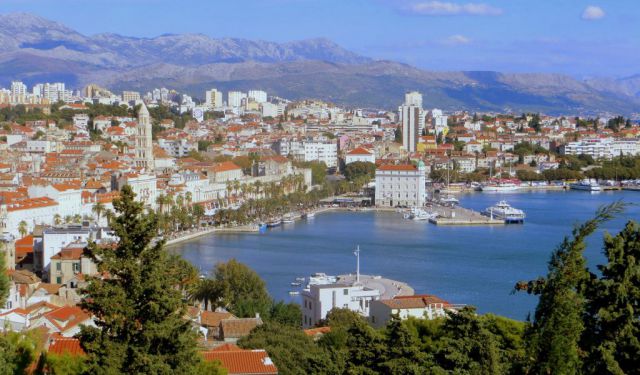
Split Old Town Walking Tour
Welcome to Split, Dalmatia’s sun-drenched heart and, believe it or not, the ultimate ancient retirement plan.
Its story has a bit of a botanical side and dates back more than two millennia, when Greek settlers from Issa (or modern-day Vis) founded here a colony they called Aspalathos, named after a prickly, yellow-flowering shrub that still dots the coastline. The Romans called it Spalatum,... view more
Tour Duration: 1 Hour(s)
Travel Distance: 1.2 Km or 0.7 Miles
Its story has a bit of a botanical side and dates back more than two millennia, when Greek settlers from Issa (or modern-day Vis) founded here a colony they called Aspalathos, named after a prickly, yellow-flowering shrub that still dots the coastline. The Romans called it Spalatum,... view more
Tour Duration: 1 Hour(s)
Travel Distance: 1.2 Km or 0.7 Miles