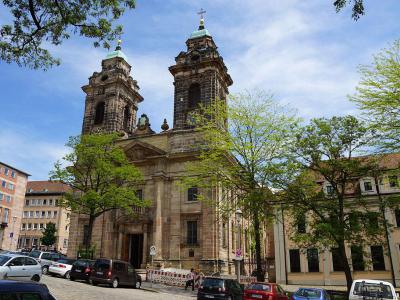


St. Egidien's Church, Nuremberg
Saint Egidien's Church, located in Nuremberg, stands as a prominent example of baroque church architecture in Middle Franconia. Originally established as a Benedictine abbey dedicated to Saint Giles, it has undergone various transformations since its inception.
The initial church structure was likely erected around 1120/1130 on the grounds of what was then the northern Nuremberg royal court, which managed royal assets and agricultural activities. This initial establishment granted it the status of a royal church. Around 1140, Emperor Conrad III and his wife Gertrud elevated the site's status to a Benedictine abbey, appointing Carus from the Scots Monastery in Regensburg as its first abbot. The abbey was notably affluent and answered directly only to the Holy Roman Emperor.
Originally built as a Romanesque-style three-aisled basilica, the abbey experienced a financial decline by 1418, leading to significant debt and the need for structural and administrative reforms. This included the takeover by German Benedictines from Reichenbach, who initiated renovations and adjusted the religious community.
The Reformation in 1525 led to the dissolution of the monastery, with its assets transferred to city control. Later efforts by Roman Catholics to reclaim these assets, particularly during 1578 and between 1629 and 1631, were unsuccessful. A devastating fire in 1696 destroyed the original structures, prompting a rebuild in the baroque style which commenced in 1711 under architects Johann and Gottlieb Trost, featuring contributions from artists such as Donato Polli, Daniel Preisler, and Johann Martin Schuster.
The church suffered severe damage during a World War II air raid on January 2, 1945, which destroyed much of the structure. Post-war reconstruction between 1946 and 1959 by architect Rudolf Gröschel adhered to more economical interpretations due to financial constraints, which prevented a full restoration of its baroque intricacies.
Today, Saint Egidien's Church remains a significant historical and architectural site in Nuremberg, reflecting a rich history of religious, cultural, and architectural evolution.
The initial church structure was likely erected around 1120/1130 on the grounds of what was then the northern Nuremberg royal court, which managed royal assets and agricultural activities. This initial establishment granted it the status of a royal church. Around 1140, Emperor Conrad III and his wife Gertrud elevated the site's status to a Benedictine abbey, appointing Carus from the Scots Monastery in Regensburg as its first abbot. The abbey was notably affluent and answered directly only to the Holy Roman Emperor.
Originally built as a Romanesque-style three-aisled basilica, the abbey experienced a financial decline by 1418, leading to significant debt and the need for structural and administrative reforms. This included the takeover by German Benedictines from Reichenbach, who initiated renovations and adjusted the religious community.
The Reformation in 1525 led to the dissolution of the monastery, with its assets transferred to city control. Later efforts by Roman Catholics to reclaim these assets, particularly during 1578 and between 1629 and 1631, were unsuccessful. A devastating fire in 1696 destroyed the original structures, prompting a rebuild in the baroque style which commenced in 1711 under architects Johann and Gottlieb Trost, featuring contributions from artists such as Donato Polli, Daniel Preisler, and Johann Martin Schuster.
The church suffered severe damage during a World War II air raid on January 2, 1945, which destroyed much of the structure. Post-war reconstruction between 1946 and 1959 by architect Rudolf Gröschel adhered to more economical interpretations due to financial constraints, which prevented a full restoration of its baroque intricacies.
Today, Saint Egidien's Church remains a significant historical and architectural site in Nuremberg, reflecting a rich history of religious, cultural, and architectural evolution.
Want to visit this sight? Check out these Self-Guided Walking Tours in Nuremberg. Alternatively, you can download the mobile app "GPSmyCity: Walks in 1K+ Cities" from Apple App Store or Google Play Store. The app turns your mobile device to a personal tour guide and it works offline, so no data plan is needed when traveling abroad.
Download The GPSmyCity App



St. Egidien's Church on Map
Sight Name: St. Egidien's Church
Sight Location: Nuremberg, Germany (See walking tours in Nuremberg)
Sight Type: Religious
Sight Location: Nuremberg, Germany (See walking tours in Nuremberg)
Sight Type: Religious
Nearby Sights
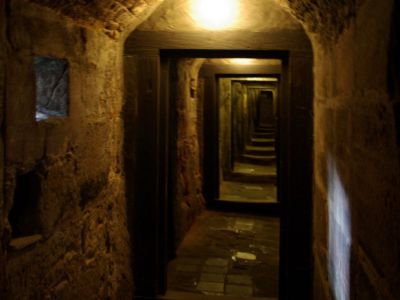
Walking Tours in Nuremberg, Germany

Create Your Own Walk in Nuremberg
Creating your own self-guided walk in Nuremberg is easy and fun. Choose the city attractions that you want to see and a walk route map will be created just for you. You can even set your hotel as the start point of the walk.
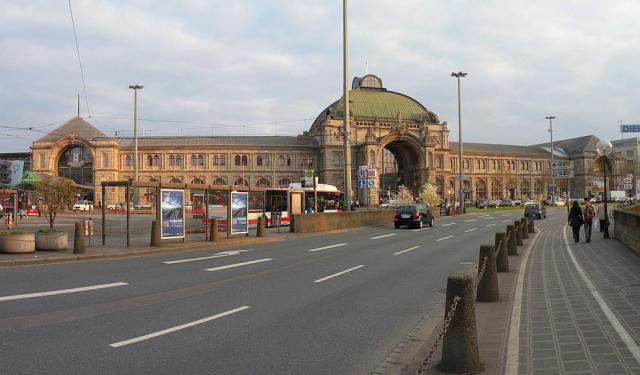
A Walk Through Nuremberg's Historical Old Town
American poet Henry Wadsworth Longfellow described Nuremberg as a “quaint old town of toil and traffic, quaint old town of art and song.”
Nuremberg has witnessed some of the most significant events in German history. For many people, the city is first associated with the rise of the Third Reich, the Nazi Party rallies, and the postwar trials of Nazi leaders. Indeed, Hitler regarded... view more
Tour Duration: 3 Hour(s)
Travel Distance: 3.8 Km or 2.4 Miles
Nuremberg has witnessed some of the most significant events in German history. For many people, the city is first associated with the rise of the Third Reich, the Nazi Party rallies, and the postwar trials of Nazi leaders. Indeed, Hitler regarded... view more
Tour Duration: 3 Hour(s)
Travel Distance: 3.8 Km or 2.4 Miles
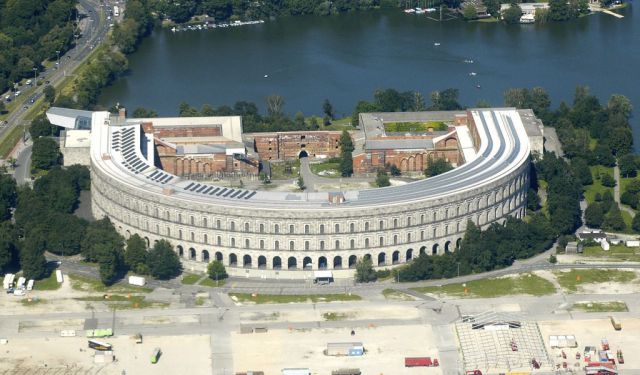
Hitler's Nuremberg Tour
Nuremberg’s association with Adolf Hitler and National Socialism is one of the darkest chapters in the city’s history. Although Nuremberg is known for its medieval architecture and storybook appearance, few German cities are as closely intertwined with the Nazi legacy. Hitler referred to it as the “City of the Party Rallies” and regarded it as a model for the ideal German city.
The... view more
Tour Duration: 2 Hour(s)
Travel Distance: 4.9 Km or 3 Miles
The... view more
Tour Duration: 2 Hour(s)
Travel Distance: 4.9 Km or 3 Miles